One Nation MP David Farley has used his maiden speech to Parliament to warn that Australia’s generosity must not be exploited, calling for the swift removal of people who come to the country but seek to “bring harm and disrespect” rather than become contributing Australians.
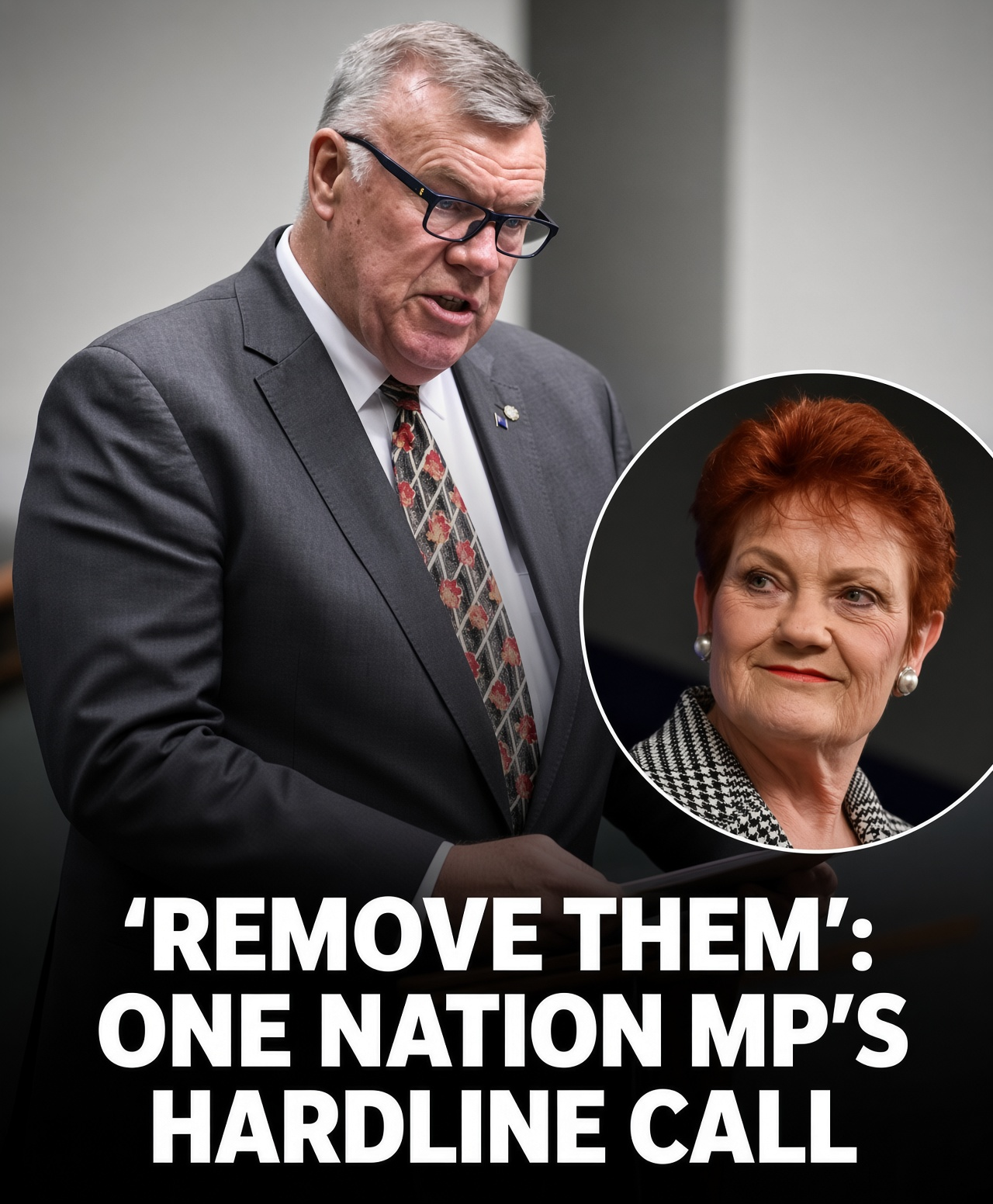
The Member for Farrer delivered a wide-ranging address of more than 20 minutes on Tuesday, moving from immigration and Australian identity to farming, water policy, energy and the country’s growing vulnerability to global supply-chain disruption.
Farley, a former agribusiness executive with deep connections to regional New South Wales, framed almost every subject around one central idea: Australians have inherited an extraordinarily successful country, but maintaining it requires each generation to leave behind something stronger than it received.
His speech also marked a historic moment for Pauline Hanson’s party.
Farley became the first One Nation candidate ever elected directly to the federal House of Representatives when he captured Farrer in a stunning May by-election victory following the resignation of former Liberal leader Sussan Ley. The Australian Electoral Commission formally declared him elected later that month.
Hanson embraced Farley following his maiden address.
Barnaby Joyce could also be heard offering his assessment.
“Great speech. Nailed it,” Joyce said.
‘That generosity and kindness must be guarded’
Farley’s strongest comments came as he reflected on Australia’s history as a destination for migrants and refugees.
He described the country as “one nation of an extraordinarily fortunate people” and spoke positively about Australia welcoming talent from across the world.
He said the country had given people facing discrimination and persecution an opportunity to build new lives.
But Farley argued that generosity creates obligations in both directions.
“That same generosity and kindness must be guarded and respected,” he said.
Farley then drew a line between migrants who come to contribute and those he believes arrive expecting Australian society to change around them.
“As we open our welcoming doors, there are those who arrive onto our shores who want to change, and expect that change must be on us and not them,” he said.
His prescription was uncompromising.
“We must, with expediency and with minimal cost, remove those who want to bring harm and disrespect to this great nation of ours.”
The remarks placed assimilation and national allegiance firmly inside Farley’s first major statement of his political beliefs, while stopping short of identifying particular religious or ethnic groups.
A multicultural childhood in Narrandera
Farley supported his argument by returning to his childhood in Narrandera, in the Riverina region of New South Wales.
His description was notably different from a rejection of immigration itself.
Farley recalled attending school alongside First Nations children and what he called “new Australians” whose families had come from different parts of the world.
His point was that people of different racial, religious and cultural backgrounds could successfully share one community when belonging came with common responsibilities.
That experience, he suggested, helped shape his view that migration works when newcomers become active participants in the country they have joined.
It is a distinction that matters politically for One Nation.
The party has increasingly argued that its immigration policy should be understood not simply as opposition to migration, but as support for lower numbers, tighter controls and stronger expectations of assimilation.
Farley’s speech placed him firmly within that argument while emphasising his own experience of growing up in a culturally mixed community.
‘We inherit the Australia built by those who came before us’
The philosophical centre of Farley’s speech was not immigration, however.
It was intergenerational responsibility.
Farley argued that Australians occupy a temporary place in a much longer national story.
“We inherit the Australia built by those who came before us,” he said.
“We are custodians of that inheritance for a short period of time. We carry an obligation to leave something stronger for those who follow.”
Farley said that obligation was “at the heart” of why he had entered Parliament.
It became the connecting theme between seemingly different parts of his address: agriculture, migration, national security, economic resilience and the future his grandchildren will inherit.
Farley takes aim at Murray-Darling Basin Plan
For voters in Farrer, one section of the speech was particularly significant.
Farley launched a direct attack on the Murray-Darling Basin Plan, an issue that has enormous economic and political importance across his electorate.
He described the plan as a “failing, expensive ideology” and argued it had become detached from the practical requirements of functioning regional communities.
Farley’s background makes water policy considerably more than an abstract political issue.
Before entering Parliament he had extensive experience in agriculture and irrigation and was prominent in campaigns concerning water management.
His election campaign also placed Murray-Darling reform among his major priorities.
When he was sworn into Parliament in June, Farley specifically identified water reform and the consequences of environmental and cultural flows for farmers and private landholders as issues he intended to pursue.
His maiden speech demonstrated that those commitments will remain central to his work in Canberra.
Live cattle ban held up as warning
Farley also returned to the 2011 suspension of Australia’s live cattle exports to Indonesia as an example of what he regards as government decision-making that fails to understand how regional economies actually function.
He argued the consequences extended far beyond individual cattle producers.
The damage, Farley said, moved through transport businesses, aviation operators, Indigenous enterprises, workers and their families, lenders, regional schools and towns.
His broader point was about economic interconnectedness.
A decision directed at one industry can create consequences across an entire network of businesses and communities.
That argument flowed directly into one of the most substantial themes of his address: productive capital.
‘The world is not created by government decree’
Farley spent much of his working life in agriculture and agribusiness, including serving as chief executive of the Australian Agricultural Company.
He said that career taught him what “productive capital can achieve”.
It also taught him something else.
“The world is not created by government decree,” Farley said.
He presented economic production — farms, infrastructure, businesses, skills and physical capacity — as the foundation on which national prosperity ultimately rests.
That philosophy placed his speech firmly within a producer-oriented view of economic policy, with particular emphasis on regional industries rather than government programs or financial measures alone.
Australia can no longer take supply chains for granted
Farley’s economic argument then expanded from regional Australia to geopolitics.
He said Australians had lived through decades of relative security and prosperity under what he described as the Pax Americana, an international order in which the United States provided much of the strategic architecture underpinning global trade.
Farley warned that era could no longer simply be assumed to continue unchanged.
The world, he said, had become more fragmented, transactional, technologically competitive and multipolar.
“Artificial intelligence, semiconductors, energy, critical minerals, food, shipping routes, supply chains are becoming instruments of strategic power,” he said.
“Australia cannot be blind, deaf, arrogant or naive about that change.”
The implications, in Farley’s view, are substantial.
Australia cannot indefinitely assume medicines, technology, fuel, industrial inputs or other essentials will always be available from international suppliers regardless of geopolitical conditions.
A wealthy country that cannot produce enough of what it needs in an emergency remains strategically vulnerable.
‘A sovereign nation’ needs productive capacity
Farley therefore argued that sovereignty requires more than borders, a flag and formal political independence.
It also requires the ability to keep a society functioning during shocks.
“A sovereign nation must possess the productive capacity to withstand shocks and to survive on its own,” he said.
Food and energy security featured prominently in that argument.
For an MP representing one of Australia’s major agricultural regions, the connection was obvious: farming was not merely another industry seeking government support but an element of national resilience.
His argument also aligned with a broader shift in Western economic thinking since the pandemic, as governments have paid greater attention to critical minerals, semiconductor supply, defence manufacturing and vulnerabilities created by concentrated international supply chains.
Farley wants agriculture included in the same strategic conversation.
A different path into One Nation
Farley’s arrival in Canberra is itself politically significant.
Farrer had been held by the Liberal Party for decades and was represented by Sussan Ley from 2001 until her resignation in 2026.
The by-election that followed produced a remarkable collapse in the traditional Coalition vote.
Farley secured 39.5 per cent of first preferences and ultimately defeated independent Michelle Milthorpe with 57.6 per cent of the final preference count, according to the ABC’s final results.
The Liberals finished with just 12.4 per cent of first preferences and the Nationals with 9.8 per cent.
For a seat long regarded as conservative Coalition territory, the result was a political shock.
It also gave One Nation something it had never achieved before: a candidate elected directly to the House of Representatives under the party’s own banner.
Why ‘second-ever MP’ needs context
Farley has sometimes been described as One Nation’s “second-ever MP”, particularly following Barnaby Joyce’s move to the party.
That description requires qualification.
Farley is the first One Nation candidate ever elected directly to the federal House of Representatives.
Previous parliamentarians who subsequently represented One Nation in the lower house entered Parliament after originally being elected under another political affiliation.
The distinction makes Farley’s victory more historically significant than the shorthand description suggests.
His mandate came directly from Farrer voters with “Pauline Hanson’s One Nation” beside his name on the ballot paper.
Thanks for Hanson — and an offer to work across Parliament
Farley paid tribute to Hanson during his address, thanking her for taking what he called the “plunge into politics” in 1995 and for the support she had given him.
But he also signalled that he did not intend to treat every parliamentary question as a purely partisan contest.
Farley said he was prepared to work with any political party genuinely seeking to leave Australia stronger than it found it.
“The challenges ahead are bigger than any political party,” he said.
That statement will be tested as One Nation’s representation grows and the party attempts to convert rising electoral support into legislative influence.
A lower-house MP representing a large regional electorate must also deal with practical constituency issues that do not always fit neatly within national party campaigns.
Family watches from the gallery
The most personal moments of the speech came when Farley acknowledged the family members watching him enter Australia’s parliamentary record.
His 98-year-old mother was there.
“Mum, thank you. You are now part of Farrer’s political history as well,” Farley told her.
His daughters Kate and Sarah and his grandchildren were also present.
Farley connected them directly to the intergenerational argument running through the speech.
“They are not incidental to what I say today,” he said.
“They are the reason for it.”
Farley also recalled leaving home at 17 and the values he absorbed through working life.
Nobody owed a person promotion, he said; it had to be earned.
Hard work mattered, but so did curiosity, politeness, fairness, responsibility, accountability and simply turning up when others depended on you.
He recalled receiving a framed copy of Rudyard Kipling’s poem If— and keeping it alongside Theodore Roosevelt’s famous passage about “the man in the arena”.
The references fitted the central theme of a maiden speech built around responsibility rather than entitlement.
From farming to national strategy
Maiden speeches often provide new MPs with an opportunity to thank campaign workers, recount their biographies and describe their electorates.
Farley did all three.
But his address also offered the clearest indication yet of what kind of One Nation MP he intends to be.
His politics combine tougher expectations of migrants with a positive account of Australia’s history of welcoming newcomers.
They combine criticism of government intervention with demands for a stronger national productive base.
And they place irrigation, farming and regional communities within a larger argument about sovereignty and geopolitical resilience.
That combination may prove important for One Nation as the party attempts to expand beyond the political identity built around Hanson.
Farley represents a seat where water, agriculture and regional economics can matter as much as the national culture wars that dominate much of One Nation’s media coverage.
His maiden speech sought to connect those agendas.
‘Thank you Farrer. Thank you Australia’
Farley finished where he began: with the electorate that sent him to Canberra and the country he says each generation temporarily holds in trust.
His warning about people who “want to bring harm” will inevitably attract much of the attention from the speech.
But it formed part of a wider message.
Farley argued Australia should remain generous but not naive, internationally connected but capable of standing on its own, and open to newcomers while expecting them to contribute to the country they have chosen.
He argued governments should understand the economic consequences of their decisions and protect the productive industries that sustain the nation.
And he argued politicians should measure themselves not simply by what they inherited, but by what they leave behind.
For One Nation’s first directly elected federal lower-house MP, it was a maiden speech designed to establish an identity extending well beyond the circumstances of his surprise by-election victory.
Farley’s final words were simple.
“Thank you, Mr Speaker. Thank you Farrer. Thank you Australia.”






