The New South Wales Court of Appeal has ruled that a controversial video allegedly showing two former Bankstown Hospital nurses making threatening comments about Israeli patients can be used as evidence at their upcoming criminal trial, overturning an earlier decision that had excluded the footage.
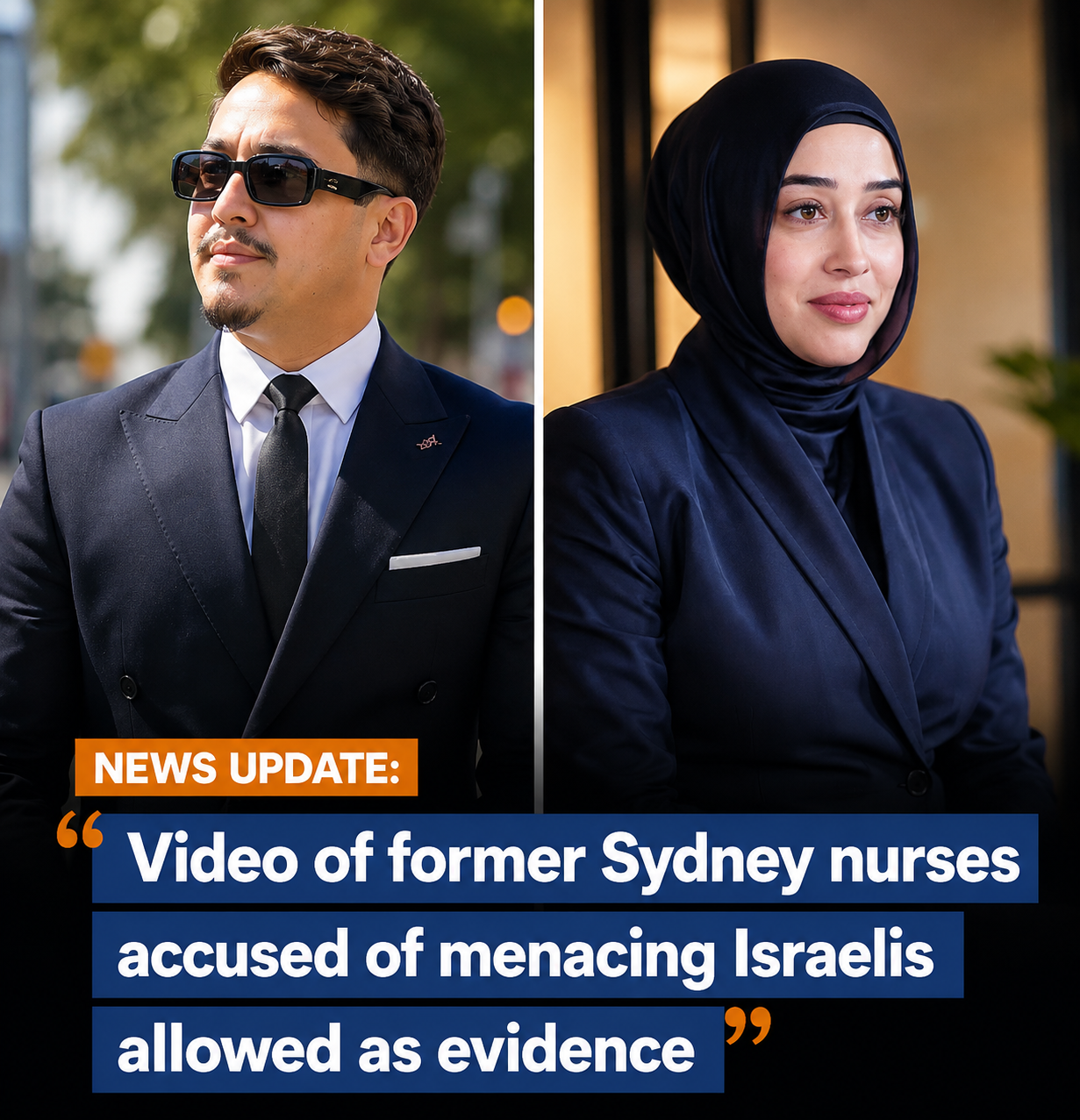
The decision marks a significant development in one of Australia’s most closely watched criminal proceedings involving alleged threats made by healthcare workers.
Former nurses Sarah Abu Lebdeh and Ahmad Rashad Nadir have both pleaded not guilty to charges of using a carriage service to menace, harass or offend following an online conversation with Israeli content creator Max Veifer, whose legal name is Max Ilinsky, on the Chatruletka video chat platform in February last year. Ms Abu Lebdeh has also pleaded not guilty to an additional charge alleging she threatened violence against a group.
The case attracted widespread public attention after footage of the online conversation circulated internationally. Prosecutors allege the video captured threatening remarks directed at Israeli patients, while the defence has challenged whether the recording was lawfully obtained.
Last month, the NSW District Court ruled the video should not be admitted into evidence, accepting defence arguments that it had been improperly obtained and may have breached state surveillance laws governing private conversations. That ruling represented a major setback for prosecutors because the recording forms a central part of the Commonwealth’s case.
However, following an appeal by prosecutors, the Court of Appeal overturned that decision on Friday, restoring the video as admissible evidence ahead of the trial.
The court has provided its reasons for judgment to the parties, but those reasons remain subject to suppression and non-publication orders. As a result, the detailed legal reasoning behind the decision cannot yet be publicly reported.
The appeal largely centred on whether the recording breached New South Wales surveillance laws and where, legally, the recording was made.
During the appeal hearing, Crown prosecutor Paul Holdenson KC argued the recording was created in Israel because Mr Ilinsky was physically located there when he recorded the conversation using his own computer. On that basis, prosecutors submitted that New South Wales recording laws did not apply.
“Mr Ilinsky was sitting in Israel at the time of the conversation,” the court was told.
“His computer was with him in Israel.”
Lawyers representing the former nurses argued the conversation was also recorded in New South Wales because the microphones attached to the nurses’ computer equipment captured the audio while they were located inside the state.
Defence counsel Peter Lange SC submitted that the alleged conduct occurred partly within New South Wales.
“What was used was the microphone in the room at the hospital … in order to capture the sound,” he argued.
“The conversation may also have been in Israel … but it is also in New South Wales.”
The geographical question became an important legal issue because different jurisdictions may apply different laws governing the recording of conversations and the admissibility of evidence.
Prosecutors also argued that excluding the footage would substantially weaken the criminal case because jurors would lose important context surrounding the conversation.
The Crown submitted that jurors should be able to assess not only the words allegedly spoken but also the tone, facial expressions, gestures and overall context in which the conversation occurred.
According to prosecutors, viewing the complete interaction would allow jurors to determine for themselves what occurred rather than relying solely on witness recollections.
The Court of Appeal ultimately agreed that the earlier ruling should be overturned, allowing the unedited recording to be presented during the forthcoming trial.
The legal dispute over the video’s admissibility has become one of the defining issues in the prosecution.
Earlier proceedings examined whether conversations conducted through random online chat platforms should be regarded as “private conversations” under New South Wales law and whether recording them without consent breaches surveillance legislation.
The earlier District Court ruling concluded the recording should be excluded, but that position has now been reversed following the successful appeal.
The Court of Appeal’s decision does not determine whether either defendant is guilty or innocent. Instead, it decides only that the prosecution may rely on the video as part of its evidence before a jury.
Both defendants continue to deny the allegations against them, and the criminal charges remain to be tested during the trial.
The case stems from an online interaction with Israeli content creator Max Veifer, who previously told the court he routinely recorded conversations conducted through the platform for his own protection and later published the particular video because he believed members of the public should be aware of what had been said.
The controversy prompted significant public debate after the footage circulated widely online, leading to investigations by police, health authorities and professional regulators.
Following the incident, both nurses were dismissed from their employment at Bankstown Hospital while separate regulatory action affected their ability to continue practising during ongoing investigations. The employment consequences are separate from the criminal proceedings now before the court.
The criminal trial is currently scheduled to begin at the end of August in New South Wales.
Before jurors are empanelled, the parties will continue addressing suppression and publication issues arising from the Court of Appeal’s judgment.
Those restrictions mean portions of the legal reasoning behind Friday’s decision cannot yet be publicly reported until further court orders are made.
The upcoming trial will determine whether prosecutors have proved the charges beyond reasonable doubt based on all admissible evidence presented during the proceedings.
As with all criminal matters before Australian courts, the accused are presumed innocent unless and until guilt is established in court.






