A peaceful demonstration outside a former church building in Sydney has reignited debate over the changing role of historic religious properties, freedom of expression and the challenges of balancing differing community values in modern Australia.
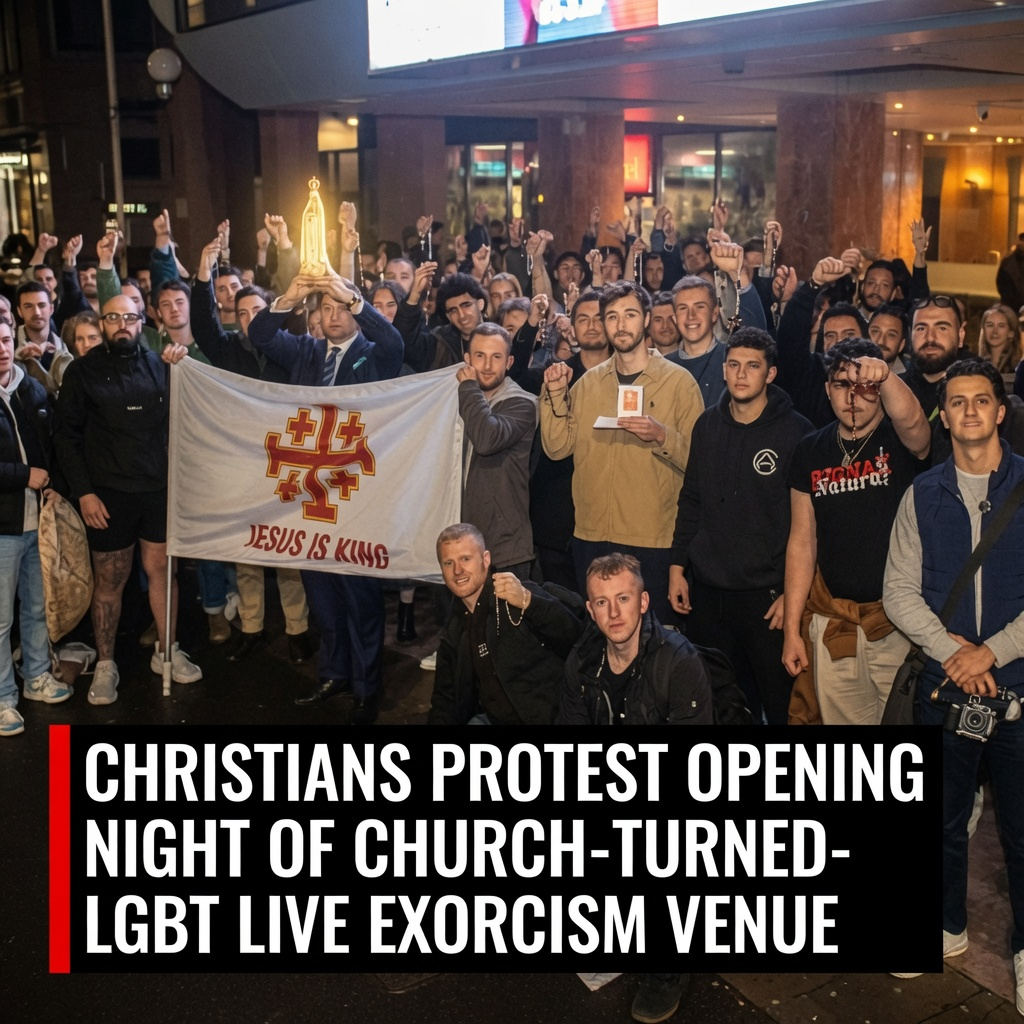
Dozens of Christians gathered outside the building after it was repurposed from a place of worship into a commercial entertainment venue. Organisers of the demonstration said they wanted to express concern over what they viewed as the loss of a site with significant religious heritage and to pray peacefully outside the premises.
The protest remained peaceful, with participants holding signs, singing hymns and praying as people entered and exited the venue. Video shared online showed police monitoring the gathering, although there were no immediate reports of major disturbances or arrests linked to the demonstration.
The venue operating from the former church has attracted attention in recent months for hosting a variety of nightlife events, performances and themed entertainment. Some advertised events have generated discussion on social media because of their theatrical nature and unconventional themes.
For many protesters, however, the primary issue extended beyond any individual event. They argued that transforming a building originally constructed as a church into an entertainment venue represented a broader cultural shift that they believe diminishes the religious significance attached to such sites.
Several speakers addressing those gathered said the demonstration was intended to be an expression of religious conviction rather than hostility towards any particular community. They emphasised that participants wished to pray for the building and for the wider community while encouraging respectful public discussion.
On the other hand, supporters of the venue argue that the building is privately operated and legally entitled to host events within the framework of Australian law and local planning approvals. They maintain that changing the use of heritage buildings is not uncommon, particularly as declining congregations have left many churches without sufficient financial support to continue operating as places of worship.
Across Australia, numerous former churches have been converted into restaurants, apartments, galleries, offices, community centres and performance spaces after religious organisations sold properties that had become increasingly expensive to maintain. Heritage experts note that adaptive reuse is often viewed as one way of preserving historic buildings that might otherwise fall into disrepair.
While such conversions frequently receive community support, they can also generate strong emotional responses, particularly when former places of worship are used for purposes that some religious groups consider incompatible with the buildings’ original purpose.
The latest demonstration illustrates how these questions extend beyond architecture or heritage conservation into broader discussions about identity, faith and cultural change.
Australia’s legal framework provides protections for both freedom of religion and freedom of peaceful assembly. Individuals and organisations are generally entitled to express their beliefs publicly, provided demonstrations remain lawful and do not threaten public safety or unlawfully interfere with others.
Likewise, businesses and venue operators that comply with planning, licensing and anti-discrimination laws are generally free to conduct lawful commercial activities, even where those activities attract public criticism.
Legal experts often note that disagreements of this nature are not uncommon in democratic societies, where competing rights can exist simultaneously. One group’s exercise of religious freedom may coincide with another group’s right to operate a lawful business or organise public events.
That balance can be difficult to navigate, particularly when debates involve issues of faith, sexuality, cultural identity or deeply held personal beliefs.
The protest also reflects wider conversations occurring across Australia regarding the future of religious institutions. Census data has shown that religious affiliation has gradually declined over recent decades, while the proportion of Australians identifying as having no religion has continued to increase.
As attendance at many churches has fallen, some denominations have chosen to consolidate congregations and sell older properties that are no longer financially sustainable. Those buildings have subsequently found new uses ranging from residential developments to hospitality venues and cultural spaces.
For many believers, however, former churches continue to hold significant spiritual and historical importance regardless of ownership changes. They argue that these buildings represent generations of community worship, family milestones and local history that deserve continued respect.
Others contend that once ownership changes legally, communities inevitably adapt to new social and economic realities, allowing heritage buildings to remain active rather than abandoned.
The differing perspectives demonstrate why similar disputes periodically emerge both in Australia and overseas whenever historically significant religious sites undergo substantial redevelopment.
At the centre of the Sydney demonstration were questions that extend beyond one building or one event. Protesters said they hoped their gathering would encourage public reflection on the role of Christianity within Australian society and the preservation of religious heritage.
Meanwhile, supporters of the venue have argued that Australia is a pluralistic society in which people from different backgrounds, beliefs and communities should be able to coexist peacefully while respecting each other’s legal rights.
The discussion has also unfolded largely through social media, where short video clips and photographs have circulated widely, prompting strong reactions from people holding very different views. As is often the case with online debate, opinions have ranged from strong support for the protesters to equally strong support for the venue’s continued operation.
Authorities have not indicated that any laws were broken during the demonstration, and there have been no announcements suggesting regulatory action against either the organisers of the protest or the venue itself.
Whether the event ultimately influences future discussions about heritage buildings, religious freedoms or community relations remains to be seen. What is clear is that the protest has become another example of how questions involving faith, identity and the changing use of historic spaces continue to generate significant public interest across Australia.






