Ben Carroll has wasted little time attempting to redefine Victoria’s political direction, announcing an ambitious package of anti-corruption reforms and a Royal Commission into the state’s construction industry on his very first day as Premier.
Only hours after being sworn in as Victoria’s 50th Premier, Carroll sought to project an image of decisive leadership, declaring that his government would move immediately to strengthen integrity institutions, investigate alleged misconduct within one of the state’s largest industries and demonstrate that his administration would not simply continue the approach of previous Labor governments.
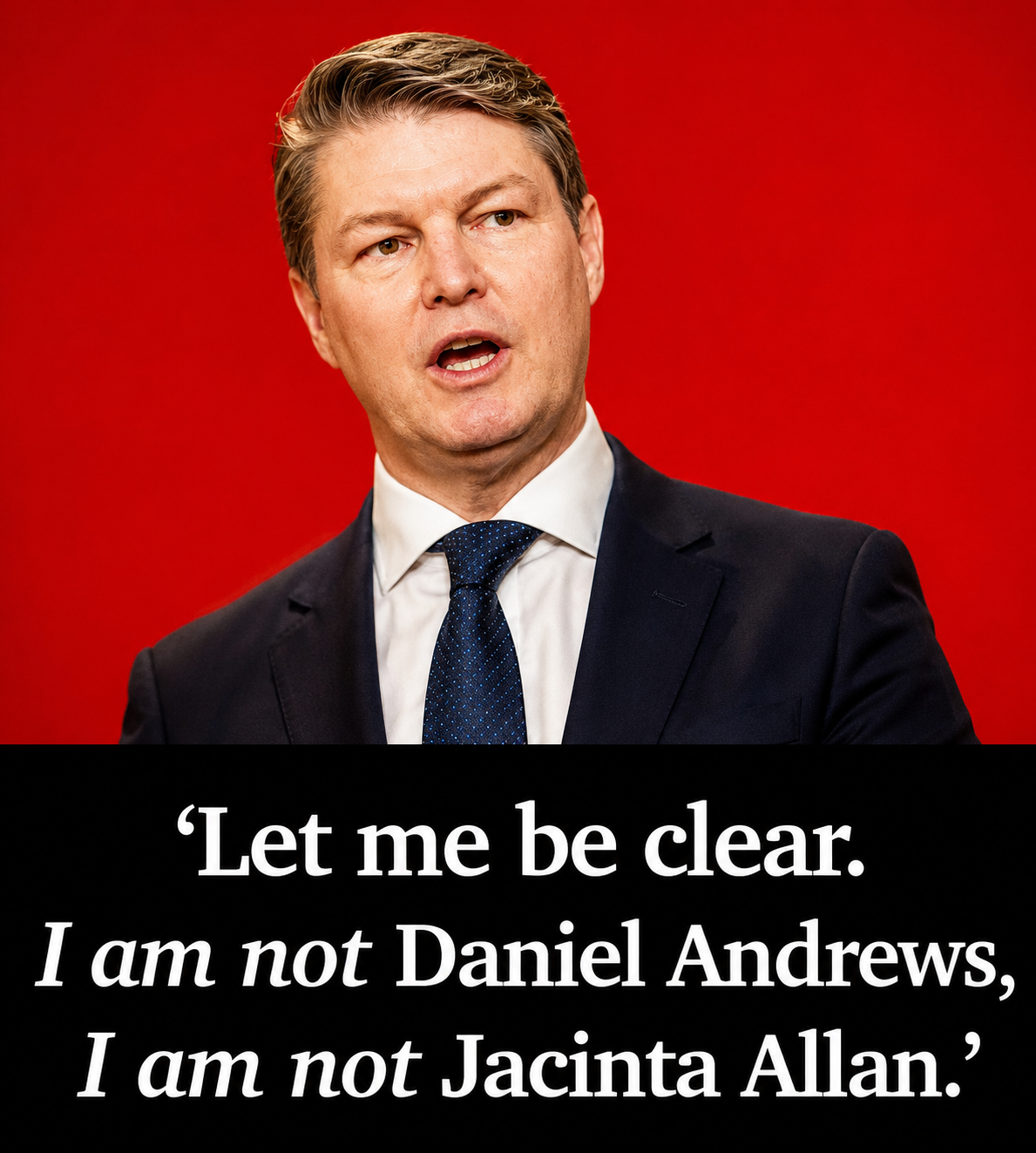
The announcements formed the centrepiece of Carroll’s first official press conference following his elevation to the state’s highest office after winning the Labor leadership unopposed.
Rather than limiting his first appearance to ceremonial remarks or broad policy aspirations, the new Premier delivered a series of concrete commitments aimed at restoring public confidence in government accountability and institutional integrity.
Foremost among those commitments was the announcement that Victoria will establish a Royal Commission into the construction sector.
The inquiry is expected to examine governance, misconduct and systemic issues affecting one of Australia’s largest and most economically significant industries, with Carroll promising that no area of concern would be considered off limits.
A Royal Commission represents the most powerful investigative mechanism available under Australian law.
Unlike ordinary departmental reviews or parliamentary committees, Royal Commissions possess extensive legal authority to compel witnesses to testify, require documents to be produced under oath, conduct public hearings and recommend sweeping legislative reforms.
Historically, Royal Commissions have led to major policy changes across areas including banking, aged care, institutional child abuse, disability services and law enforcement.
By choosing the construction industry as the subject of his government’s first major inquiry, Carroll signalled that accountability would become one of the defining themes of his premiership.
Victoria’s construction sector has long played a central role in the state’s economy, employing hundreds of thousands of workers while delivering major transport, housing and infrastructure projects.
At the same time, the industry has periodically faced allegations involving corruption, organised crime infiltration, unlawful conduct, procurement concerns and workplace disputes, prompting repeated calls from business groups and political figures for stronger oversight.
Although Carroll has yet to release the inquiry’s detailed terms of reference, his announcement indicates the government intends to undertake one of the most comprehensive examinations of the sector in many years.
The Premier paired that announcement with a second major reform aimed directly at strengthening Victoria’s anti-corruption framework.
He confirmed his government would establish a dedicated Special Prosecutor responsible for pursuing significant corruption-related offences.
The proposal is intended to ensure complex corruption investigations can proceed independently through the criminal justice system while providing additional expertise for high-profile cases.
Carroll also pledged to immediately expand the investigative powers of Victoria’s Independent Broad-based Anti-corruption Commission, better known as IBAC.
IBAC serves as Victoria’s principal anti-corruption watchdog and is responsible for investigating allegations involving public sector misconduct, police corruption and serious breaches of public trust.
Since its establishment, the commission has played an increasingly prominent role in examining allegations involving government agencies, public officials and law enforcement.
However, critics from across the political spectrum have argued IBAC has at times lacked sufficient powers or resources to pursue the most complex investigations effectively.
Carroll said additional authority would enable the commission to investigate corruption more aggressively and respond more quickly when serious allegations emerge.
The combined package of reforms appears designed to send a clear message that integrity and accountability will become defining priorities under the new administration.
Just as significant as the policy announcements was the political message Carroll sought to deliver alongside them.
During his first media appearance, he made a deliberate effort to distinguish his leadership from those of former Premiers Daniel Andrews and Jacinta Allan.
His declaration that he is “not Daniel Andrews” and “not Jacinta Allan” immediately became one of the defining moments of the leadership transition.
Although both leaders remain central figures in Labor’s modern history, Carroll’s remarks suggested he recognises that many Victorians are seeking a different governing style after more than a decade of continuous Labor rule.
Daniel Andrews dominated Victorian politics for almost nine years, winning multiple elections while overseeing some of the state’s largest infrastructure projects and leading Victoria through the COVID-19 pandemic.
His supporters credit him with reshaping public transport, education and health infrastructure, while critics argue his governments left Victoria with record debt, escalating project costs and declining public confidence in key institutions.
Jacinta Allan inherited those political challenges when she succeeded Andrews, but struggled to reverse growing dissatisfaction over economic management, housing affordability and the state’s financial position.
By distancing himself from both predecessors, Carroll appears to be acknowledging that political renewal requires more than simply changing the individual occupying the Premier’s office.
Instead, he is attempting to persuade voters that his administration will adopt a different tone, different priorities and a stronger emphasis on accountability.
Whether that message succeeds remains one of the central political questions confronting the new government.
Leadership transitions often provide governments with an opportunity to reset public perceptions, but history shows that symbolic gestures alone rarely produce lasting political benefits.
Ultimately, voters tend to judge new administrations on policy outcomes, economic performance and the effectiveness of public services rather than inaugural speeches or first-day announcements.
For Carroll, the challenge is particularly complex because he is not arriving from outside government.
Before becoming Premier, he served in several senior ministerial positions within the very Labor administration he now seeks to distinguish himself from.
Supporters argue that experience equips him with a detailed understanding of government and the ability to implement reforms quickly.
Critics, however, contend it also makes it difficult to argue he bears no responsibility for decisions made during previous administrations.
The Opposition is expected to use that argument repeatedly in coming months, portraying Carroll as an experienced insider rather than a genuine political outsider capable of delivering transformational change.
At the same time, Labor hopes the leadership transition will provide an opportunity to reconnect with voters who may have grown frustrated with the government’s direction while retaining confidence in the party’s broader policy agenda.
The promised Royal Commission, Special Prosecutor and expanded IBAC powers therefore represent more than individual policy initiatives.
Together, they form the foundation of Carroll’s attempt to redefine Labor’s image around transparency, accountability and institutional reform.
The coming months will reveal whether those commitments translate into meaningful legislative action and whether Victorians view the reforms as evidence of genuine renewal or simply a new presentation of an established government.
For now, Ben Carroll has chosen to begin his premiership with one of the strongest integrity agendas announced by a newly installed Victorian leader in recent years, setting expectations high for what his government hopes will become a markedly different chapter in the state’s political history.






