Barnaby Joyce has declared Australia’s soaring tobacco excise a “fool’s errand” that is effectively “subsidising the mafia”, as One Nation intensifies its push to wind back the tax and attack the booming illicit cigarette trade.
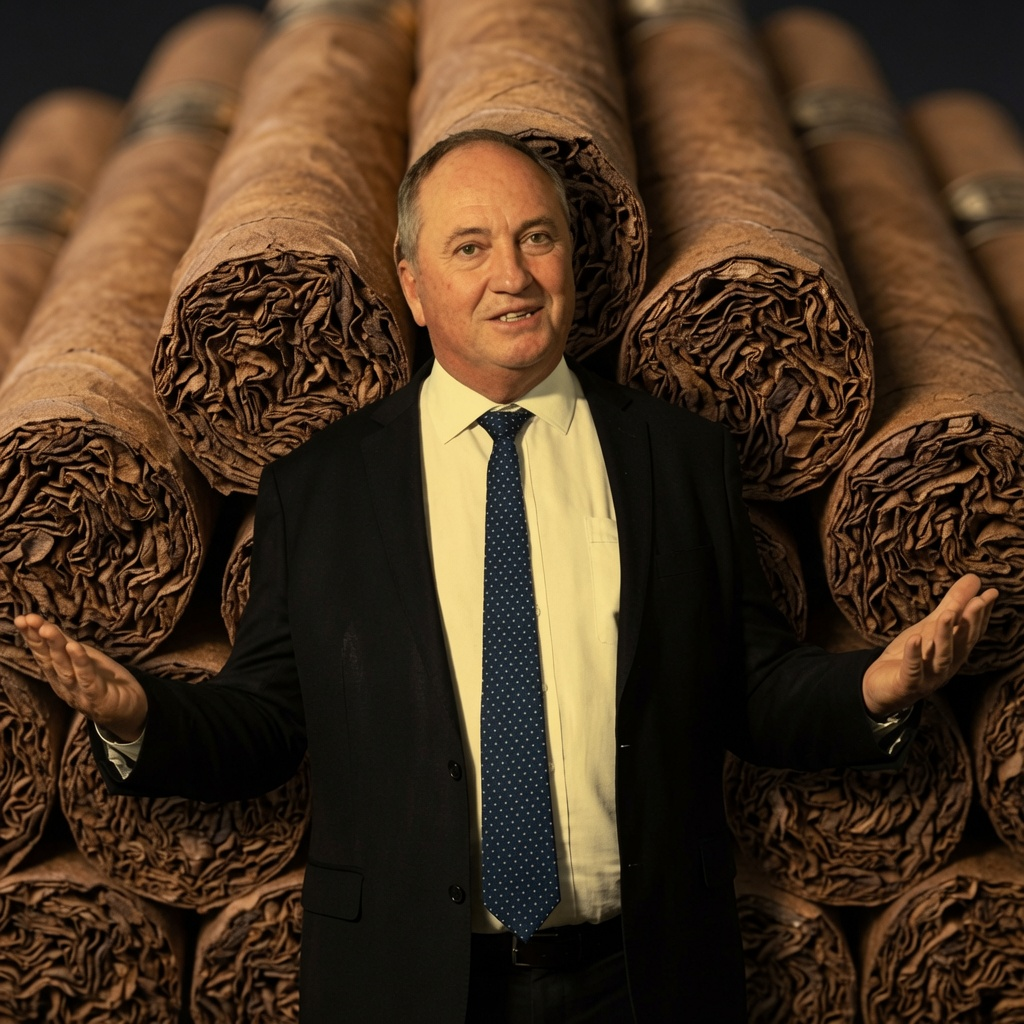
The One Nation MP said a government led by his party would move to reduce the excise on tobacco products, arguing that repeated tax increases had reached the point where they were driving consumers away from the legal market and towards criminal suppliers.
His comments come amid extraordinary new official data showing that Australians are consuming more nicotine despite years of increasingly aggressive tobacco taxation and regulation.
Speaking on Sky News’ Sunday Agenda, Joyce said there was now a “massive black hole” in government revenue from excise, particularly on cigarettes.
“Because more and more we are just pricing people into the black market,” Joyce said.
Asked whether One Nation would cut the tobacco excise, he said winding it back was “absolutely essential”.
“I think that is absolutely essential to go into that process because it’s a fool’s errand at the moment,” he said.
“We’re raising the price of excise. We’re reducing the amount we’re getting. We’re actually subsidising the mafia … A pretty bad outcome all around.”
The intervention puts Joyce firmly behind a policy already being promoted by One Nation leader Pauline Hanson, who has argued that Australia’s tobacco tax settings are no longer merely failing to suppress the black market but are actively strengthening the financial incentives behind it.
One Nation has proposed cutting the tobacco excise by 50 per cent and freezing indexation until June 30, 2028, with the option of extending the freeze. Hanson has said the policy could cut the retail price of a legal packet of 20 cigarettes by about $17.
The party’s argument is straightforward: legal cigarettes have become so expensive that criminal groups can sell illicit tobacco at a steep discount while still making enormous profits. Reducing the price gap, One Nation says, would make the legitimate market more competitive and strip organised crime of customers.
That position remains fiercely contested on public health grounds. But a dramatic shift in Australia’s tobacco market has ensured the debate can no longer be confined to smoking rates alone.
Official data shows a dramatic black market surge
Australian Bureau of Statistics figures released in June found the quantity of nicotine consumed nationally increased by almost 40 per cent between 2017 and 2025.
Australia’s population grew by about 14 per cent over the same period.
According to the ABS, the rise in nicotine consumption was underpinned by rapid growth in illicit cigarettes, along with increases in e-cigarettes and other nicotine products.
The most striking figure was the estimated share of tobacco consumption coming from illicit sources.
In 2017, illegal products accounted for about 12 per cent of total tobacco consumed. By 2025, the ABS estimated that figure had reached 80 per cent.
The data presents a deeply uncomfortable policy picture. Australia has continued to impose some of the world’s toughest tobacco controls, while the legal tobacco market has contracted sharply. Yet total nicotine consumption has risen as an enormous underground market has expanded beyond the reach of normal taxation and regulation.
The ABS analysis does not, by itself, prove that excise increases caused the entire expansion of the illicit market. Vaping, changing consumer behaviour, criminal supply networks and other factors have also transformed nicotine consumption.
However, the enormous difference between the price of legal and illegal cigarettes has become central to the political debate.
Australia’s tobacco excise is indexed twice each year, in March and September, in line with movements in average weekly ordinary time earnings. The excise rate rose again in March 2026 to roughly $1.53 per cigarette stick.
For a packet of 20 cigarettes, that means more than $30 in tobacco duty is embedded in the product before other costs and taxes are considered.
Illicit cigarettes, by contrast, can be sold at prices far below those charged by legitimate retailers. The result is an unusually large profit opportunity for anyone able to import, manufacture or distribute untaxed tobacco.
Hanson says the government has created an industry for criminals
Hanson last month called on the Albanese government to repeal or dramatically cut the tobacco excise, arguing that continuing the twice-yearly increases was worsening the criminal market.
“What a stupid thing the government has done in constantly raising the excise tax on it and it’s going up again in September,” Hanson told 2GB.
“Cut the excise tax, cut the guts right out of it so you don’t give them an industry out there for these mongrels.”
Asked whether the excise would be placed on the “chopping block” under One Nation, Hanson said: “You have to.”
She also argued that stronger customs inspections would be needed alongside tax reform, raising concerns about the proportion of shipping containers physically examined as they enter Australia.
For One Nation, the tobacco issue has become a case study in what the party describes as government policy producing the opposite of its intended result.
Excise was designed in part to make smoking less affordable and reduce consumption. The higher price of cigarettes has long been treated as an important public health tool, particularly in discouraging young people from taking up smoking and encouraging existing smokers to quit.
Australia’s National Tobacco Strategy continues to emphasise the enormous health and social damage caused by smoking. Tobacco use is associated with cancer, cardiovascular disease, respiratory illness and premature death, and nicotine is highly addictive.
The public health case for keeping cigarettes expensive therefore remains substantial.
But Joyce and Hanson argue the tax can only influence behaviour when consumers remain in the legal market. Once a dominant share of consumption moves underground, they say, raising the legal price may have diminishing benefits while increasing the potential profit available to illegal suppliers.
Tobacco revenue is collapsing
The federal budget is also exposing the financial consequences of the shift.
Treasury has substantially downgraded expected tobacco excise receipts, including a $1.2 billion downward revision for 2026–27 and an $8 billion reduction across the forward estimates in the latest budget papers.
Tobacco excise revenue, which once delivered more than $16 billion during its peak years, has fallen dramatically as legal sales have collapsed.
Revenue collected from legal tobacco products was about $7.7 billion in 2024–25. Estimates cited in the growing excise debate put receipts at about $4.13 billion for 2025–26, with further declines expected over coming years.
That creates a strange fiscal outcome. The government continues to increase the tax rate on legal tobacco, but the shrinking legal market means the Commonwealth is collecting less revenue.
Meanwhile, an often-cited estimate based on the social costs of smoking put direct healthcare costs at about $6.8 billion annually, based on 2015–16 research used in federal tobacco strategy material.
The comparison between excise revenue and healthcare costs is not a complete measure of tobacco policy. Tobacco taxation is intended primarily to reduce harmful consumption rather than simply pay medical bills, and the broader social cost of smoking extends far beyond hospital expenditure.
Nevertheless, the revenue collapse has become politically significant because it supports the argument that consumers are not necessarily abandoning nicotine. Many are instead purchasing products outside the taxed market.
Organised crime has moved into tobacco at extraordinary scale
The Australian Border Force openly acknowledges that serious and organised crime controls significant parts of the illicit tobacco market.
According to the ABF, criminal syndicates exploit the high-profit nature of illegal tobacco to fund broader criminal activity, including drug trafficking and money laundering.
The scale of recent seizures demonstrates how large the market has become.
Between December 1, 2025 and March 31, 2026, the ABF said authorities disrupted almost 1,000 tonnes of illicit tobacco and vapes across offshore, border and domestic operations.
At the Australian border alone, officers detected more than 786 million illicit cigarettes and more than 347 tonnes of loose-leaf tobacco during the four-month period. The combined duty allegedly evaded exceeded $2 billion.
Authorities also detected more than 3.6 million vapes at the border.
In a separate North Queensland operation announced in March, agencies seized more than 2.5 million illicit cigarettes, 50 kilograms of loose-leaf tobacco and 8,000 vapes. Queensland Police also seized about $300,000 in cash and electronic devices believed to contain evidence relating to money laundering and further importations.
These operations show why politicians increasingly describe illicit tobacco as an organised crime issue rather than simply a tax avoidance problem.
The illegal market undermines legitimate tobacconists and convenience stores, deprives the Commonwealth of revenue and places the distribution of highly addictive products in the hands of criminal groups with no incentive to comply with age restrictions or product standards.
At the same time, enforcement agencies face the enormous challenge of disrupting a market in which the profit margin between untaxed and fully taxed cigarettes can be vast.
The policy argument is shifting
For years, the central Australian tobacco debate was largely about how quickly governments could reduce smoking rates.
The latest ABS figures have changed the terms of that discussion.
The question now confronting Canberra is whether the existing tax structure is still reducing overall harm as intended, or whether the extreme price difference between legal and illicit tobacco has reached a point where it is distorting the market in favour of criminals.
Supporters of lower excise argue the government needs to reclaim the legal market before it can effectively regulate consumption. Their theory is that cheaper legal cigarettes would reduce the financial incentive to buy from illicit sellers, weaken criminal profits and return consumers to products subject to Australian regulation.
Critics of that approach warn cheaper cigarettes could make smoking more affordable, undermine decades of public health policy and potentially encourage greater consumption. Tobacco remains a leading preventable cause of disease, and price has historically been an important tool in reducing smoking.
That leaves policymakers facing a difficult trade-off.
A tax can discourage consumption when consumers respond by quitting or reducing their use. It becomes much less effective when a large number of consumers respond by buying an untaxed substitute from an illegal supplier.
The ABS estimate that 80 per cent of tobacco consumed in 2025 came from illicit sources has given unprecedented weight to arguments that Australia may have crossed that line.
Joyce’s language is characteristically blunt, but his underlying criticism now sits within a much wider national debate involving economists, law enforcement officials, state politicians and public health advocates.
The Albanese government has continued to emphasise enforcement against illicit tobacco rather than accepting calls for a major excise cut. Border authorities have highlighted record seizures and expanding international co-operation aimed at stopping illegal products before they reach Australian communities.
One Nation believes that strategy is treating the symptoms while leaving the economic incentive intact.
For Joyce, every further increase in the legal cigarette price risks widening the commercial opportunity available to criminal syndicates.
“We’re raising the price of excise. We’re reducing the amount we’re getting,” he said.
With nicotine consumption rising, tobacco revenue collapsing and the illegal market now estimated to dominate consumption, the argument over Australia’s cigarette tax is unlikely to disappear before the next scheduled excise increase.
The political fight is no longer simply about whether smoking should be expensive. Almost everyone in the debate accepts the severe health damage caused by tobacco.
The increasingly urgent question is whether Australia’s current tax settings are still helping smokers quit — or helping organised crime sell them cheaper cigarettes.






