A major police operation at an Australian airport is the kind of image that immediately changes the tone of a national conversation.
People do not need to know every legal detail to understand the symbolism.
Security personnel mobilised.
Counter-terror precautions activated.
Families returning from territory once controlled by one of the world’s most notorious extremist organisations.
That combination guarantees a reaction.
Australia is once again confronting one of the most politically sensitive questions in modern national security policy as another group of Australian women and children linked to the Islamic State returns home under heavy operational oversight.
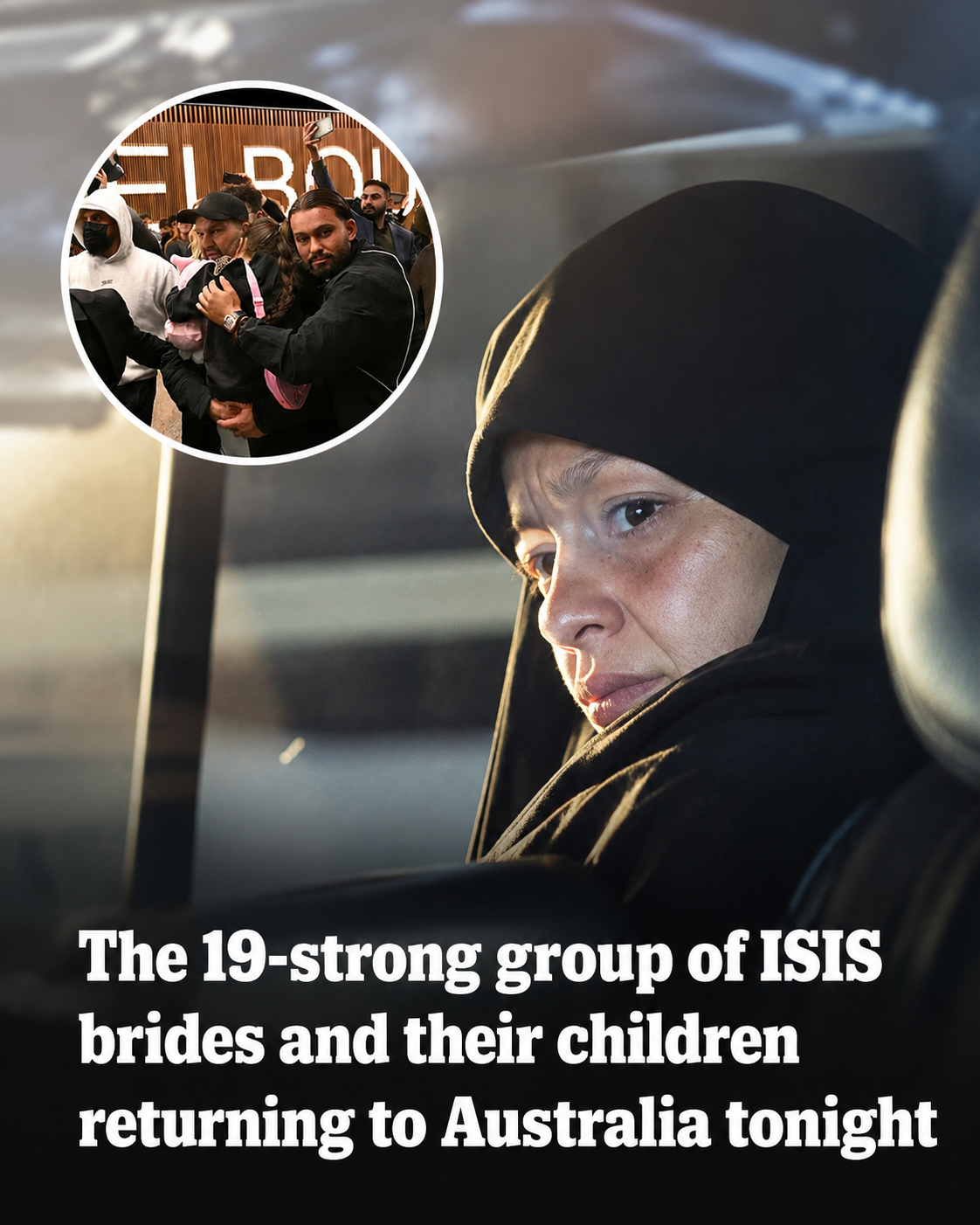
The return of ISIS-linked Australians is reopening a wider national debate over security risk, citizenship and public trust in government decision-making.
On the surface, this is a story about logistics, law enforcement and government process.
In reality, it is much bigger than that.
It reaches into some of the most emotionally charged questions in Australian public life, including terrorism, border control, citizenship rights, public safety and whether governments can truly manage long-term extremist risk once people return home.
Those questions are politically explosive because they do not sit neatly inside legal frameworks alone.
They live in the space between law, fear, memory and trust.
The immediate facts are serious enough.
Australian authorities have overseen the return of another group of women and children linked to ISIS detention camps in Syria, with police and intelligence agencies involved in managing the operation and assessing any associated risks.
This is not an improvised response.
Security agencies have spent years preparing for scenarios involving Australian citizens returning from conflict zones tied to extremist activity.
That preparation reflects how seriously governments take the issue.
But politically, it also creates another interpretation.
If authorities require a significant security response, many members of the public will naturally conclude that the threat itself must be serious.
That may not always be the full picture.
But public reaction rarely waits for detailed nuance.
For many Australians, the emotional question arrives immediately.
How did the country end up here at all?
How do people connected to one of the world’s most feared extremist movements ultimately return to Australian soil?
And if they are returning, how certain can the public be that every meaningful risk has been contained?
Those are not fringe questions.
They are exactly the questions many ordinary readers will ask within seconds of seeing the headline.
That is what gives this story political force.
The federal government’s legal position is relatively straightforward.
Australian citizenship creates legal obligations and protections.
Governments cannot simply block citizens from returning unless specific legal grounds exist.
Where criminal conduct can be proven, prosecution remains the intended path.
Where evidence thresholds are not met, authorities instead rely on intelligence monitoring, control mechanisms, assessment frameworks and long-term risk management tools.
That is the institutional answer.
Whether it satisfies public emotion is another matter entirely.
The emotional barrier here is obvious.
ISIS is not just another political label.
Even years after the territorial collapse of the so-called caliphate, the name still carries enormous emotional power.
It remains associated with terrorism, executions, radicalisation, foreign fighters, international instability and security failures that shaped public consciousness across multiple Western countries.
That history changes how every part of this story is interpreted.
A routine immigration matter would not provoke this reaction.
A normal repatriation story would not dominate debate in the same way.
But anything carrying the ISIS label enters a completely different emotional category.
That makes political communication exceptionally difficult.
Because this is not merely a procedural story.
It is a trust story.
And trust stories rarely remain contained for long.
For sceptical voters, reassurance from government institutions may not automatically calm concern.
In some cases, official reassurance may actually deepen suspicion.
If police are visibly mobilised, some observers will interpret that as confirmation of serious danger rather than proof of preparedness.
That psychological gap matters.
Because once public interpretation becomes emotionally anchored, detailed explanations become much harder to land.
This is exactly why stories like this spread aggressively through social media audiences.
They combine several emotionally potent ingredients at once.
National security anxiety.
Terrorism history.
Questions around citizenship.
Children caught in geopolitical fallout.
Government accountability.
Public safety concern.
Immigration politics.
That combination guarantees engagement because people do not need technical expertise to form strong instincts.
The political divide surrounding the issue is predictable.
Critics will argue Australia has been too permissive, too cautious about using exclusion powers or too optimistic about rehabilitation and monitoring.
Supporters of the government response will argue that democratic nations operate through law rather than emotional retaliation, and that citizenship rights do not disappear simply because a case becomes politically uncomfortable.
Both positions will resonate with different audiences.
That is precisely why the issue remains politically volatile.
There is also a serious humanitarian dimension that complicates simplistic reactions.
Not everyone returning occupies the same moral category.
Children, in particular, are often viewed very differently.
Many did not choose where they were taken, what environment they were raised in or the ideological circumstances surrounding them.
That creates a profound moral challenge for policymakers.
Governments are not simply managing a security file.
They are balancing security obligations, legal rights, humanitarian considerations and long-term social outcomes all at once.
That balancing act is far harder than headline politics suggests.
A purely punitive political response may satisfy public anger in the short term while creating other legal and humanitarian complications.
A softer humanitarian framing may immediately trigger accusations of weakness.
Neither path offers easy political safety.
The legal challenge is equally complex.
Public suspicion alone does not create prosecutable evidence.
Investigators need admissible material, sustainable legal charges and evidence that can survive court scrutiny.
That becomes significantly harder when alleged conduct occurred years earlier in unstable war zones with fragmented documentation and limited access to conventional investigative processes.
This is often where public expectation collides with legal reality.
Many citizens understandably assume that anyone associated with extremist territory should automatically face straightforward criminal consequences.
The justice system does not function on instinct alone.
It functions on provable evidence.
That distinction is legally fundamental.
Politically, it is much harder to explain.
This is where the deeper public trust question becomes central.
Do Australians trust security institutions to monitor risk effectively over the long term?
Do they believe intelligence agencies have the capacity required?
Do they trust governments to communicate honestly about threat assessments?
Do they believe rehabilitation pathways, where relevant, genuinely reduce risk?
Those questions often sit beneath controversies like this even when they are never stated directly.
And once trust becomes the real issue, the political lifespan of the story becomes much longer.
Because trust controversies evolve.
They rarely disappear overnight.
The citizenship angle guarantees another layer of debate.
Questions about what citizenship actually means during national security crises are deeply politically sensitive.
How far should exclusion powers go?
What obligations does a democratic nation retain toward citizens who became linked to extremist movements abroad?
Can legal citizenship and public trust ever fully align in emotionally charged terrorism cases?
Those are difficult questions without easy answers.
No political party gets a perfectly comfortable position here.
The current government will almost certainly continue emphasising process, law, monitoring and institutional preparedness.
That is the most defensible formal message available.
But public reaction to terrorism-linked stories is rarely shaped by calm legal reasoning alone.
Fear, memory and perceived vulnerability often shape interpretation far more powerfully.
That is why this story has lasting political energy.
Even if every operational safeguard works exactly as intended.
Even if every returnee is managed appropriately.
Even if no direct threat emerges.
The symbolism alone is enough to sustain debate.
For many Australians, the deeper question will not simply be whether authorities followed the correct procedure.
The deeper question will be whether the country should ever have been placed in this position at all.
And that is exactly the kind of question that keeps politically sensitive national security debates alive long after the airport operation itself is over.






