Australia’s housing debate has moved well beyond affordability frustration and into something much bigger.
It is now a direct political battle over how wealth is built, who gets access to property ownership and whether long-standing tax rules that shaped generations of financial planning are about to be fundamentally rewritten.
That makes this more than another Canberra policy argument.
It makes it a fight over the economic rules many Australians believed were stable.
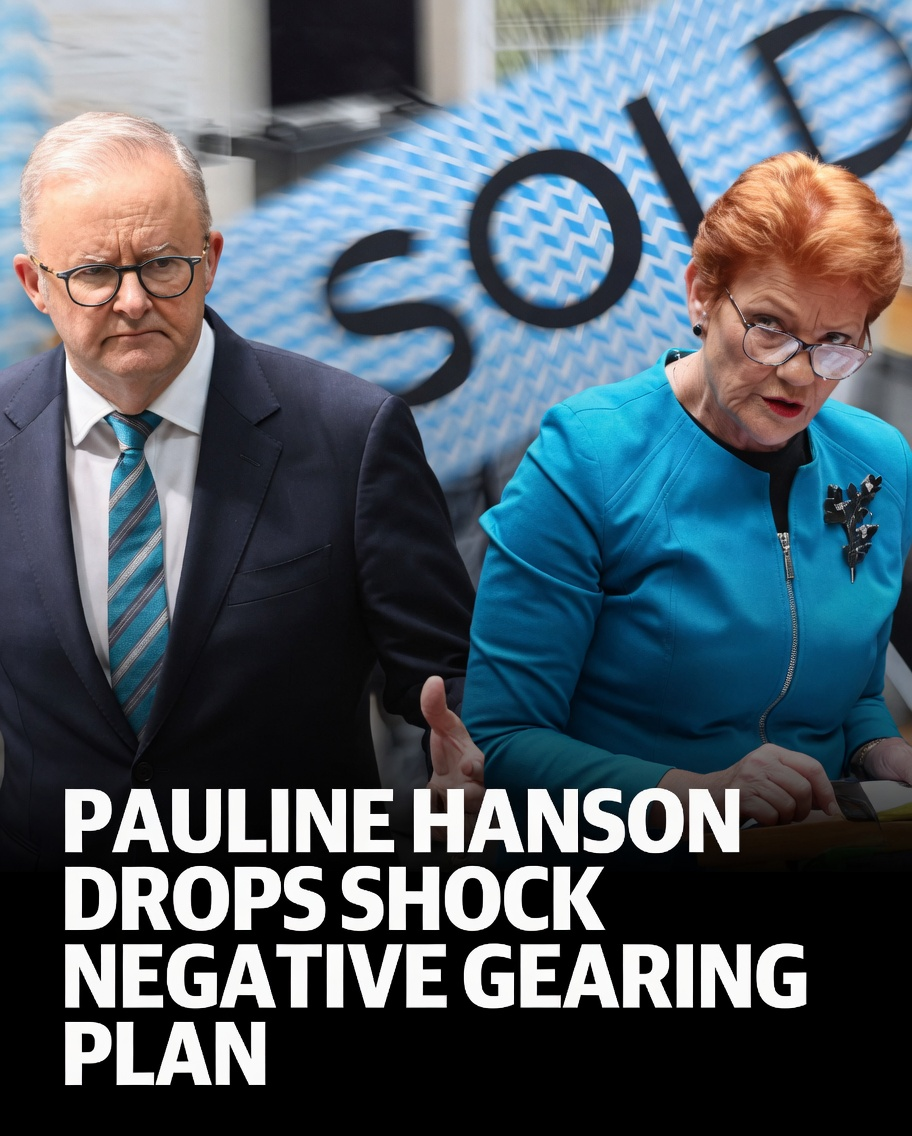
A fresh political fight over housing tax policy is reigniting questions about affordability, investment confidence, rental supply and whether Australia’s property wealth model is entering a permanent reset.
The immediate trigger is the escalating political conflict around negative gearing reform, one of the most emotionally charged features of Australia’s housing tax system.
Fresh pressure has intensified after Pauline Hanson proposed limiting negative gearing access to just two investment properties per person, inserting another major force into an already volatile housing reform fight.
That matters because the broader housing tax landscape is already shifting fast.
Once political leaders begin openly redrawing rules that were long treated as politically dangerous to touch, investors, renters, first-home buyers and lenders all begin recalculating their assumptions.
And assumptions are what property markets run on.
For decades, housing in Australia has been more than shelter.
It has functioned as a retirement strategy, a family wealth engine, a leverage vehicle, a perceived inflation hedge and, for many households, the single most important financial decision they will ever make.
That is why housing tax reform creates such unusually emotional reactions.
People do not hear “negative gearing reform” and think abstract policy mechanics.
They think mortgage repayments.
Retirement security.
Rent pressure.
Deposit hurdles.
The possibility their children may never buy.
That emotional intensity explains why housing debates rarely stay technical for long.
Negative gearing itself has always divided opinion sharply.
Supporters argue it reflects legitimate tax treatment for investment losses, rewards risk-taking and helps maintain private rental supply by keeping investors in the market.
Critics argue it distorts housing demand, disproportionately benefits existing asset holders and worsens affordability by encouraging investor competition for homes that owner-occupiers also want.
Neither argument is new.
What is new is the seriousness of current political momentum.
The Albanese government’s recent tax direction has already destabilised assumptions around investor concessions, pushing housing taxation back into the centre of national political combat.
That shift alone changes behaviour.
Markets do not wait for laws to pass before reacting.
Policy uncertainty is itself a market force.
An investor deciding whether to buy an established property, refinance, expand a portfolio or hold cash is not simply evaluating today’s rules. They are evaluating whether today’s rules still exist tomorrow.
That uncertainty can materially influence borrowing appetite, transaction volume and sentiment long before legislation takes effect.
This is where the affordability argument becomes brutally difficult.
Australia clearly has a housing stress problem.
Renters are under pressure.
First-home buyers remain frustrated.
Supply constraints continue biting.
Younger Australians increasingly see ownership as structurally harder than it was for earlier generations.
That political frustration is real.
But housing policy interventions often create trade-offs rather than clean victories.
If investor incentives are weakened too aggressively, critics warn rental supply could tighten further, borrowing demand could shift unpredictably and private capital may retreat from segments of the housing market.
If reform remains too timid, opponents argue affordability deterioration continues while incumbent asset holders remain protected.
That is why housing reform fights are politically vicious.
Every proposed fix creates a new group convinced they are being punished.
The intergenerational divide may be the most politically explosive dimension.
Older cohorts who entered the market under earlier pricing conditions often view property ownership as a reward for discipline, sacrifice and long-term planning.
Younger Australians increasingly see the same system as structurally tilted against them.
That difference in worldview is not just economic.
It is emotional.
And politics runs heavily on emotional fairness narratives.
That is why housing arguments often become identity arguments.
The rental market complicates everything further.
Supporters of investor tax concessions argue discouraging private landlords risks shrinking rental stock and driving rents higher.
Reform advocates counter that investor-friendly settings have not solved affordability and may have intensified speculative demand without fixing supply constraints.
The evidence debate remains contested, which means politics fills the certainty gap.
And politics rarely rewards nuance.
The business and finance implications are equally serious.
Housing policy does not sit neatly inside real estate pages.
It affects mortgage lending behaviour, household consumption confidence, banking exposure, construction pipelines and broader economic sentiment.
That is why financial markets pay close attention to what can look like “just” housing politics.
This is macroeconomic territory.
Not niche property commentary.
The Senate arithmetic adds another layer of instability.
When reforms require negotiation across competing political interests, outcomes become harder to model.
That uncertainty matters because uncertainty itself changes decision-making.
Households delay purchases.
Investors pause commitments.
Lenders reassess risk.
Developers watch sentiment.
Confidence becomes harder to price.
And confidence is central to housing behaviour.
The political messaging war is now clearly forming.
Reform advocates frame changes as overdue fairness correction.
Opponents frame them as attacks on aspiration, retirement planning and private housing investment.
Both narratives are strategically powerful because both connect with genuine anxieties.
That makes compromise harder.
The deeper question is whether Australia has become too dependent on property as its preferred household wealth machine.
That is a profoundly uncomfortable question because it challenges assumptions embedded across generations of economic behaviour.
If housing is not merely shelter but the primary engine of middle-class wealth creation, then changing tax incentives becomes more than policy reform.
It becomes structural economic redesign.
That is why reactions are so intense.
The trust question may ultimately matter most.
Do Australians believe housing reform is being pursued to genuinely improve affordability?
Or do they believe the rules are being destabilised without a coherent long-term model for what replaces them?
That distinction matters enormously.
Because once trust in the rules begins weakening, the effects spread far beyond investors.
They reach households, lenders, renters, developers and broader economic confidence.
This fight is no longer simply about negative gearing.
It is about who Australia’s housing system ultimately serves, and whether the country is entering a generational reset in how property ownership works.






