Australia’s political debate over hate crime laws is escalating fast, and the argument is no longer limited to terrorism or public safety.
It is now turning into a much broader fight over free speech, protest rights and whether different groups are beginning to receive different legal protections under the same system.
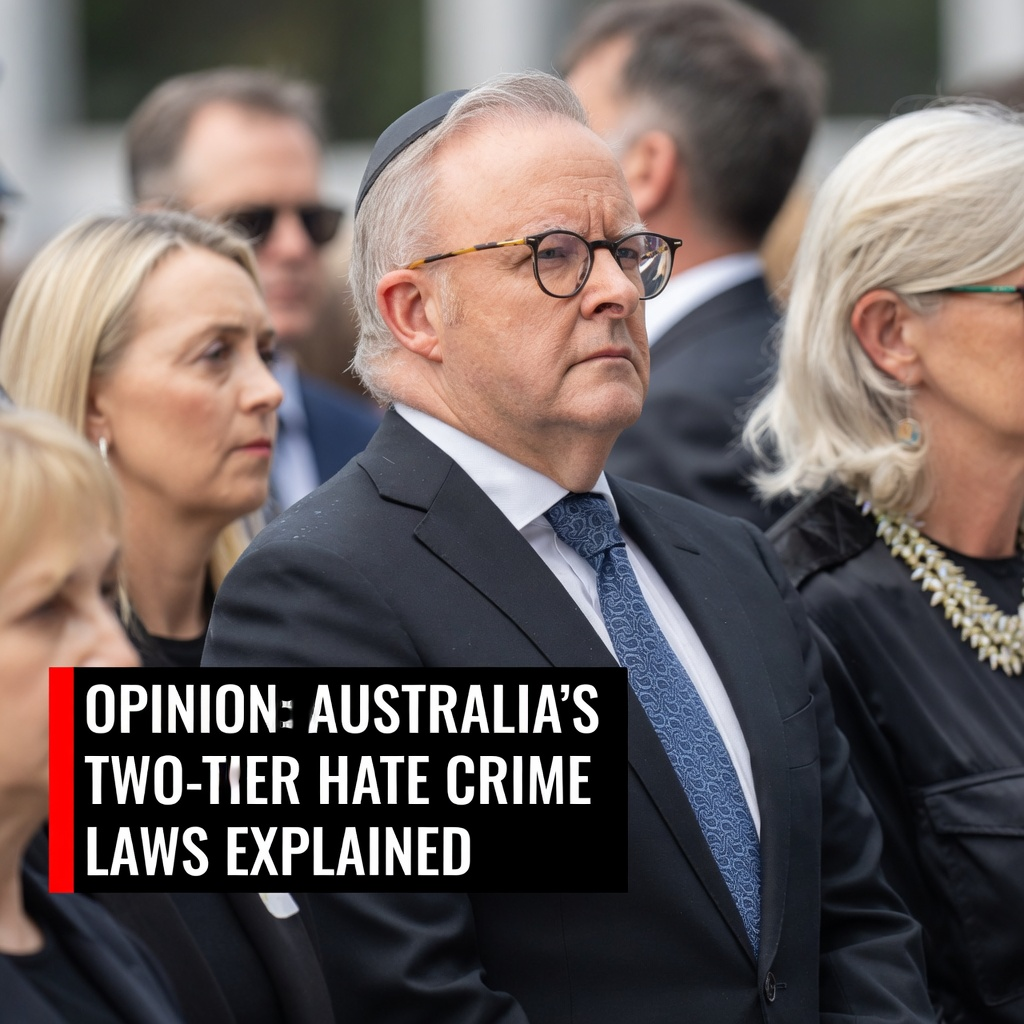
New hate crime laws introduced after the Bondi terror attack are reigniting fierce debate over civil liberties, extremism laws and how far governments should go when responding to public fear.
The latest controversy intensified after commentator Mark Collett published a strongly critical opinion piece arguing Australia’s new hate crime framework risks creating a “two-tier” legal system.
His comments quickly spread online because they tapped directly into a debate already building across the country since the Bondi terror attack shocked Australia late last year.
That attack changed the political atmosphere almost overnight.
The December shooting at a Jewish community event in Bondi Beach left 15 people dead and triggered one of the largest national security responses Australia has seen in years.
The scale of the violence created enormous pressure on governments to act quickly against extremism, antisemitic threats and organised hate activity.
Within weeks, new legislation targeting extremist organisations, hate-based offences and public incitement powers moved through parliament.
Supporters argue those laws were necessary after Bondi exposed serious weaknesses in Australia’s ability to respond to rising extremist threats.
The Bondi attack also intensified concerns around antisemitic violence, online radicalisation and organised hate activity, issues that have since dominated hearings connected to the Royal Commission on Antisemitism and Social Cohesion.
That context is central to understanding why the laws passed with such strong political momentum.
For many Australians, the legislation was seen as a direct response to a national trauma.
But critics argue the speed of the response is exactly what makes the situation risky.
Civil liberties groups, protest advocates and anti-censorship campaigners have increasingly warned that emergency-style political environments can produce laws that reach far beyond their original purpose.
That concern is now moving into mainstream political debate.
The controversy is no longer just about extremism.
It is about how broadly these powers could eventually be applied.
Some critics fear the laws may create uneven enforcement standards depending on which communities are involved, particularly during politically sensitive protests or online speech disputes.
Others argue stronger protections are justified because certain groups are facing disproportionate threats from organised hate and violence.
That divide is becoming sharper online.
Especially across debates involving migration, religion, race and national identity.
The government continues defending the legislation as necessary for public safety and social cohesion.
Officials have repeatedly pointed to the rise in extremist rhetoric and antisemitic incidents following the Bondi attack as evidence stronger powers were needed.
Recent royal commission hearings have also revealed widespread online abuse and threats directed at Jewish witnesses connected to the inquiry.
At the same time, legal challenges and public criticism have already started emerging around some protest restrictions introduced after the attack.
That has fuelled concern among critics that Australia may be drifting toward more aggressive speech regulation during periods of national tension.
The debate is becoming politically dangerous because both sides increasingly believe fundamental rights are at stake.
Supporters of the laws argue democratic societies must respond forcefully to organised hate and extremist violence before attacks escalate further.
Critics argue democracies can damage themselves if governments expand state power too aggressively during moments of fear.
That argument is now extending beyond parliament and into everyday public conversation.
Social media has accelerated the tension dramatically.
Complex legal debates are increasingly reduced into emotionally charged slogans about censorship, racism, extremism and national identity.
Nuance disappears quickly once the issue enters culture-war territory.
The Bondi attack still sits at the centre of the entire debate.
The scale of the violence shocked the country and pushed national security fears back into mainstream politics in a way Australia had not experienced for years.
That emotional backdrop continues shaping how every new law, protest restriction or hate crime investigation is interpreted.
Some Australians now believe stronger intervention is overdue.
Others increasingly fear the legal response could permanently reshape free speech boundaries long after the immediate security crisis fades.
The political pressure on governments is unlikely to ease soon.
If authorities soften their position, they risk appearing weak on extremism.
If they continue expanding restrictions too aggressively, they risk fuelling broader backlash around civil liberties and equal treatment under the law.
That balancing act is becoming harder as the debate grows more emotionally polarised.
And with more legal challenges, protests and political campaigns likely ahead, the fight over Australia’s hate crime laws now appears far from settled.






