Prime Minister Anthony Albanese has announced a sweeping package of measures aimed at tackling Islamophobia in Australia, committing around $66 million in new funding while expanding education programs, community security initiatives and policing resources.
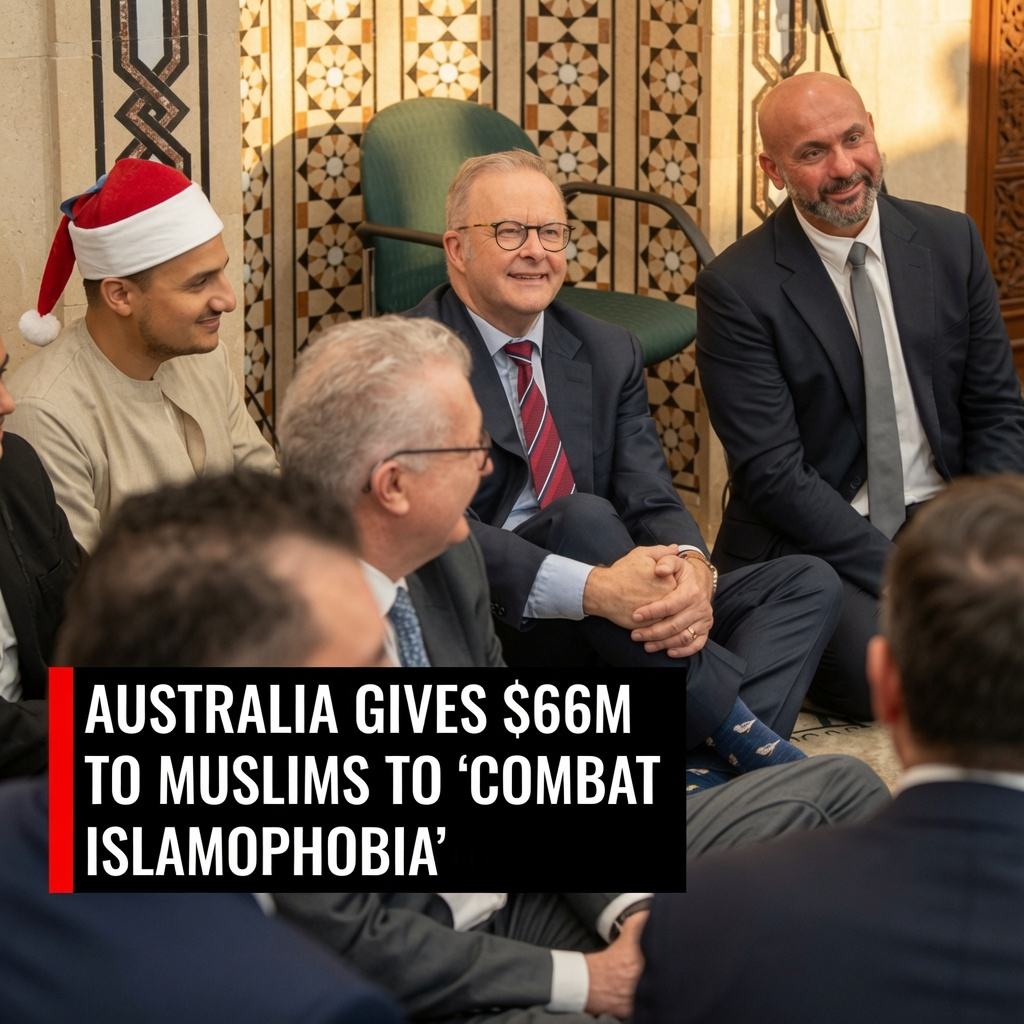
The announcement marks the federal government’s formal response to recommendations made by Australia’s Special Envoy to Combat Islamophobia, Aftab Malik. Canberra has accepted 35 of the envoy’s 54 recommendations, describing the package as part of a broader effort to strengthen social cohesion while addressing anti-Muslim discrimination.
“There is simply no place in Australia, or anywhere in the world, for Islamophobia and racial hatred,” Mr Albanese said when unveiling the government’s response.
He said reported incidents targeting Muslim Australians demonstrated that governments, institutions and communities all had a role to play in reducing discrimination and preventing religious hatred.
The largest component of the package is $41.9 million allocated to improve security at Muslim faith-based facilities. The funding is intended to assist mosques and other community locations with physical security upgrades following concerns about increasing threats against religious institutions.
The government also announced:
- A new Australian Federal Police Social Cohesion Team.
- Expansion of AFP Community Liaason Teams working with multicultural communities.
- Additional grants supporting Muslim women and young Australians.
- Funding for mental health and wellbeing services for Muslim students.
- $15 million towards a sporting facility for Muslim athletes.
- $2.6 million for the Office of Multicultural Affairs to coordinate anti-Islamophobia initiatives.
- Mandatory consideration of Islamophobia prevention measures across universities.
- Acceleration of a national hate crime database.
One of the most closely watched elements of the package is the creation of an Islamophobia Education Taskforce.
According to the Department of Education, the taskforce will oversee education initiatives from early childhood education through to universities.
Its work is expected to include teacher training, curriculum reviews and the development of new guidance aimed at strengthening racial and religious tolerance throughout Australia’s education system.
The government said the taskforce would work alongside a new Social Cohesion Education Advisory Council.
Among its responsibilities will be reviewing the Australian Curriculum to identify opportunities to strengthen teaching around religious tolerance, helping develop a Social Cohesion Framework for Schools, and assisting universities with nationally consistent anti-racism frameworks.
The reference to early childhood education has attracted particular attention because the review extends beyond primary and secondary schooling into preschool and childcare settings. Government officials have said the taskforce will consider age-appropriate approaches rather than introducing formal classroom instruction for very young children.
The measures form part of a broader strategy the Albanese government says is designed to improve community cohesion as Australia continues to become more religiously and culturally diverse.
Successive governments have periodically expanded security funding for religious organisations following periods of heightened community tensions. Similar programs have previously supported churches, synagogues, mosques and other places of worship where credible security risks existed.
The latest package arrives after authorities reported concerns about increasing incidents targeting both Muslim and Jewish Australians following heightened tensions linked to overseas conflicts.
The federal government has repeatedly stated that discrimination against any religious community is unacceptable and that responses should protect Australians regardless of their faith.
Not every recommendation made by Special Envoy Aftab Malik was adopted.
The government rejected proposals relating to Australia’s counter-terrorism legislation after receiving advice from national security agencies.
Mr Malik had argued that aspects of existing terrorism laws disproportionately affected Muslim communities and recommended changes to certain legal definitions. Mr Albanese said those recommendations would not proceed following consultation with security authorities.
Other recommendations calling for expanded hate speech and hate crime laws were also not fully implemented as originally proposed.
The government’s response instead focuses on education, community engagement, improved reporting mechanisms and institutional responses rather than broad legislative reform.
The Alliance of Australian Muslims and the Australian National Imams Council welcomed the government’s response, describing it as an important milestone while arguing additional reforms would still be needed.
In a joint statement, the organisations said the package represented an unprecedented step towards recognising the challenges experienced by Muslim Australians but maintained that further work remained ahead.
The announcement also carries political significance.
It follows an incident earlier this year when Prime Minister Albanese and Immigration Minister Tony Burke were heckled during a visit to Sydney’s Lakemba Mosque, Australia’s largest mosque. That event highlighted tensions between sections of Australia’s Muslim community and the federal government over international and domestic issues.
While Saturday’s announcement focuses specifically on combating Islamophobia, it is also part of a wider government agenda centred on social cohesion.
Federal ministers have increasingly emphasised the importance of maintaining community harmony amid growing geopolitical tensions and domestic concerns about religiously motivated abuse.
Australia has long promoted multiculturalism as a central element of national identity, with governments generally seeking to balance freedom of religion, freedom of expression and public safety.
The challenge for policymakers is determining where that balance should lie.
Supporters of the package argue that targeted investment can improve safety, reduce discrimination and strengthen trust between minority communities and public institutions.
Critics, however, have questioned whether allocating funding to initiatives focused on a single religious community risks creating perceptions of unequal treatment, particularly given existing programs supporting other faith groups.
The education reforms are also likely to attract continued public discussion as details emerge about how curriculum reviews and early childhood initiatives would be implemented in practice.
For now, the Albanese government says the measures represent an important step toward addressing documented anti-Muslim discrimination while reinforcing Australia’s broader commitment to social cohesion, religious freedom and community safety.






