One Nation leader Pauline Hanson has doubled down on her long-running campaign against the burqa and Australia’s immigration settings, telling delegates at the Conservative Political Action Conference (CPAC) in London that Australia had been “stupid” not to prohibit the full-face Islamic garment.
The remarks came during Hanson’s address to the inaugural British edition of the conservative conference, where she urged supporters to “stand our ground” against what she described as the growing influence of multiculturalism, mass immigration and progressive politics. The speech forms part of a wider European tour that has already generated significant political debate back home.
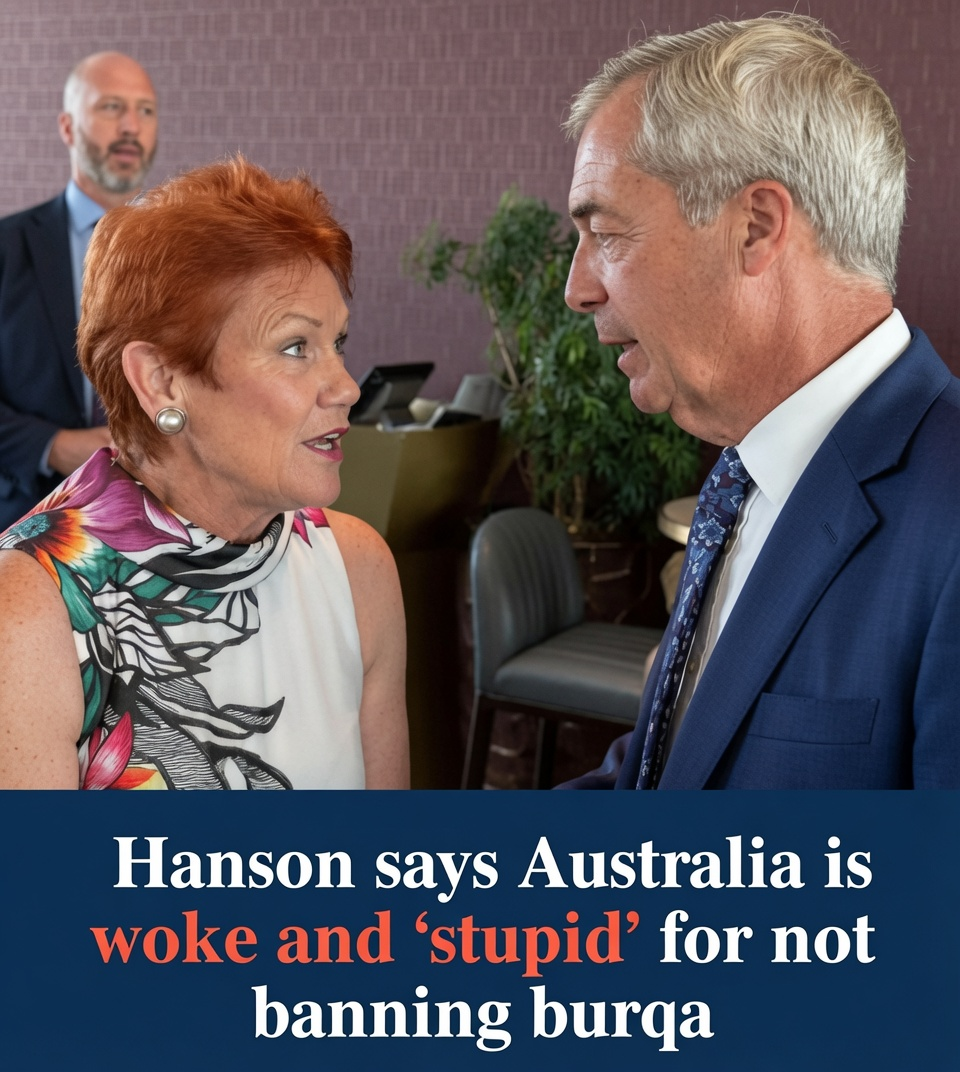
Addressing supporters, Hanson argued Australia should learn from what she believes has occurred in parts of Britain, claiming high migration had fundamentally altered communities and national identity.
“We have to stand our ground,” Hanson told attendees, warning Australia was heading in the same direction unless immigration policies were tightened.
Among her most controversial comments was renewed support for banning the burqa, with Hanson saying Australia had been “stupid” not to prohibit the garment. The issue has been central to her political messaging for years and remains one of the defining elements of One Nation’s platform on immigration and national security.
Hanson also criticised multiculturalism, arguing it had weakened social cohesion and encouraged communities to live separately rather than integrating into Australian society.
She claimed Australia remained “five to ten years behind England” but was following what she viewed as the same trajectory, particularly through sustained high migration levels.
The speech largely echoed themes Hanson has promoted throughout her political career, including calls for lower immigration, stronger border protection, greater emphasis on Australian cultural values and opposition to what she describes as identity politics.
Her appearance at CPAC came after several weeks in Britain and Europe, which Hanson has described as a fact-finding trip examining immigration policies and political movements gaining momentum across Western democracies.
While Hanson received a standing ovation from supporters attending the conference, the event itself attracted attention for a different reason. Media reports noted that her speech was delivered before a relatively small audience, with only a fraction of the available seats occupied inside the conference venue.
That did little to reduce the political reaction in Australia.
Government ministers and opposition figures criticised Hanson’s language, arguing it unfairly targeted Muslim Australians and risked inflaming community divisions.
Critics also questioned the broader message presented during the conference, particularly repeated claims that multiculturalism had failed and that immigration posed an existential threat to Western societies.
Hanson’s speech follows renewed scrutiny over comments she made during a podcast appearance with British far-right activist Tommy Robinson, where she again criticised Islam and Australia’s migration policies. Those remarks prompted fresh condemnation from political opponents, who accused the One Nation leader of promoting divisive rhetoric.
The burqa debate itself is not new in Australian politics.
Hanson has advocated banning face-covering Islamic garments for more than a decade, arguing they raise security concerns and conflict with Australian values. Her campaign has periodically returned to national attention through parliamentary motions and public statements.
One of the most memorable episodes occurred in 2017 when Hanson entered the Senate chamber wearing a burqa before demanding the garment be outlawed.
Then attorney-general George Brandis immediately rejected the proposal, warning against unnecessarily offending Australia’s Muslim community and stressing that national security agencies did not support such a ban. His response received bipartisan applause in the Senate and became one of the defining moments of that parliamentary debate.
More recently, Hanson again attempted to revive the issue by introducing legislation aimed at banning face coverings in public settings, although those efforts failed to gain parliamentary support.
Supporters of Hanson argue her position reflects legitimate concerns about integration, social cohesion and national security.
They contend Australians should be able to openly debate immigration levels and cultural change without being labelled racist or intolerant.
Opponents counter that existing Australian laws already address security concerns through identity verification requirements where necessary and argue that singling out religious clothing unfairly targets Muslim Australians while offering little practical benefit.
Australia has never introduced a nationwide prohibition on the burqa or niqab. Instead, governments have generally preferred targeted security measures requiring temporary removal of face coverings in specific circumstances such as airports, courts and identity checks.
The broader debate over immigration has nevertheless become increasingly prominent in Australian politics.
Cost-of-living pressures, housing shortages, infrastructure demand and record migration numbers have intensified public discussion about the pace of population growth.
One Nation has sought to capitalise on those concerns by advocating significantly lower migration levels, stronger border controls and policies favouring greater cultural assimilation.
Polling over recent months has suggested growing support for parties campaigning on immigration, although voter priorities remain divided between economic management, healthcare, housing affordability and taxation.
During her London appearance, Hanson also criticised what she described as the spread of “woke” politics and challenged discussions around white privilege and transgender rights.
She argued governments were becoming distracted by identity issues instead of addressing the practical concerns facing ordinary citizens.
Those themes closely mirrored speeches delivered by several other conservative speakers attending the conference, including former British prime minister Liz Truss and Australian Nationals Senate leader Bridget McKenzie, although McKenzie later distanced herself from some of Hanson’s specific comments regarding Islam.
CPAC itself has evolved into one of the most influential gatherings for conservative politicians and activists across several countries, particularly the United States, Australia and now Britain.
The conferences typically feature discussions on limited government, national sovereignty, border security, cultural issues and opposition to progressive social policies.
For Hanson, the London appearance also reinforced One Nation’s efforts to align itself with a broader international conservative movement at a time when anti-establishment and immigration-focused parties have gained momentum in parts of Europe.
The overseas trip has not been without controversy beyond politics.
Hanson has also faced repeated questions about her attendance at a Dolce & Gabbana fashion event in Sicily alongside mining billionaire Gina Rinehart and about who funded parts of the European visit. Hanson has maintained that Australian taxpayers did not pay for the private components of the trip but has declined to provide further details regarding some expenses.
Despite criticism, Hanson has shown little sign of moderating her message.
Instead, she has argued that growing public concern about immigration demonstrates Australians increasingly share many of the issues she has raised throughout her political career.
Whether those arguments translate into stronger electoral support remains uncertain, but they continue to ensure One Nation occupies a prominent place in Australia’s debate over migration, multiculturalism and national identity.
As Parliament prepares to resume and political parties position themselves on issues likely to dominate coming campaigns, Hanson’s latest overseas speech has once again placed immigration and cultural integration at the centre of Australia’s political conversation—while highlighting just how polarising those questions remain.






