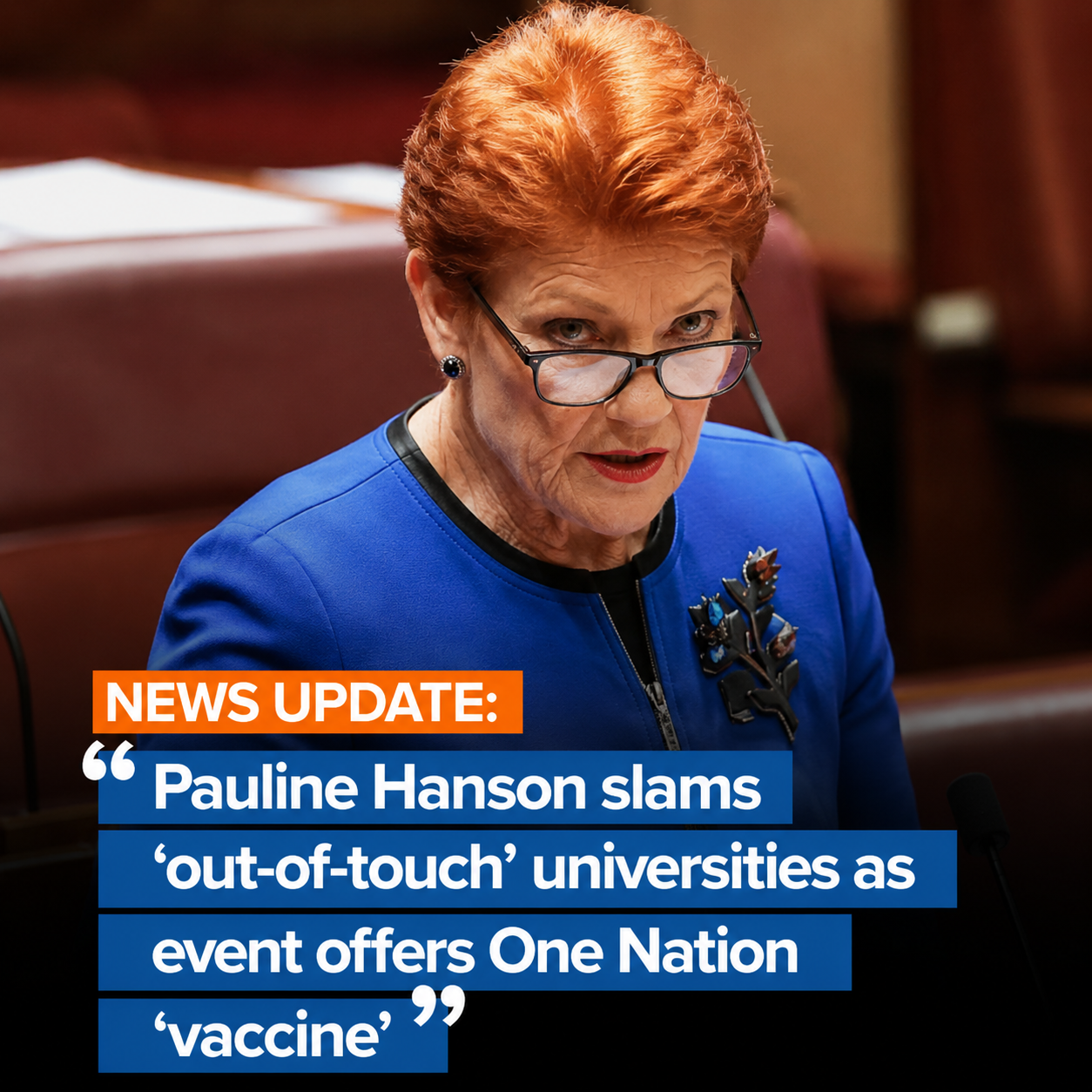
A growing political debate is putting Australia’s universities under renewed scrutiny, with critics arguing that higher education institutions are becoming increasingly disconnected from the concerns of everyday Australians.
The latest criticism centres on a question that extends far beyond politics.
What should universities actually be doing?
Should they focus almost exclusively on teaching skills, knowledge and workforce preparation, or should they also play a role in shaping broader social and political conversations?
That question has become increasingly prominent as public confidence in many institutions continues to evolve.
Universities have traditionally been viewed as places where ideas are challenged, research is conducted and future generations develop the skills needed to contribute to society.
However, critics argue that some campuses have become overly focused on political activism and ideological debates at the expense of practical education and career preparation.
The concern is not entirely new.
Arguments about academic freedom, political diversity and the role of universities have surfaced repeatedly across Australia over the past decade.
Recent disputes involving campus events, guest speakers and political activism have fuelled claims from some politicians that universities are increasingly out of step with mainstream community views. Recent controversies surrounding university-hosted discussions on political ideology have intensified those concerns among critics.
Supporters of universities reject the suggestion that institutions are failing in their mission.
They argue that higher education should encourage critical thinking, robust debate and exposure to competing viewpoints.
From that perspective, uncomfortable conversations are not evidence of failure but a fundamental part of academic life.
The disagreement highlights a deeper challenge facing the sector.
Australian universities are expected to serve multiple purposes at the same time.
They must educate students, conduct research, support innovation, contribute to economic growth and prepare graduates for a rapidly changing workforce.
Meeting all of those expectations simultaneously is becoming increasingly difficult.
The economic stakes are significant.
Higher education remains one of Australia’s largest export industries and contributes billions of dollars to the national economy each year.
Universities also play a critical role in training professionals across healthcare, engineering, education, technology and countless other fields.
Yet concerns about graduate outcomes continue to attract attention.
Many students are entering university with substantial financial commitments and expectations about future employment opportunities.
As the cost of living rises, families are increasingly asking whether degrees provide sufficient value for money.
That question has become particularly important for younger Australians.
Many graduates now face a combination of student debt, rising rents, higher house prices and growing competition within the labour market.
As a result, there is increasing pressure on universities to demonstrate clear pathways from education to employment.
Employers are also paying close attention.
Businesses consistently identify workforce shortages in critical sectors while simultaneously emphasising the importance of practical skills, adaptability and workplace readiness.
Many industry groups argue that stronger partnerships between universities and employers could help address these challenges.
This is where the debate often shifts from politics to economics.
Australians are investing significant public and private resources into higher education.
Taxpayers contribute through government funding while students and families often make substantial personal sacrifices.
Consequently, there is strong public interest in ensuring those investments deliver meaningful outcomes.
Academic freedom remains another important aspect of the discussion.
Universities have historically defended the principle that scholars and students should be able to explore ideas freely, even when those ideas prove controversial.
Supporters argue this freedom is essential for innovation, research and democratic debate. Discussions about academic freedom and political diversity on campus have remained an ongoing feature of Australia’s education debate for several years.
Critics, however, sometimes question whether ideological diversity is being protected equally across all viewpoints.
This concern has contributed to ongoing political disputes over the governance and culture of higher education institutions.
The broader public appears increasingly interested in these questions because universities influence more than just students.
They help shape future leaders, professionals, researchers and policymakers.
Their impact extends throughout society and the economy.
That influence means debates about university priorities often become debates about Australia’s future.
How should young Australians be prepared for the workforce?
What skills will be most valuable in the decades ahead?
How can institutions encourage critical thinking while maintaining public confidence?
These questions are unlikely to disappear anytime soon.
Rapid technological change, artificial intelligence, workforce disruption and economic uncertainty are transforming expectations placed on education providers.
Universities will increasingly face pressure to demonstrate relevance not only to academic communities but also to employers, taxpayers and students themselves.
Ultimately, most Australians probably agree on one fundamental goal.
They want universities that produce capable graduates, support economic growth and equip young people with the knowledge needed to succeed in a competitive world.
The disagreement lies in how those objectives should be achieved.
As political and cultural debates continue to unfold, Australia’s universities are likely to remain at the centre of an important national conversation about education, opportunity and the future direction of the country.






