Prime Minister Anthony Albanese is facing renewed scrutiny over political fundraising and transparency after attending a private dinner at a luxury Sydney mansion hosted by businessman Felix Lee, amid reports linking the gathering to a substantial donation to the Australian Labor Party.
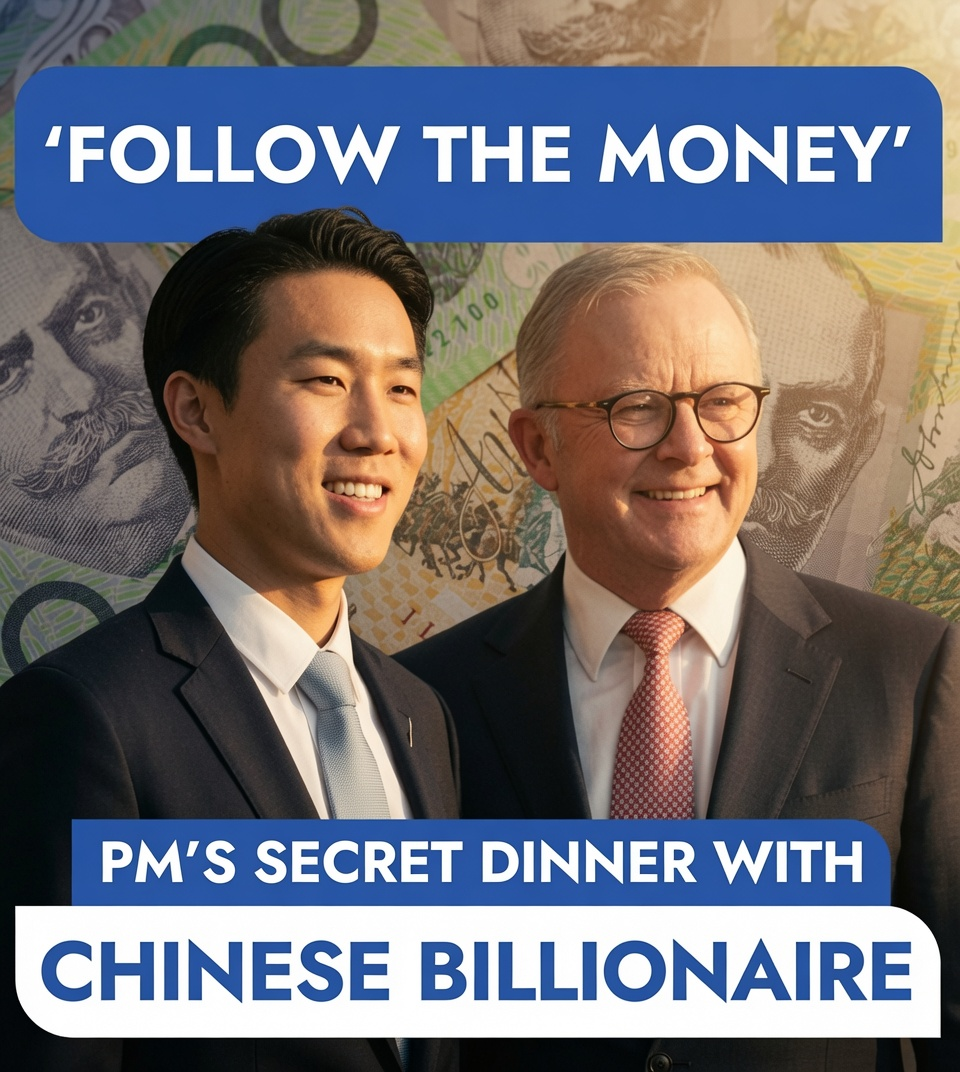
The invitation-only event took place on Monday evening at Mandalay, a landmark waterfront property in the exclusive harbourside suburb of Point Piper. Media reports said only a small group of prominent guests attended the dinner, including senior business leaders and former political figures.
Attention quickly focused on the gathering after reports suggested it had been organised alongside a proposed donation of around A$1 million to the Labor Party.
However, that figure has since been disputed.
Senior Labor sources familiar with the event told Australian media that while the dinner was a fundraising function, it was not built around a single A$1 million contribution. Instead, they said guests typically contribute between A$5,000 and A$10,000 to attend similar events with the Prime Minister, placing the total amount raised much closer to A$100,000.
The Prime Minister’s Office declined to discuss the private meeting itself.
In a statement provided to media, a spokeswoman said the government does not comment on private meetings and noted that political donations are a matter for the Australian Labor Party, with all reportable contributions declared in accordance with Australia’s electoral laws.
The dinner was hosted by Felix Lee, a 25-year-old businessman who has established the Lee Family Office to oversee the Australian investment interests of his family.
His father, Phillip Dong Fang Lee, is a wealthy property developer and businessman whose gambling activity at Sydney’s Star Casino has previously attracted regulatory attention. Phillip Lee has also been involved in a long-running tax dispute with the Australian Taxation Office.
The Lee family’s Australian business interests extend across property, finance and hospitality.
Felix Lee has also been associated with digital banking venture in1Bank, which ceased operations after encountering regulatory challenges during its development.
Among those reported to have attended Monday night’s dinner were Commonwealth Bank chief executive Matt Comyn, former Victorian premier Dan Andrews, former Future Fund chairman David Murray, former Australian Securities and Investments Commission chairman James Shipton and former HSBC Australia chief executive Antony Shaw.
The presence of such a high-profile guest list has intensified public interest in the event, particularly because it occurred during a period of heightened debate over political fundraising and access to senior government figures.
Political fundraising dinners are a longstanding feature of Australian politics.
Both the Australian Labor Party and the Coalition regularly organise fundraising events where businesses, industry groups and individual supporters pay to attend dinners, breakfasts or policy discussions with senior ministers and party leaders.
Such events are lawful, provided political donations and fundraising comply with disclosure requirements under Australia’s electoral laws.
Under the Commonwealth Electoral Act, political parties are required to disclose donations above legislated reporting thresholds through returns submitted to the Australian Electoral Commission. Those disclosures are published publicly, although they often occur well after the fundraising event itself.
Even so, large political donations frequently attract public scrutiny because of concerns about transparency, influence and public confidence in government decision-making.
While there is no evidence that any improper conduct occurred at the Point Piper dinner, the private nature of the gathering and conflicting reports about the amount involved have prompted questions from political observers and opposition figures.
At the centre of the discussion is the distinction between lawful political fundraising and perceptions of privileged access.
Successive governments from both major parties have faced criticism over fundraising events that allow business leaders and wealthy donors to meet ministers or party leaders in private settings.
Transparency advocates have long argued that the public should be able to see more quickly who is contributing significant sums to political parties and whether those donors subsequently receive government access or policy influence.
The Albanese Government has previously committed to reforms aimed at strengthening transparency around political donations and reducing the influence of large financial contributions on Australia’s electoral system.
The current controversy is therefore likely to be viewed through that broader policy debate.
Another aspect drawing attention is the Lee family’s growing profile within Australian business circles.
Former federal treasurer Joe Hockey serves as chairman of the Lee Family Office, while his advisory firm, Bondi Partners, has been registered as a lobbyist acting for the organisation. Those connections have further fuelled interest in the family’s expanding network of relationships across politics, finance and business.
Media reports also noted that former Victorian premier Dan Andrews was seen with Felix Lee again the following day at Terrey Hills Golf and Country Club, another business linked to the Lee family. Neither Andrews nor Lee publicly commented on the nature of those meetings.
Despite speculation surrounding the fundraiser, no evidence has emerged that government policy, contracts or regulatory decisions were discussed during the Point Piper dinner.
Nor has any allegation of unlawful political donations been made.
The principal questions raised publicly concern transparency, political fundraising practices and the appearance of access to senior decision-makers rather than claims of illegality.
Australia has experienced several high-profile controversies involving political donations over the past decade, particularly where wealthy overseas-linked business figures have sought to build relationships with political parties.
Those episodes have led to tighter foreign donation laws and greater public attention on the source and disclosure of political funding.
Current legislation prohibits foreign political donations while requiring Australian political parties to report eligible domestic contributions above disclosure thresholds.
For the Albanese Government, the Point Piper dinner is unlikely to create immediate legal consequences, but it has revived broader questions about how political fundraising should operate and how governments balance legitimate engagement with business leaders against public expectations of openness and accountability.
Whether the reported donation ultimately proves to be significantly smaller than initially suggested or matches early speculation, the episode illustrates the intense scrutiny that accompanies private fundraising involving serving prime ministers.
As further disclosure information becomes available through Australia’s political donations regime, greater clarity is expected about the size of contributions associated with the event and how they were reported to electoral authorities.






