Prime Minister Anthony Albanese has come under renewed scrutiny after parliamentary expense records revealed taxpayers funded flights for his wife and adult son to attend the 2026 Federal Budget night in Canberra, prompting fresh debate over the use of family travel entitlements during Australia’s ongoing cost-of-living pressures.
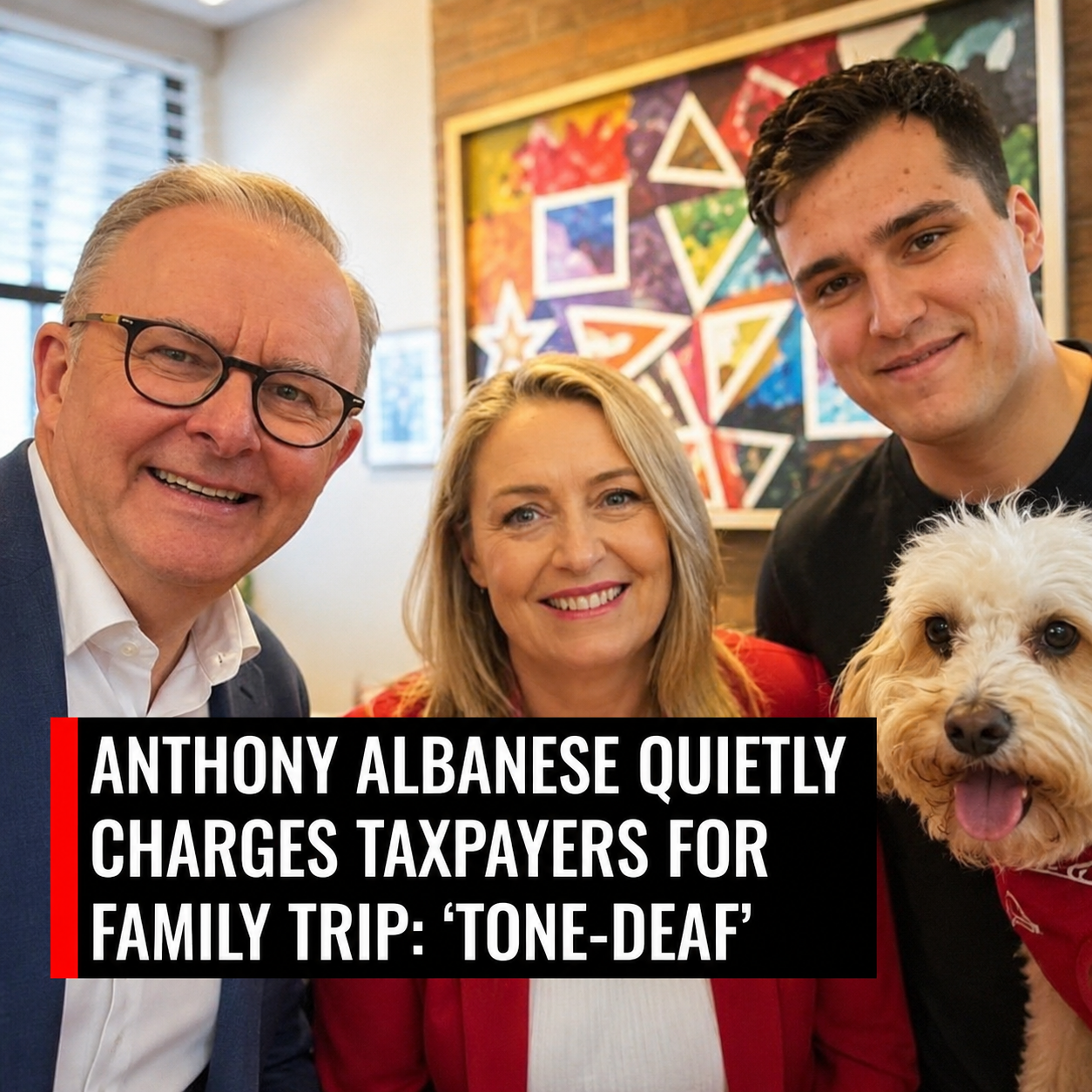
The travel was funded through the parliamentary family reunion allowance, an entitlement available to eligible federal parliamentarians and senior office holders when undertaking official parliamentary duties.
According to reports, Mr Albanese’s partner, Jodie Haydon, and his adult son, Nathan Albanese, travelled to Canberra for Budget night at taxpayer expense. Treasurer Jim Chalmers also claimed the allowance for members of his family attending the event, with the combined travel cost reported to be approximately $4,200.
The claims were made under existing parliamentary expense rules, and there is no suggestion that either Mr Albanese or Mr Chalmers breached the entitlement framework. Australia’s Independent Parliamentary Expenses Authority (IPEA) permits eligible family reunion travel in circumstances where the parliamentarian is travelling primarily for parliamentary business and the travel facilitates family life.
However, while the expenses appear to comply with the rules, critics argue the decision reflects poor judgement at a time when many Australian households continue to face rising mortgage repayments, elevated grocery prices and broader cost-of-living pressures.
Political commentator Peter van Onselen described the decision as “tone-deaf”, arguing taxpayers should not be expected to fund what he characterised as a family show of support during Budget night.
“Taxpayers shouldn’t be expected to cover the travel bill for what was essentially a family cheer squad,” he reportedly said, adding that Budget night traditionally centres on the Treasurer’s presentation rather than the Prime Minister.
Opposition figures have similarly argued that although the expenditure complied with parliamentary rules, elected representatives should exercise greater restraint when using public money during a period of economic hardship.
The latest revelations have emerged amid broader public scrutiny of parliamentary family travel entitlements.
Over recent months, several federal ministers from both government and opposition have faced questions over taxpayer-funded travel involving family members. Communications and Sport Minister Anika Wells referred her own travel claims to the Independent Parliamentary Expenses Authority for audit following criticism over family trips linked to major sporting events. Trade Minister Don Farrell and Attorney-General Michelle Rowland have also faced public attention over aspects of their family travel expenses.
The controversy has fuelled wider discussion about whether Australia’s parliamentary travel rules continue to reflect community expectations.
Under the current framework administered by the IPEA, eligible parliamentarians can claim family reunion travel when parliamentary duties require them to spend extended periods away from home. Senior office holders, including the Prime Minister and Cabinet ministers, have access to additional entitlements recognising the demands of their roles.
The framework is designed to help maintain family relationships while MPs undertake official duties across Australia. Importantly, eligibility depends on meeting specific administrative requirements rather than whether the accompanying family members attend public events.
Supporters of the existing system argue that federal politicians often spend lengthy periods travelling between Canberra, their electorates and interstate engagements, making family reunion provisions a reasonable employment entitlement.
Former officials and governance experts have previously noted that the debate should distinguish between conduct that breaches parliamentary rules and conduct that may simply fall short of public expectations.
Critics, however, argue that legality alone is not enough.
They contend that ministers should consider the broader message sent when claiming taxpayer-funded travel during a period in which many Australians are making significant financial sacrifices.
The timing of the latest criticism is particularly sensitive because the Federal Budget included several significant tax and fiscal policy changes that generated strong political debate.
Although supporters of the government’s Budget argued the measures were designed to improve long-term fiscal sustainability and fund priority spending, opponents criticised several tax reforms and accused Labor of increasing financial pressure on Australian households.
The controversy has also reignited calls for reform of parliamentary expenses.
Following months of scrutiny over politicians’ travel claims, several parliamentarians across the political spectrum have supported reviewing the family reunion travel scheme to ensure it better reflects modern community standards.
Potential reforms discussed publicly have included restricting eligible travel destinations, requiring economy-class travel for family members, tightening approval criteria and increasing transparency around claims.
Prime Minister Albanese has previously defended the use of family reunion entitlements, stating that his claims were made in accordance with the rules established by the parliamentary expenses framework.
The Prime Minister’s office has consistently maintained that all disclosures have been appropriately reported and comply with IPEA requirements.
For now, there is no indication of any investigation into Mr Albanese’s Budget night travel, nor any allegation that parliamentary rules were breached.
Nevertheless, the episode illustrates the increasing political sensitivity surrounding government spending and parliamentary entitlements at a time when Australians remain focused on household budgets and value for taxpayer money.
As debate over parliamentary expenses continues, pressure is likely to remain on both major parties to demonstrate not only compliance with official rules but also that decisions involving public funds align with community expectations.






