Prime Minister Anthony Albanese has delivered one of his strongest rebukes yet of Pauline Hanson’s comments about Islam and Australia’s multicultural identity, arguing political leaders have a responsibility to strengthen social cohesion rather than inflame divisions.
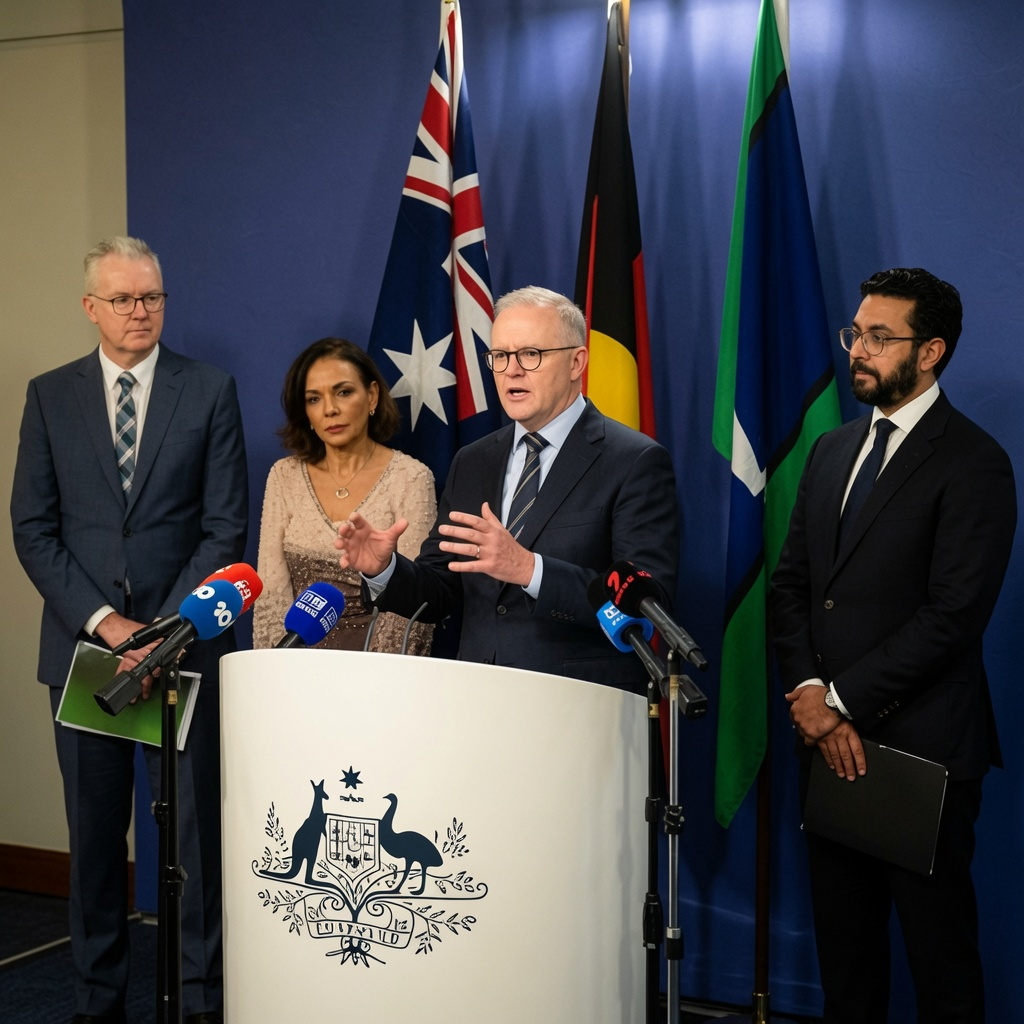
The Prime Minister’s remarks came as the federal government unveiled its long-awaited response to Australia’s national report into Islamophobia, announcing a package of measures designed to better protect Muslim Australians, improve reporting of hate incidents and strengthen education programs aimed at combating religious prejudice.
Speaking in Sydney, Mr Albanese said Islamophobia remained a growing concern and warned that inflammatory rhetoric from public figures risked undermining Australia’s multicultural foundations.
“Islamophobia has no place in Australia,” the Prime Minister said.
“We have seen a rise in Islamophobic attacks and abuse directed at Muslim Australians.”
Without directly engaging in an extended political exchange, Mr Albanese nevertheless made clear he rejected Pauline Hanson’s recent comments regarding both Islam and Australia’s abandonment of the White Australia policy.
The controversy follows Senator Hanson’s appearance on a podcast hosted by British far-right activist Tommy Robinson, where she suggested Australia’s immigration challenges began after the White Australia policy was abolished in 1973. She also previously linked Islam with terrorism during another podcast interview, drawing criticism from political opponents and community leaders.
Asked about those remarks, the Prime Minister argued Australia’s modern identity had been built through decades of successful migration.
“I have seen Senator Hanson’s comments that say Australia got it wrong when we moved away from the White Australia policy in 1973,” Mr Albanese said.
He stressed that dismantling the policy had not been solely a Labor initiative, noting the shift began under bipartisan political support during the 1960s before being formally completed by the Whitlam Government.
“That was a good thing,” he said.
Mr Albanese said Australia’s success had been built by generations of migrants who chose the country as their home while contributing to its economy, culture and national identity.
“Modern Australia is made up of, with the exception of First Nations people, people who’ve come from all over the world to make Australia their home, to have a better life.”
The Prime Minister said Australians should always be able to practise their religion freely while sharing a common commitment to the nation.
The comments coincided with the government’s official response to the 54 recommendations contained in the report prepared by Special Envoy to Combat Islamophobia Aftab Malik, which was delivered almost ten months ago.
The government accepted many of the recommendations while declining others, particularly proposals involving Australia’s counter-terrorism framework. Instead, ministers said national security laws would continue to be guided by advice from intelligence and security agencies.
Among the new initiatives announced are additional funding for security at Muslim institutions, expanded support services for Muslim women, improved hate-crime reporting, stronger education initiatives in schools and universities, and new programs designed to strengthen community cohesion. The government has also established a 12-month Islamophobia Education Taskforce to work with education authorities across Australia.
Mr Albanese said prejudice was not an inevitable part of Australian society.
“Prejudice is something that isn’t normal; isn’t intrinsic to human endeavour, it’s something that is taught,” he said.
“Political leaders have a responsibility to promote social cohesion in this country.”
Special Envoy Aftab Malik welcomed the government’s response but made clear he would continue advocating for recommendations that remain outstanding.
He described the report as his independent advice to government and said it should continue serving as the benchmark for future progress.
“Where the government has acted, I will support that progress. Where recommendations remain outstanding, I will continue to advocate for them,” Mr Malik said.
Asked directly about Senator Hanson’s comments describing much of Islam as being based on terrorism, Mr Malik responded by quoting the Qur’an, emphasising peace rather than confrontation.
He argued that political rhetoric could have real-world consequences for communities and urged leaders to avoid language that deepened division.
Home Affairs Minister Tony Burke also delivered a forceful defence of Australia’s multicultural identity.
He said he never imagined an elected Australian parliamentarian would advocate ideas associated with the White Australia policy during his political career.
“Part of saying you love Australia is to love Australia for who we are,” Mr Burke said.
He warned against attempts to redefine Australian identity through exclusion or fear, arguing the country’s diversity represented one of its greatest strengths rather than a weakness.
The White Australia policy, introduced following Federation in 1901, restricted non-European immigration through a range of legislative measures and administrative practices. Over several decades those restrictions were gradually dismantled before the policy was formally abandoned in 1973, allowing Australia to transition towards a non-discriminatory immigration system that now underpins its multicultural framework.
Successive governments from both major parties have since defended multiculturalism as central to Australia’s national identity, despite ongoing political debate surrounding immigration levels, border security and integration.
Senator Hanson’s recent comments have reignited those debates, particularly following her appearance alongside Tommy Robinson, a controversial British far-right activist whose views have attracted widespread criticism internationally.
While Hanson has continued arguing that Australia needs lower migration and stronger integration policies, her references to the White Australia policy have generated condemnation across much of the political spectrum. She has subsequently insisted she was not advocating for its return, although critics argue her comments implied nostalgia for the former system.
The government’s response to Mr Malik’s report also reflects broader concerns about increasing religiously motivated abuse since international tensions surrounding conflicts in the Middle East intensified over recent years.
Officials say the new measures aim to improve protection for vulnerable communities while balancing Australia’s existing national security framework.
Not every recommendation was adopted. The government rejected proposals to revise Australia’s legal definition of terrorism and declined calls for broader reviews of counter-terror legislation, arguing those decisions should continue relying primarily on expert advice from national security agencies rather than political considerations.
Mr Albanese defended that position, saying governments must ultimately make decisions based on the best available intelligence advice.
“We operate our terror laws on the basis of appropriate advice from national security agencies,” he said.
The Prime Minister said Australians were entitled to hold differing political opinions but argued disagreement should never undermine the country’s commitment to peaceful coexistence.
He concluded that the government’s objective was not simply to respond to one report, but to reinforce the values that have shaped modern Australia over decades.
“Every Australian deserves to be safe, respected and at home in our country,” he said.
As debate over immigration, multiculturalism and national identity continues, the government’s latest response places renewed emphasis on education, community protection and responsible political leadership as central elements in maintaining Australia’s social cohesion.






