Australian politics has entered a new phase of competition on the centre-right, with Opposition Leader Angus Taylor making One Nation one of his primary political targets. While Taylor argues the minor party’s policies would damage Australia’s economy, critics believe the strategy risks dividing conservative voters at precisely the moment the Coalition should be focused on defeating Labor.
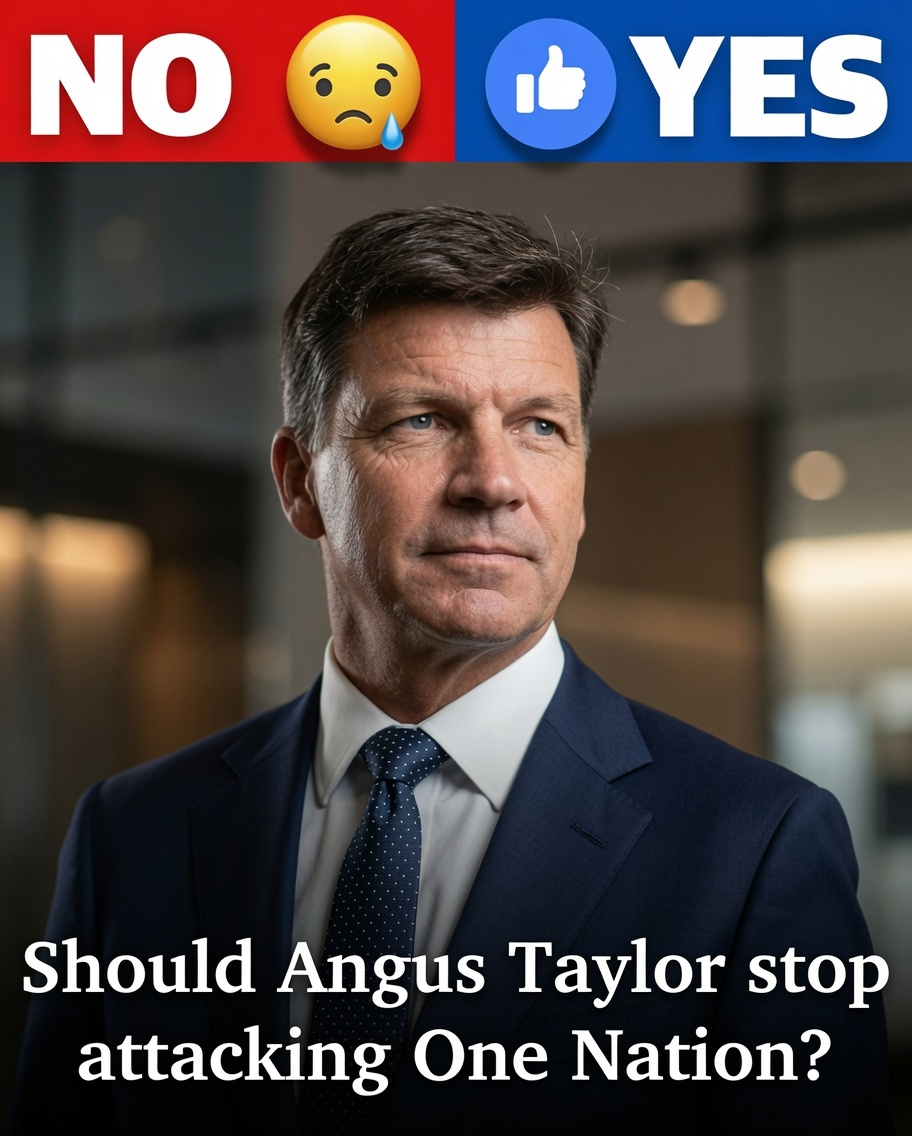
Rather than presenting a united alternative government, the Coalition now finds itself engaged in two political battles at once—one against Anthony Albanese’s Labor government and another against Pauline Hanson’s resurgent One Nation.
For many conservative commentators, that second fight is proving increasingly difficult to understand.
Opinion writer Kylie Lang argues Angus Taylor’s public attacks on One Nation are handing Labor an unnecessary political advantage. Her central argument is straightforward: every minute spent criticising another conservative party is a minute not spent holding the government to account over inflation, housing affordability, taxation and declining living standards.
That view reflects a growing debate inside Australia’s conservative movement about how the Coalition should respond as One Nation attracts support from voters frustrated with both major parties.
Taylor has made his position unmistakably clear.
During a major speech at the Sydney Institute, he described One Nation as “a column of smoke”, accused the party of lacking coherent economic policies and argued that just a handful of its proposals could cost taxpayers around one trillion dollars over a decade. He warned a One Nation government would produce higher inflation, higher interest rates and greater mortgage costs.
He later reinforced that message by ruling out any formal Coalition arrangement with Pauline Hanson’s party.
“I’m ruling it out,” Taylor said, insisting there would be no Coalition agreement with One Nation while arguing its policies would leave Australia with “an eternity of pain.”
Those remarks represented the strongest criticism of One Nation from a Coalition leader in years.
The political calculation behind the strategy is understandable. Taylor wants voters to see the Coalition as the only credible alternative government while portraying One Nation as incapable of governing responsibly.
However, critics argue politics rarely operates that neatly.
Unlike Labor’s long-standing relationship with the Greens—where preference flows often benefit the broader progressive side of politics—the Coalition faces the challenge of competing with One Nation for many of the same voters.
That creates a delicate balancing act.
Attack too softly, and voters may drift toward One Nation.
Attack too aggressively, and some disillusioned conservatives may decide the Coalition has become part of the political establishment they no longer trust.
Kylie Lang contends Taylor has crossed that line. Rather than persuading One Nation supporters to return to the Liberal Party, she argues the attacks risk pushing them further away while distracting attention from Labor’s vulnerabilities on the economy and cost of living.
The timing is also significant.
Australian voters continue to rank housing affordability, inflation, mortgage pressure and everyday living costs among their biggest concerns.
These are traditionally issues on which opposition parties seek to maximise pressure against an incumbent government.
Instead, much of the recent political discussion has focused on the relationship between the Coalition and One Nation.
Taylor himself has argued that Labor created Australia’s current economic problems and has repeatedly accused the government of excessive spending, bureaucracy and policies that have undermined productivity.
But every interview devoted to explaining why One Nation’s policies are dangerous inevitably reduces time spent prosecuting that broader case against Labor.
Whether voters ultimately see this as strategic discipline or misplaced priorities remains an open question.
The Coalition’s dilemma has been building for months.
One Nation has enjoyed periods of renewed momentum by campaigning heavily on immigration, cost-of-living pressures, government spending and dissatisfaction with Australia’s political establishment.
Although polling has fluctuated in recent weeks, the party continues to attract voters who previously supported both Labor and the Coalition, making it an increasingly important player despite Australia’s preferential voting system.
Political analysts note that many of these voters are motivated less by ideological loyalty than by frustration with major parties.
For that reason, harsh attacks on One Nation may not necessarily persuade those voters to return to the Coalition.
Instead, some may interpret the criticism as confirmation that One Nation is challenging the political status quo.
That dynamic has complicated the Coalition’s strategy.
Only weeks earlier, internal messaging reportedly encouraged Coalition figures to focus overwhelmingly on Labor rather than elevating One Nation in public debate.
Taylor’s more direct confrontation therefore marked a noticeable shift.
Supporters argue the change was necessary.
From their perspective, an aspiring government must clearly distinguish itself from parties whose policies it considers economically irresponsible.
Taylor has consistently argued that credibility matters and that Australians deserve to know which policies the Coalition believes would damage the economy.
His supporters also argue that failing to challenge One Nation would risk allowing unrealistic promises to go unanswered.
Critics respond that elections are rarely won simply by pointing out flaws in competing opposition parties.
Governments are generally defeated when voters become convinced the opposition offers a more compelling alternative.
That is where Lang believes Taylor’s focus has become counterproductive.
Rather than spending political capital fighting One Nation, she argues the Coalition should devote virtually all of its energy to exposing Labor’s record on housing, taxation, government spending and declining living standards.
The broader strategic question extends beyond the next election.
Centre-right politics in Australia has become increasingly fragmented, mirroring developments seen in several other Western democracies.
Traditional conservative parties now compete with smaller populist movements for many of the same voters.
That competition creates difficult choices.
Should major conservative parties attempt to win those voters back through stronger policy differentiation?
Should they ignore smaller challengers entirely?
Or should they seek areas of common ground while maintaining separate identities?
Australia’s preferential voting system means those decisions carry significant electoral consequences.
Preference flows can determine outcomes in closely contested seats, making relationships between parties almost as important as primary vote shares.
At the same time, political leaders must balance electoral mathematics with policy credibility.
Taylor has repeatedly rejected any suggestion that electoral convenience should override economic principles.
He maintains that One Nation’s economic agenda would ultimately make Australians worse off, regardless of its popularity among some voters.
Whether that argument resonates remains to be seen.
Recent polling suggests both major parties continue to face significant challenges with voter satisfaction, while support for minor parties remains an influential feature of Australia’s political landscape.
For Labor, the public disagreement on the conservative side may prove politically useful if it shifts attention away from the government’s own record.
For the Coalition, the challenge is more complicated.
It must convince Australians it offers a credible alternative government while simultaneously preventing further erosion of support among conservative voters attracted to One Nation.
That balancing act may become one of the defining political tests of Angus Taylor’s leadership.
Ultimately, the debate is no longer simply about One Nation itself.
It is about how Australia’s centre-right should respond to a changing electorate, rising political fragmentation and growing public frustration with traditional politics.
Whether Taylor’s confrontational approach strengthens the Coalition’s long-term credibility or inadvertently benefits Labor is likely to remain one of the most closely watched questions in Australian politics as the next federal election draws nearer.






