A Sydney court has refused bail for a second time to an Australian woman accused of joining the Islamic State (ISIS) while living in Syria, ruling that the seriousness of the allegations outweighs arguments that she urgently requires psychological treatment after years in a refugee camp.
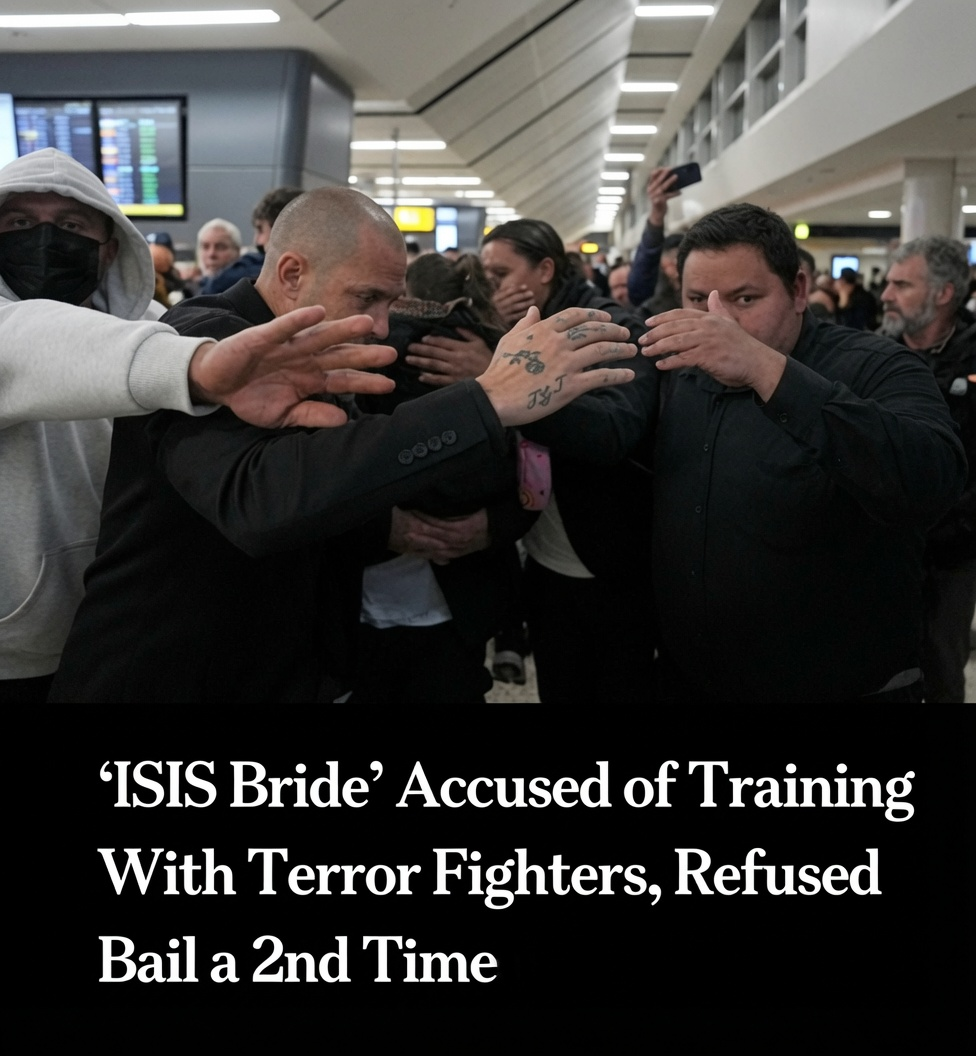
Janai Samarra Safar, 32, has remained in custody since her arrest in May after arriving back in Australia with a group of women and children returning from a detention camp in north-eastern Syria.
She faces Commonwealth charges alleging she knowingly became a member of the Islamic State terrorist organisation between 2015 and 2019 and unlawfully entered or remained in a declared conflict zone in Syria between 2015 and 2017. Each offence carries a maximum penalty of 10 years’ imprisonment if proven.
Safar has not entered pleas to the charges. Under Australia’s criminal justice system, she is presumed innocent unless and until proven guilty in court.
During her latest bail application before the Downing Centre Local Court, defence barrister Michael Ainsworth argued that his client has suffered profound psychological harm after spending more than seven years in extremely harsh conditions following the collapse of the Islamic State’s self-declared caliphate.
According to the defence, Safar experienced chronic shortages of food, ongoing insecurity, repeated exposure to violence and the constant threat of punishment while living in camps controlled by authorities after ISIS lost its territory.
Ainsworth told the court that segregation while in Australian custody had further affected her mental wellbeing and that she required specialist treatment.
He also argued Safar had rejected the ideology of the extremist group but could not openly express that position while living in Syria because of fears for her own safety and that of her family.
The defence submitted that Safar has extensive family support in New South Wales and would comply with any strict bail conditions imposed by the court while awaiting trial.
Prosecutors opposed the application, arguing the evidence against Safar could not be regarded as weak and that the law governing terrorism offences requires exceptional circumstances before bail can be granted.
Crown prosecutor Brian Massone told the court investigators allege Safar deliberately travelled to ISIS-controlled territory and was associated with two men linked to the terrorist organisation, whom she is alleged to have married during her time in Syria.
The prosecution also relied on communications allegedly exchanged between Safar and her father that investigators say were broadly consistent with ISIS ideology.
In addition, prosecutors referred to earlier evidence alleging Safar undertook several weeks of training while living under Islamic State control. The defence disputes aspects of the prosecution case and has challenged the admissibility and reliability of some evidence expected to feature during future proceedings.
Judge Marguerite Vassall acknowledged the difficult conditions Safar had endured in Syria and accepted there was evidence she required ongoing medical and psychological care.
However, the judge found that, when considered alongside the seriousness of the allegations and the available prosecution material, the defence had failed to establish the exceptional circumstances required under Commonwealth legislation for bail in terrorism cases.
As a result, Safar will remain in custody while the criminal proceedings continue. The matter has been adjourned until September for further court hearings.
The case is one of several high-profile prosecutions arising from Australia’s efforts to investigate citizens who travelled to Syria and Iraq during the height of the Islamic State insurgency.
Following the territorial defeat of ISIS in 2019, thousands of foreign nationals—including women and children—were held in camps such as al-Roj and al-Hol under the control of Kurdish-led authorities.
Australian governments for several years resisted broad repatriation programs, citing significant national security concerns and the logistical difficulties of bringing citizens home from unstable regions.
However, a number of Australian women and children have gradually returned under arrangements involving Australian authorities and international partners.
Those returns have often been accompanied by extensive security screening, criminal investigations and welfare assessments designed to balance humanitarian considerations with public safety.
Australian Federal Police investigations into alleged offences committed overseas have presented unique legal challenges.
Gathering admissible evidence from an active or recently concluded conflict zone can be exceptionally difficult. Investigators frequently rely on intelligence material, electronic communications, witness statements, travel records and digital evidence collected over many years.
Because the alleged conduct occurred outside Australia, prosecutors must establish not only the factual basis of the allegations but also satisfy legislative requirements that allow Australian courts to exercise jurisdiction over terrorism offences committed overseas.
The current proceedings relate only to the criminal charges filed against Safar and not to any determination of guilt.
The prosecution alleges she voluntarily associated herself with ISIS and knowingly remained within territory controlled by the organisation.
The defence, meanwhile, argues her circumstances were more complex and should be viewed in the broader context of war, coercion, prolonged displacement and severe trauma experienced during years of conflict.
The competing narratives are expected to be examined in greater detail if the matter proceeds to trial.
Australia has enacted some of the world’s most comprehensive counter-terrorism legislation since the emergence of ISIS and earlier extremist organisations.
Among those measures are offences relating to membership of terrorist organisations, providing support to terrorist groups, entering declared conflict areas without legitimate reason and preparing for foreign incursions.
The declared area offence was introduced to discourage Australians from travelling to regions where terrorist organisations exercised effective control and where gathering evidence of individual conduct would later prove extremely difficult.
Under that framework, travelling to or remaining in certain designated areas can itself constitute a criminal offence unless a recognised exemption applies, such as humanitarian work, journalism or visiting immediate family under specified circumstances.
Cases involving returning women associated with ISIS have generated significant public debate across Australia.
Some commentators argue anyone who willingly travelled to support the terrorist organisation should face the full force of Australian law.
Others maintain each individual’s circumstances should be assessed separately, particularly where allegations involve coercion, forced marriage or prolonged detention following the collapse of ISIS.
Human rights advocates have also raised concerns about the mental health consequences of years spent in Syrian detention camps, especially for children who lived through conflict despite having no role in the alleged offending of adults.
Australian courts, however, continue to assess each accused person according to the available evidence, relevant legislation and established legal principles rather than broader political debate.
For now, Safar remains on remand as investigators and prosecutors continue preparing their case.
The court’s latest ruling does not determine whether she committed the offences alleged. Instead, it reflects the judge’s conclusion that, at this stage of proceedings, the legal threshold required for release on bail has not been met.
Further hearings are expected later this year as the matter continues through the federal criminal justice system.






