Australia’s ambitious plan to build 1.2 million new homes by mid-2029 is facing growing pressure after fresh Australian Bureau of Statistics (ABS) figures revealed the nation has fallen well behind the pace required to meet the National Housing Accord target.
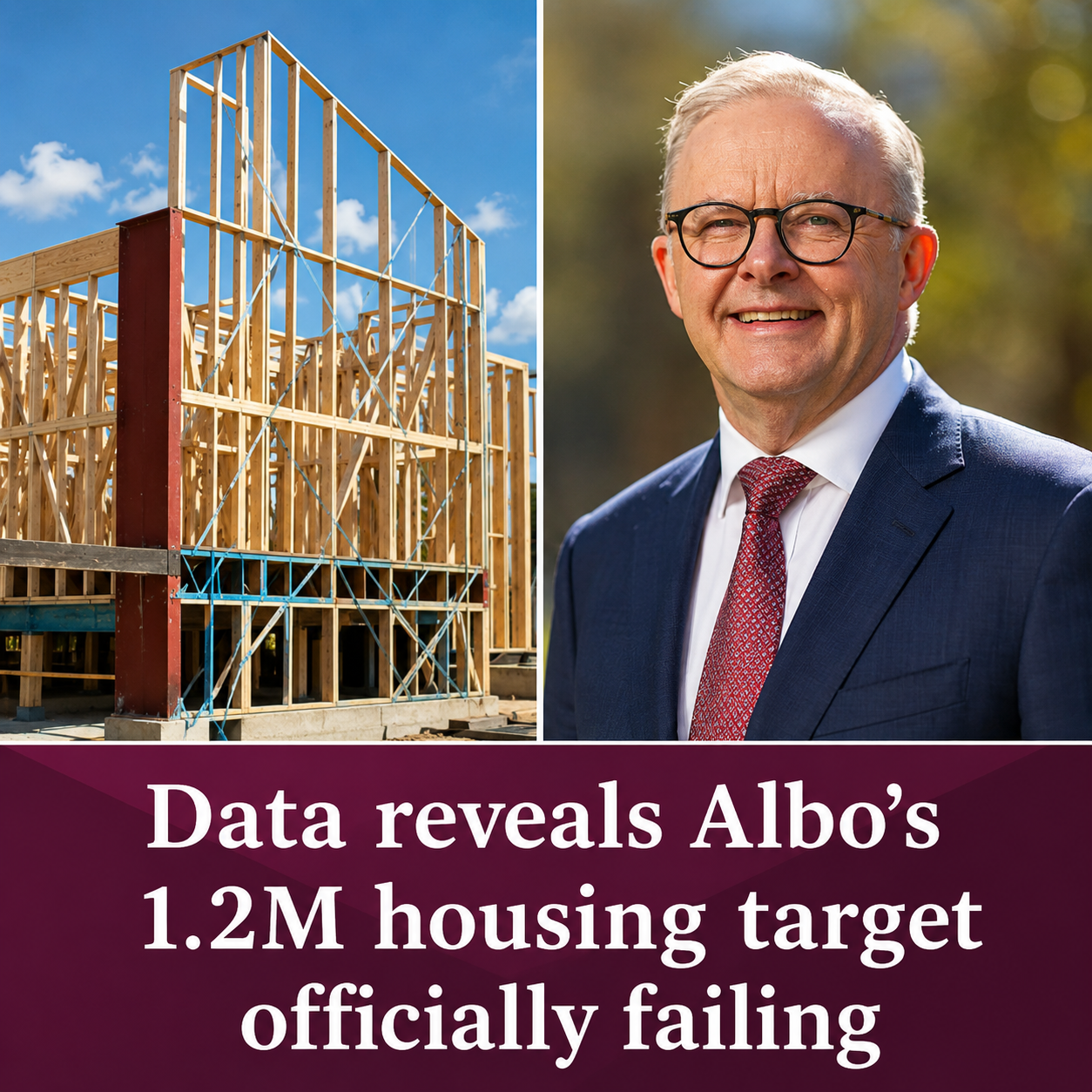
Just two years into the five-year program championed by Prime Minister Anthony Albanese, Australia has approved only 393,426 new dwellings for construction—more than 100,000 fewer than the approximately 500,000 approvals considered necessary to remain on track.
The figures have intensified concerns that Australia’s housing affordability crisis may persist for years unless approvals, construction activity and completed homes accelerate dramatically over the remainder of the Accord period.
Although annual approvals have improved, rising from 188,777 in the 12 months to June 2025 to 204,649 over the latest 12-month period, industry economists say the improvement is still well short of what is required.
Most analysts estimate Australia needs roughly 250,000 dwelling approvals every year to ultimately deliver the government’s goal of 240,000 completed homes annually. Because not every approved development proceeds to construction, approvals must consistently exceed the completion target.
Current approval levels remain tens of thousands below that benchmark despite recent gains.
The latest ABS data also highlights another growing obstacle—construction costs.
Analysis undertaken by Primara Research on behalf of HomeLoanRates.com.au found residential building costs increased by 5.8 per cent during the year to June, compared with just 0.4 per cent over the previous 12 months.
The sharp increase is making new home construction more expensive for developers and buyers alike, potentially limiting future projects at a time when Australia desperately needs additional housing supply.
Primara Research Head of Research and Data Peter Drennan warned that while higher interest rates could eventually reduce pressure on construction pricing by lowering demand, doing so would create another problem.
“A rate rise could put downward pressure on new build costs by pricing some buyers out of the market altogether,” Drennan said.
“The problem is that Australia already needs a 49 per cent lift in completions to meet the government’s 1.2 million home target.
“Cooling demand to tame costs risks widening the very supply gap policymakers are trying to close.”
Research commissioned for the housing analysis estimates Australia could ultimately fall around 305,000 completed homes short of the National Housing Accord target if current trends continue.
Housing Industry Association Chief Economist Tim Reardon said the latest approval figures largely reflect market conditions from late last year, meaning more recent economic developments—including higher borrowing costs and global geopolitical uncertainty—have yet to fully influence construction decisions.
He said underlying demand for housing remains exceptionally strong.
Australia continues to experience low unemployment, tight rental vacancy rates and sustained population growth, all of which continue to place pressure on housing demand.
However, Reardon argued that not every recent policy decision has supported the government’s housing ambitions.
He criticised federal budget changes affecting self-managed super funds (SMSFs), particularly reforms preventing SMSFs from borrowing to purchase residential property, including newly built homes.
According to Reardon, those properties would typically have entered the rental market, meaning the changes may reduce future rental supply rather than expand it.
“Every housing policy should be assessed against its ability to get us closer to 1.2 million homes,” he said.
“On that front, the changes affecting self-managed super funds were a significant setback.”
Oxford Economics Head of Property and Building Forecasting Timothy Hibbert agreed that approvals have improved but warned Australia still needs substantially faster growth.
He said the country now effectively requires annual approvals to exceed 300,000 for an extended period if it hopes to recover lost ground and still reach the Accord target before mid-2029.
“The increase we’ve seen is encouraging,” Hibbert said.
“But it’s still well below what’s required. From here, approvals would need to accelerate rapidly.”
He also warned that several major challenges remain.
Higher borrowing costs continue to weigh on new housing demand, while elevated construction costs reduce project feasibility.
At the same time, large government infrastructure projects—including Olympic developments and major hospital construction across several states—are competing with residential builders for skilled trades, placing further pressure on labour availability.
Those competing demands could slow housing construction even if approvals improve.
The Property Council of Australia echoed those concerns, noting that receiving development approval is only one step in a much longer process before homes are actually built.
Executive for Policy and Advocacy Matthew Kandelaars said many approved developments still struggle to become financially viable due to rising construction costs, taxation settings, workforce shortages, infrastructure limitations and increasingly complex planning systems.
He said recent findings from the Productivity Commission reinforced concerns long expressed by developers and builders.
When projects become slower, more expensive and more difficult to deliver, fewer homes ultimately reach the market.
That conclusion aligns with broader warnings from the Productivity Commission, which has identified planning delays, infrastructure bottlenecks and regulatory complexity as major structural barriers preventing Australia from significantly increasing housing supply.
The National Housing Accord remains one of the Albanese government’s flagship domestic policy commitments.
Announced as a cooperative agreement between the Commonwealth, states, territories, local governments, institutional investors and the construction industry, the Accord aims to increase the supply of well-located housing while improving affordability for future buyers and renters.
The target requires an average of approximately 240,000 completed homes every year over five years.
However, housing experts have consistently noted that approvals, commencements and completions all need to increase together for the target to remain achievable.
Recent reports from the National Housing Supply and Affordability Council have suggested progress has improved compared with the period before the Accord began, but also acknowledge that Australia remains vulnerable to construction costs, labour shortages, financing pressures and global economic shocks that could delay delivery. Independent assessments continue to indicate the country is unlikely to achieve the full 1.2 million-home target without significantly faster approval and completion rates over the remaining years of the program.
While June’s approval figures represent one of the strongest annual improvements seen in several years, the latest numbers underline the scale of the challenge facing governments, builders and developers.
With roughly three years remaining under the Accord, industry leaders increasingly agree that maintaining the current pace will not be enough.
Unless approvals climb substantially above current levels—and approved projects successfully move through financing, planning and construction—the gap between housing demand and supply is likely to remain one of Australia’s defining economic and social challenges throughout the remainder of the decade.






