The Albanese Government has moved to shut down speculation over Australia’s national flag, declaring it has no plans to remove the Union Jack after comments from a senior minister and a proposal from a Labor-affiliated union ignited a fresh political debate ahead of the Australian Labor Party’s National Conference.
The clarification came after Housing Minister Clare O’Neil was questioned during a television interview about whether the government would support proposals to redesign the Australian flag by removing the Union Jack.
Asked directly on Channel Seven’s Sunrise, O’Neil initially said the issue had “never been contemplated” and explained that, as Housing Minister, her focus was on addressing housing affordability rather than debating national symbols.
“It’s not something that I’ve had a moment to think about,” she said during the interview.
When pressed further, O’Neil added that her personal preference was to retain the current flag but stopped short of immediately ruling out change on behalf of the government.
The exchange prompted widespread media attention and political criticism, leading to questions about whether the issue might emerge during Labor’s National Conference in Adelaide.
Hours later, the government issued a clear statement to end the speculation.
“The Government will not change the flag,” a government spokesperson confirmed, making the Albanese Government’s position explicit ahead of the conference.
The controversy originated from a policy document released by the Australian Manufacturing Workers’ Union (AMWU), one of Labor’s affiliated unions.
In its Blueprint of Action, prepared for delegates attending the National Conference, the AMWU argued Australia should remove what it describes as enduring symbols of colonial rule.
The document calls for the Union Jack to be removed from Australia’s national flag alongside the removal of colonial-era statues that the union believes represent historical oppression of First Nations peoples.
“We need to strip away the constant reminders of the old ruling class and colonial empire,” the blueprint states.
According to the union, symbols associated with colonial expansion should no longer occupy prominent positions in Australian public life because they are linked to the dispossession experienced by Aboriginal and Torres Strait Islander peoples.
The proposal forms part of a broader package of recommendations dealing with Indigenous recognition, taxation, public services and economic reform.
Among other measures, the AMWU advocates higher marginal tax rates for top income earners, taxes on wealth and inheritances, expanded publicly funded essential services and renewed support for an Indigenous Voice to Parliament following the unsuccessful 2023 referendum.
Although the union has placed the proposal before Labor delegates, it does not automatically become government policy.
Labor’s National Conference is the party’s highest policy-making forum, bringing together approximately 400 delegates representing affiliated unions, state branches and parliamentary representatives.
Delegates debate proposed amendments to the party platform and vote on a wide range of policy issues, but conference resolutions do not necessarily translate directly into government legislation or cabinet decisions.
The AMWU is one of Labor’s largest affiliated unions and has longstanding institutional ties to the party.
Several current Labor parliamentarians have historical associations with the union, reflecting Labor’s traditional relationship with Australia’s organised trade union movement.
Nevertheless, affiliated unions frequently submit policy proposals that are amended, rejected or left outside the government’s legislative agenda.
The debate surrounding the national flag has highlighted the distinction between internal party discussions and official government policy.
Australia’s current flag has remained unchanged since it was officially adopted following Federation in 1901.
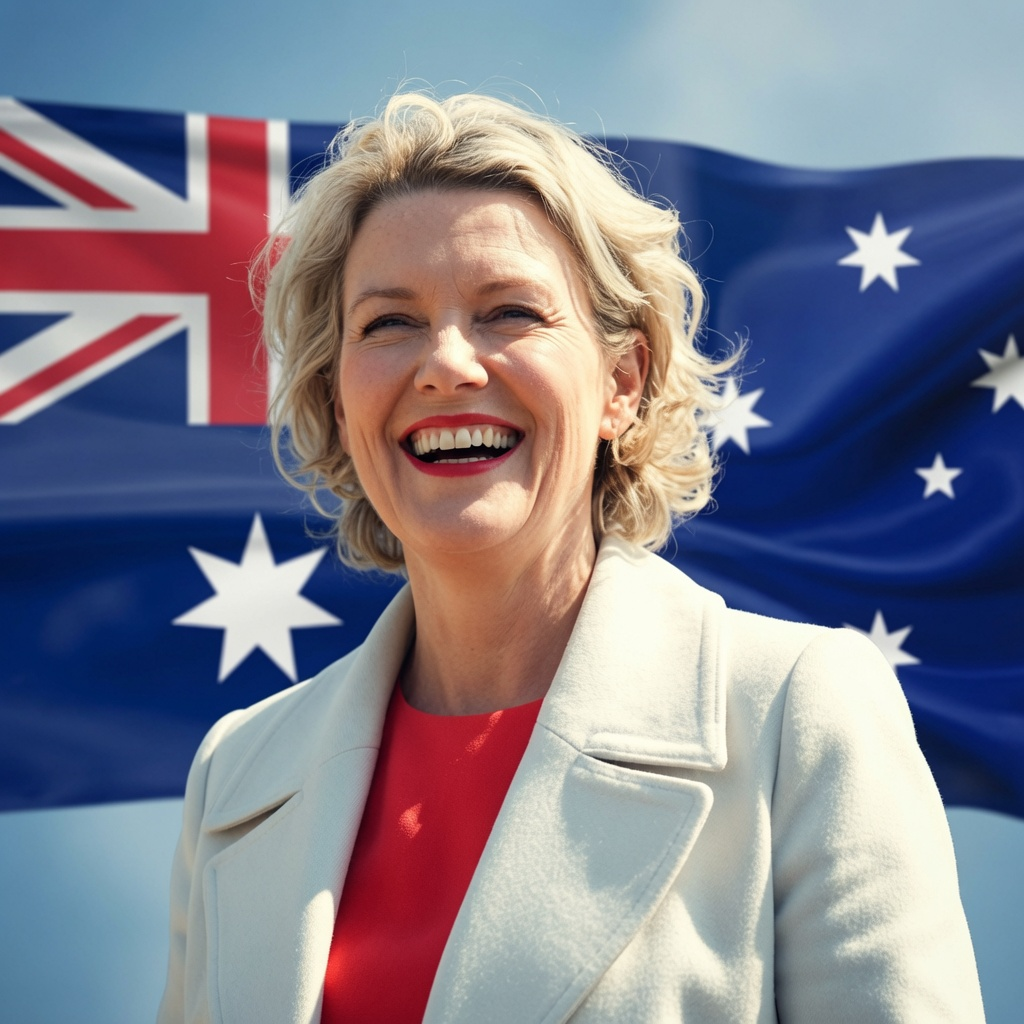
Its design incorporates three principal elements: the Union Jack in the upper canton, representing Australia’s constitutional origins within the British Empire; the Commonwealth Star, symbolising the federation of Australia’s states and territories; and the Southern Cross constellation, one of the country’s most recognisable national symbols.
For decades, campaigns have periodically emerged advocating a new Australian flag that better reflects the nation’s independent identity and multicultural society.
Supporters of redesign argue Australia has matured into a sovereign nation whose national symbols should no longer prominently display another country’s flag.
Some also argue the Union Jack represents a painful legacy for many Indigenous Australians because of colonisation and dispossession.
Opponents of change counter that the existing flag represents Australia’s constitutional history, democratic institutions, military service and national heritage.
Many note that generations of Australians have served under the current flag during wars, peacekeeping operations and humanitarian missions, giving it significance beyond its historical origins.
Successive governments from both major political parties have generally avoided pursuing changes to the national flag, recognising that the issue remains politically sensitive and public opinion has historically favoured retaining the existing design.
The latest controversy has emerged at a politically important time for Labor.
The National Conference is expected to consider a comprehensive draft platform covering housing affordability, industrial relations, climate policy, economic management, taxation, Medicare, aged care, education and other priorities for the government’s second term.
Senior ministers have repeatedly indicated they want the conference to project unity and stability while maintaining focus on practical issues affecting Australian households, particularly cost-of-living pressures and housing affordability.
Political observers note that symbolic debates over national identity can quickly dominate media coverage, potentially overshadowing discussions on economic policy.
The government’s swift clarification that it will not alter the national flag therefore appears designed to remove uncertainty before conference proceedings begin.
Even so, the AMWU proposal demonstrates that questions surrounding Australia’s colonial history, Indigenous recognition and national identity remain active topics within sections of the Labor movement.
Whether or not those ideas receive broader support among conference delegates, the debate once again illustrates how Australia’s national symbols continue to generate strong opinions across the political spectrum.
For now, however, the government’s position is clear: despite proposals submitted by one of Labor’s affiliated unions, there are no plans to remove the Union Jack from Australia’s national flag.






