Prime Minister Anthony Albanese has launched a sharp attack on One Nation leader Pauline Hanson, accusing the veteran senator of damaging Australia’s reputation by making disparaging remarks about the country while travelling overseas.
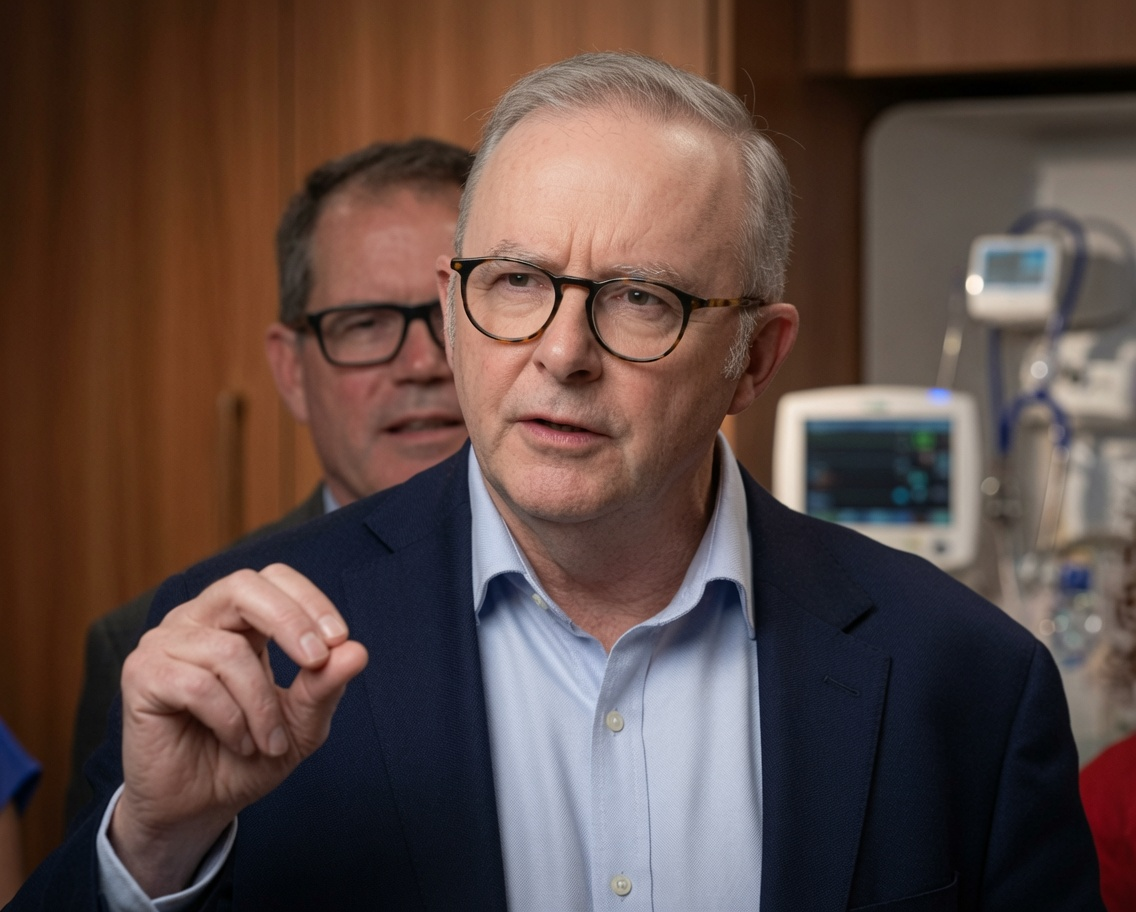
The Prime Minister’s comments came after Hanson spent much of July in Britain and Europe, attending conservative political events, meeting prominent right-wing figures and delivering speeches that reignited debate over immigration, multiculturalism and Australia’s national identity.
Albanese said he found it “astonishing” that an elected Australian parliamentarian would choose to criticise her own country while representing herself overseas, arguing that public officials should instead promote Australia’s strengths on the international stage.
“When I have the opportunity to represent Australia overseas, I talk Australia up,” the Prime Minister said, contrasting his approach with Hanson’s recent public appearances.
The latest exchange marks another escalation in the long-running political rivalry between Labor and One Nation, with Hanson once again placing immigration and cultural issues at the centre of Australia’s political conversation.
During appearances in London, Hanson argued that Australia risked following what she described as Britain’s mistakes on immigration and multiculturalism. She criticised policies relating to transgender rights, questioned aspects of Australia’s diversity agenda and suggested the country was heading in the wrong direction unless immigration policies became significantly tougher.
Many of those comments were delivered during the Conservative Political Action Conference (CPAC) in London, where Hanson told supporters she intended to continue campaigning against what she believes are the social consequences of large-scale migration.
She also warned that Australia was “five to ten years behind” Britain in facing the challenges she associates with migration and demographic change, telling the audience she intended to prevent Australia from following the same path.
Those remarks attracted immediate criticism in Canberra, with Albanese arguing that elected representatives carry a responsibility to project confidence in Australia rather than portraying it negatively before international audiences.
The Prime Minister’s criticism extended beyond Hanson’s policy positions to what he described as the symbolism of criticising Australia while abroad.
According to Albanese, political disagreements are a normal part of democratic life, but there is an important distinction between domestic political debate and comments made overseas that could shape international perceptions of Australia.
The controversy surrounding Hanson’s trip has not been limited to her speeches.
During her visit to Europe, she met with a number of conservative and right-wing political figures, including British activist Tommy Robinson, whose real name is Stephen Yaxley-Lennon. Hanson later defended the meetings as part of what she described as a fact-finding mission focused on immigration and law-and-order issues.
Her European itinerary also drew attention after she attended a Dolce & Gabbana fashion event in Sicily alongside mining billionaire Gina Rinehart before returning to London for the CPAC conference.
Questions were subsequently raised about who financed parts of the overseas trip, although Hanson insisted Australian taxpayers had not paid for the travel and said all parliamentary travel would be disclosed in accordance with existing rules.
The London speech itself generated mixed reactions.
While those attending the conference gave Hanson a standing ovation, reports indicated the audience occupied only a small proportion of the available seats, reflecting the relatively modest attendance at her session.
Despite criticism from Labor, Hanson has shown little sign of moderating her rhetoric.
Throughout her political career she has consistently argued that Australia should significantly reduce immigration, strengthen border protection, limit multicultural policies and place greater emphasis on what she considers traditional Australian values.
Her supporters argue those positions reflect concerns shared by many Australians dealing with housing shortages, infrastructure pressures and the rising cost of living.
Critics, however, contend that her language risks inflaming racial and religious tensions while oversimplifying complex social and economic issues.
Those competing narratives have helped make Hanson one of Australia’s most polarising political figures for nearly three decades.
The latest controversy arrives during a period when immigration has once again become one of the country’s defining political issues.
Australia has experienced historically strong population growth following the reopening of international borders after the pandemic, driven by skilled migration, overseas students and temporary workers.
Supporters of higher migration argue additional workers are essential for economic growth, business investment and addressing labour shortages across sectors including healthcare, construction and hospitality.
Others argue rapid population growth has intensified pressure on housing affordability, rental markets and public infrastructure, contributing to wider public dissatisfaction over living costs.
These broader debates have provided fertile political ground for parties such as One Nation, which has long campaigned for substantially lower migration levels.
Hanson has increasingly sought to align herself with conservative political movements overseas, particularly those advocating tougher immigration controls across Europe and North America.
Her participation in CPAC London reflected those international connections and mirrored similar events that have become influential gathering points for conservative activists from multiple countries.
Labor has argued that Australia’s circumstances differ significantly from those of Britain and many European nations.
Government ministers have repeatedly defended Australia’s multicultural model, describing diversity as one of the country’s greatest strengths and an important contributor to both economic prosperity and social cohesion.
The disagreement therefore extends beyond individual remarks to fundamentally different visions of Australia’s future.
For Albanese, Australia’s success has been built on immigration, multiculturalism and international engagement.
For Hanson, tighter borders and stronger cultural assimilation remain central to preserving what she sees as Australia’s national identity.
The political dispute also unfolds against a changing electoral landscape.
Recent polling suggests One Nation has regained significant support despite the criticism surrounding Hanson’s European tour.
Some surveys indicate the party has improved its standing among voters dissatisfied with both major parties, particularly amid continuing concerns about housing affordability and living costs.
That resilience may explain why Labor continues to devote considerable attention to confronting Hanson’s messaging, even though One Nation holds only a small number of parliamentary seats.
Political analysts have frequently observed that minor parties can exert influence beyond their parliamentary numbers by shaping public debate and forcing larger parties to respond to issues such as immigration, energy policy and national security.
For Albanese, criticising Hanson’s overseas remarks also reinforces Labor’s broader message that Australia benefits from presenting a confident, inclusive image internationally.
Government ministers have consistently argued that Australia’s economic success depends in part on maintaining strong diplomatic relationships, attracting investment and preserving its international reputation as an open, multicultural democracy.
One Nation rejects that characterisation, arguing it is drawing attention to problems that many governments have been reluctant to acknowledge.
Hanson maintains that raising concerns about migration, cultural integration and national identity represents patriotism rather than criticism of Australia itself.
The differing interpretations ensure the debate is unlikely to fade quickly.
As Hanson returns from Europe and federal politics increasingly shifts towards questions of migration, economic pressures and social cohesion, both Labor and One Nation appear determined to continue contesting one of the country’s most emotionally charged policy areas.
Whether voters view Hanson’s overseas remarks as an honest warning or an unnecessary criticism of Australia may ultimately prove more important than the latest exchange of political rhetoric between the Prime Minister and one of his most outspoken parliamentary opponents.






