A proposal to rename the federal electorate of Franklin in southern Tasmania after Aboriginal resistance leader Tongerlongeter has ignited a fresh debate over Australia’s colonial history, historical memory and the figures considered worthy of national recognition.
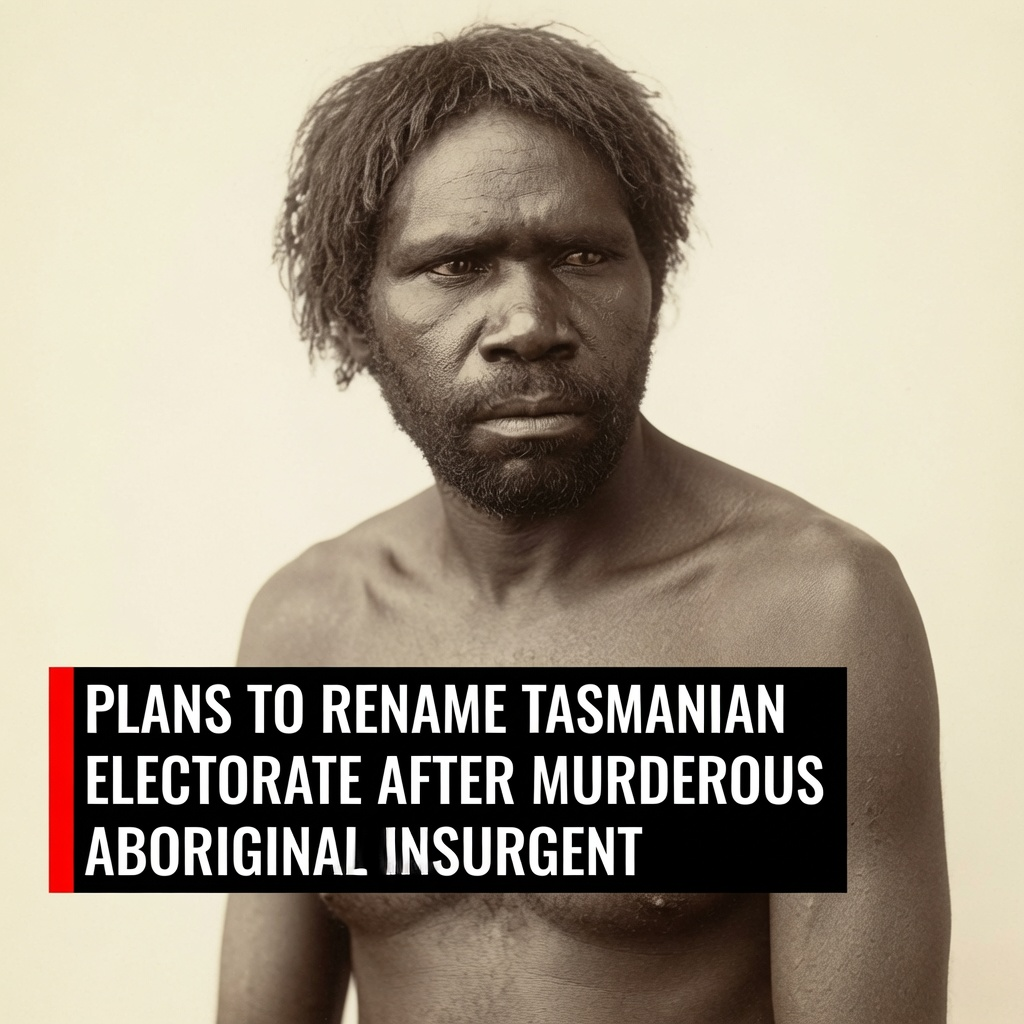
The Australian Electoral Commission (AEC) has proposed renaming the electorate to Tongerlongeter as part of its redistribution of Tasmania’s federal electoral boundaries.
The proposal forms part of the statutory redistribution process conducted after changes in enrolment numbers and is currently open for public comment before any final decision is made.
While the AEC says the new name would recognise an important Aboriginal leader who resisted British colonisation during Tasmania’s Black War, critics argue Tongerlongeter is also associated with attacks in which European civilians—including women and children—were killed.
The competing interpretations have turned what would normally be a routine electoral boundary review into a broader discussion about how Australia commemorates contentious historical figures.
Why the AEC wants to change the name
The electorate has carried the name Franklin for more than 120 years, honouring Sir John Franklin, the former Lieutenant-Governor of Van Diemen’s Land and later the famous Arctic explorer.
In announcing the proposed change, the AEC acknowledged Franklin’s long-standing historical significance but said the redistribution committee believed another name would better recognise Tasmania’s Aboriginal history.
According to the proposal, Tongerlongeter played a prominent leadership role in Aboriginal resistance during the Black War.
The commission said he worked with allied groups, including the Big River nation, to defend Country and oppose the expansion of British settlement during the 1820s and early 1830s.
The proposal states that his leadership and enduring significance in Tasmanian Aboriginal history provide strong grounds for recognising his contribution through the naming of a federal electorate.
The redistribution committee also considered several alternative names, including Mathinna, Jessie Spink Rooke and Woureddy, before selecting Tongerlongeter as its preferred option.
A contested legacy
The proposal has attracted criticism because historical records also associate Tongerlongeter with violent attacks carried out during the Black War.
The conflict, which lasted roughly a decade from the late 1820s, was one of the bloodiest episodes of Australia’s colonial frontier history.
It involved sustained violence between British settlers and Tasmanian Aboriginal groups as European settlement rapidly expanded across the island.
Like many frontier conflicts, the war involved killings on both sides, with civilians frequently becoming victims.
Historian Nicholas Clements, in his book Black War: Fear, Sex and Resistance in Tasmania, estimated that more than 219 European settlers were killed during the conflict, while many hundreds of Aboriginal Tasmanians also died through violence, disease, forced displacement and government campaigns.
Modern historians generally describe the conflict as a brutal frontier war rather than a series of isolated incidents.
Historical records of the 1828 attacks
One of the most controversial aspects of Tongerlongeter’s historical legacy concerns attacks near Lake Tiberias in October 1828.
Contemporary newspaper reports described raids on isolated farming settlements during which several European civilians were killed.
Accounts published in the Hobart Town Courier and other colonial newspapers reported that Anne Geary was killed after seeking assistance during an attack on her hut.
During the same period, Mrs Gough later died after being wounded, while her young daughter Alicia was killed. Other children survived despite suffering serious injuries.
A separate attack two weeks later resulted in the death of a young boy, John Langford, after he received multiple spear wounds during another raid on a farming property.
Researchers from the University of Newcastle’s Colonial Frontier Massacres project state that the attacks were carried out by an Oyster Bay war party that was possibly led by Tongerlongeter, reflecting the uncertainty that surrounds some historical evidence from the period.
The project also notes that the violence contributed to Governor George Arthur proclaiming martial law across settled districts in November 1828.
The complexity of the Black War
The Black War remains one of Australia’s most debated historical conflicts.
British military forces, settlers and Aboriginal resistance groups all engaged in violent campaigns that caused devastating losses.
Aboriginal communities suffered catastrophic population decline through a combination of armed conflict, introduced disease, displacement from traditional lands and government removal policies.
European settlers, particularly those living in isolated districts, also faced raids on farms, attacks on livestock and fatal assaults.
Because the conflict unfolded across many years and involved multiple groups acting independently, historians continue to debate responsibility for individual incidents and the reliability of some surviving colonial accounts.
Consequently, figures such as Tongerlongeter are viewed very differently depending on historical perspective.
Many Aboriginal historians regard him as a leader who resisted invasion and defended his people during an existential struggle.
Others argue that any public honour should also take account of documented attacks in which non-combatants lost their lives.
How federal electorates receive their names
Federal electorate names are determined by the Australian Electoral Commission under established naming guidelines.
The commission generally seeks to preserve long-standing electorate names wherever practical while also recognising distinguished Australians, geographic features and Aboriginal people who have made significant historical contributions.
When redistributions occur, proposed names are released publicly before a period of consultation allows individuals, organisations and political parties to lodge submissions supporting or opposing the changes.
The proposal to rename Franklin follows that standard process rather than any separate government decision.
Public consultation now underway
The AEC is inviting written submissions on the proposed redistribution, including the suggested name change, before making a final determination.
Interested members of the public may support the proposal, oppose it or recommend one of the alternative names previously considered.
Any objections received will be examined before the augmented Electoral Commission reaches its final decision.
Whether Franklin ultimately retains its historic name or becomes Tongerlongeter, the debate has highlighted the continuing challenges Australia faces in reconciling competing interpretations of its colonial past.
For some, recognising Aboriginal resistance leaders reflects a fuller understanding of Australian history. For others, commemorating individuals linked to attacks that killed civilians risks overlooking the suffering experienced by frontier families during one of the nation’s most violent periods.
The final outcome of the redistribution process will determine not only the electorate’s future name but may also become another chapter in Australia’s broader conversation about history, remembrance and national identity.






