A new controversy is erupting around the Australian Defence Force after internal policies revealed transgender and non-binary recruits can undertake fitness assessments aligned with their affirmed gender rather than their biological sex.
The policy has triggered fierce public debate.
Supporters argue it reflects modern inclusion standards.
Critics argue it raises serious questions about fairness, military readiness and whether social policy is beginning to influence operational standards.
But the argument is rapidly growing beyond the fitness tests themselves.
Because the biggest issue emerging from the backlash is no longer simply about gender identity.
It is about what Australians believe military standards are supposed to prioritise.
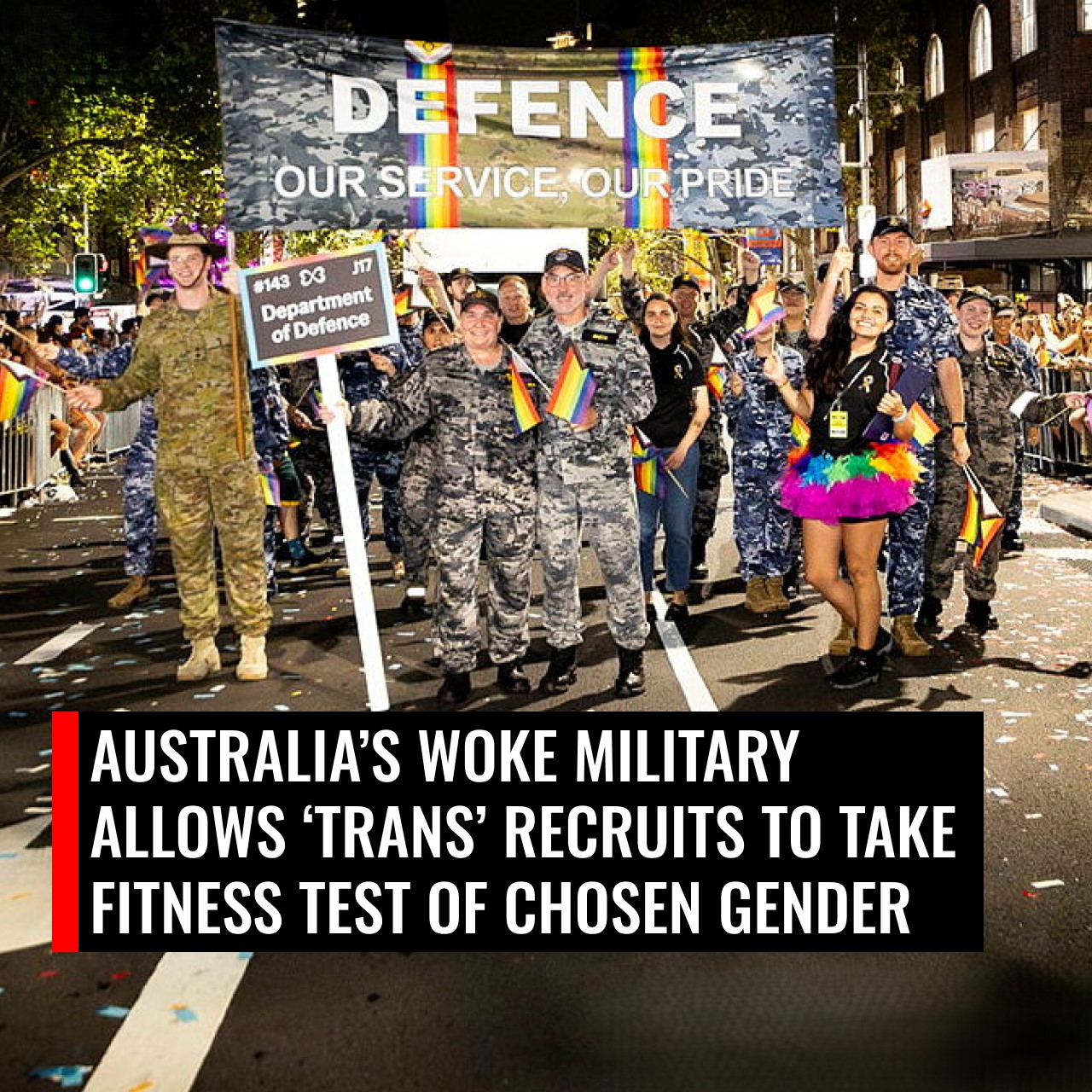
The Australian Defence Force is facing renewed scrutiny after gender identity policies reignited debate about military standards, fairness and operational priorities.
The policy emerged through documents released under freedom of information processes.
Under the guidance, transgender applicants can complete pre-entry fitness assessments aligned with their affirmed gender.
Applicants undergoing gender transition may also be assessed according to the gender they are transitioning toward.
Non-binary applicants are permitted to choose between male and female assessment standards because the current recruitment system does not fully accommodate non-binary classifications.
The documents also outline broader guidance for commanders involving accommodation arrangements, pronoun use, uniforms, sports participation and workplace conduct.
Guidance warns leaders to address deliberate misgendering and disputes involving facilities and shared spaces.
For supporters of the policy, the argument is relatively simple.
The ADF should recruit from the widest possible talent pool.
They argue capable Australians should not be excluded purely because they identify as transgender or gender diverse.
The Defence Department has repeatedly stated it supports a diverse and inclusive workforce and encourages gender-diverse Australians to apply for service opportunities.
Critics see the issue very differently.
They argue the military occupies a unique position within society.
Unlike most workplaces, its primary purpose is not inclusion.
Its primary purpose is national defence.
That distinction sits at the centre of the backlash now emerging.
Because many critics are not only questioning the gender policy itself.
They are questioning what they believe it symbolises.
A broader shift in priorities.
That is where the debate becomes much larger than recruitment procedures.
People begin asking a different question.
What should military standards actually be based on?
Should standards focus entirely on role requirements regardless of gender?
Should they account for biological differences?
Should they reflect affirmed identity?
Or should an entirely new system replace gender-based assessments altogether?
Those questions are not easy to answer.
That is partly why the issue generates such strong reactions.
Because both sides argue they are defending fairness.
Supporters argue fairness means allowing individuals to serve according to their lived identity.
Critics argue fairness means identical standards that prioritise capability above all else.
Both arguments appeal to fairness.
They simply define it differently.
That conflict is becoming increasingly common across Western institutions.
Schools.
Sport.
Government agencies.
And now increasingly the military.
Questions surrounding gender identity often become debates about something larger.
Shared rules.
Shared expectations.
And who decides where those rules begin and end.
The military context makes those questions even more sensitive.
Because defence organisations rely heavily on public confidence.
Australians expect military personnel to meet demanding physical and operational standards.
Any perception that standards are changing can quickly attract scrutiny.
That scrutiny becomes even stronger during periods of strategic uncertainty.
Australia is already facing major debates surrounding defence spending, AUKUS, recruitment challenges and military preparedness.
Against that backdrop, cultural controversies inside defence organisations often receive greater public attention than they otherwise might.
People begin connecting separate issues together.
Questions about recruitment.
Questions about readiness.
Questions about leadership priorities.
Questions about national security.
That connection may explain why the reaction has been so intense.
The argument is no longer only about transgender recruits.
It is about confidence.
Confidence that military standards remain clear.
Confidence that operational effectiveness remains the highest priority.
And confidence that fairness is being applied consistently.
Supporters of the policy argue those fears are overstated.
They point out that transgender Australians have been permitted to serve openly in the ADF for years and that inclusion does not automatically reduce capability.
Critics remain unconvinced.
They argue even the perception of different standards can undermine public trust.
That disagreement is unlikely to disappear soon.
Because the real debate is no longer about one fitness test.
It is about competing visions of what institutions should prioritise.
One side prioritises inclusion.
The other prioritises uniformity of standards.
Both believe something important is at stake.
That is why the argument continues expanding.
Not because Australians are debating a recruitment form.
But because they are debating what fairness, readiness and national service should look like in a rapidly changing society.
And those debates rarely stay confined to one institution for long.






