Two teenage twins who launched a prolonged and violent assault on a stranger in central Adelaide have been sentenced to four years and six months’ imprisonment after pleading guilty to causing serious harm with intent, with both eligible to apply for parole after serving two years and six months.
The South Australia District Court heard the attack left the victim with catastrophic and permanent injuries, including a severe traumatic brain injury that has fundamentally altered his life. According to evidence presented during sentencing, the man had to relearn how to walk and speak and will never again be able to live independently.
The offenders, anonymised by the court as KS and TS because they were 17 at the time of the offence, were sentenced as adults due to the exceptional seriousness of the crime. Both are now 18 years old and pleaded guilty to aggravated causing serious harm with intent to cause serious harm, an offence carrying a maximum penalty of 25 years’ imprisonment.
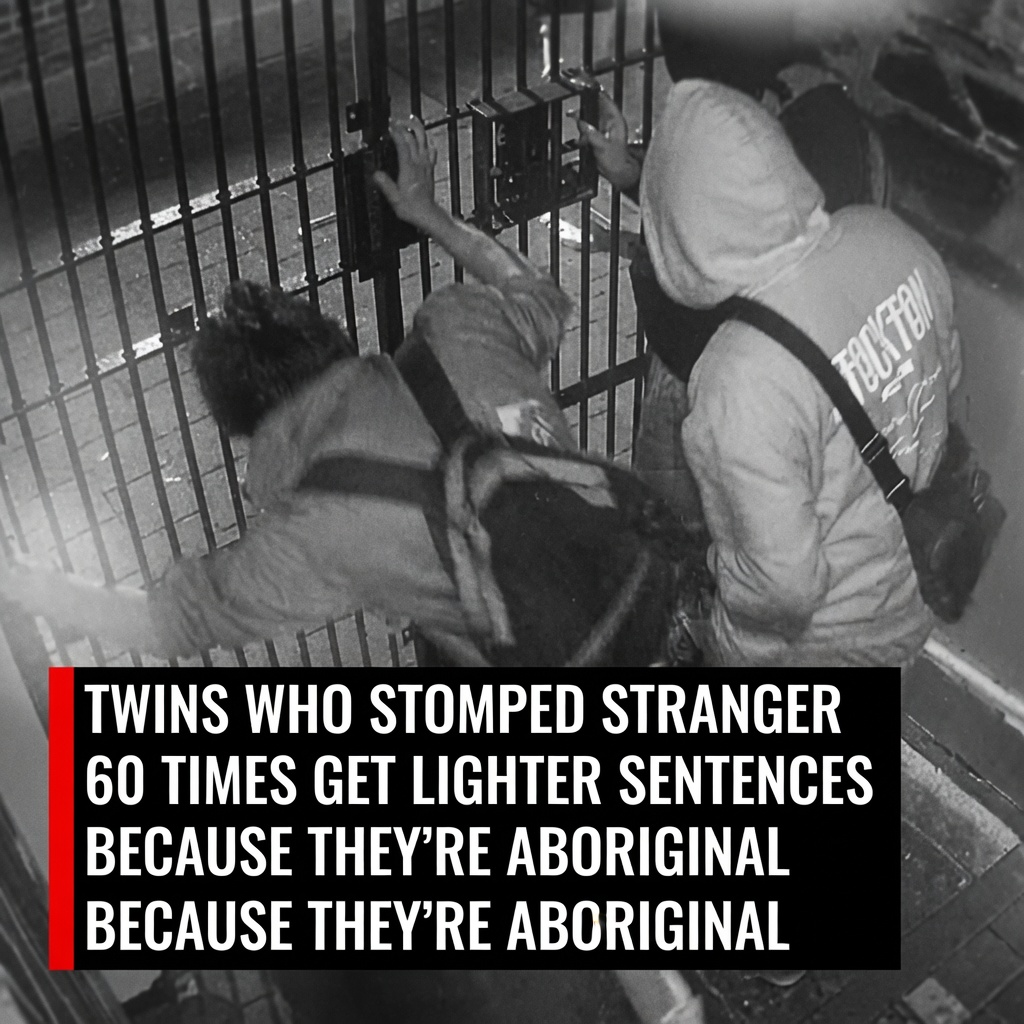
The assault occurred on the night of 24 April 2025 near the Salvation Army Sobering Centre at Whitmore Square in Adelaide. CCTV footage presented to the court showed the twins following the victim into an alley before knocking him to the ground and repeatedly punching, kicking and stomping on him.
Prosecutors told the court the victim was struck approximately 60 times during the sustained assault. The violence only stopped after the attackers walked away, leaving the man critically injured.
Judge Nick Alexandrides described the injuries as devastating. The victim’s ear was almost severed, while he suffered an extremely severe traumatic brain injury and prolonged post-traumatic amnesia. Medical evidence indicated he would experience lifelong cognitive impairment as a direct consequence of the assault.
A victim impact statement prepared by the man’s mother painted a heartbreaking picture of the aftermath.
She told the court her son’s life had “changed forever” and explained he had been forced to relearn basic functions including walking and talking. Despite extensive rehabilitation, he remains unable to care for himself independently and requires ongoing support for everyday activities.
The emotional and physical consequences extended well beyond the initial injuries. Families of victims with severe acquired brain injuries often face years of medical treatment, rehabilitation and long-term care, while survivors may experience permanent changes to memory, communication, emotional regulation and independence.
Although the prosecution emphasised the extraordinary violence involved, the sentencing hearing also examined the personal backgrounds of both offenders.
The twins said they were grieving the recent death of their grandmother when the attack occurred. One told the sentencing conference he hoped the victim might one day understand the emotional turmoil he claimed to have been experiencing at the time.
The court heard extensive psychological and social evidence concerning both young men.
KS was described as having experienced profound social disadvantage throughout childhood. Reports presented to the court indicated he had been exposed to prenatal alcohol, displayed significant neurodevelopmental impairment and had been referred for National Disability Insurance Scheme support.
Expert assessments found he ranked within the lowest one per cent for oral language functioning and the lowest four per cent for overall intellectual functioning. Specialists also identified a provisional diagnosis consistent with foetal alcohol spectrum disorder.
TS was found to have experienced similarly difficult circumstances.
The court heard he grew up amid domestic violence, physical abuse, homelessness, parental substance abuse and neglect. Psychological assessments concluded he had an intellectual disability associated with extremely low cognitive functioning.
Evidence also showed he had begun using alcohol and cannabis at a young age and reported difficulties regulating anger, particularly when he believed others were threatening or disrespecting him.
Judge Alexandrides accepted that both offenders had experienced significant lifelong disadvantage.
In his sentencing remarks, he noted they were young Aboriginal Australians whose backgrounds reflected recognised forms of social disadvantage. He concluded those factors were relevant when assessing their moral culpability and their prospects for rehabilitation.
However, the judge made clear that those circumstances did not excuse the offending.
Instead, they formed only part of the sentencing exercise required under Australian law, where courts must balance punishment, deterrence, protection of the community, denunciation of criminal conduct and the possibility that an offender can be rehabilitated.
The judge said the offenders’ intellectual impairments and disadvantaged backgrounds justified some moderation of sentence, but only to a limited extent given the gravity of the offending.
He also concluded there remained cautious grounds for optimism that both young men could be rehabilitated with appropriate support following imprisonment.
Despite those findings, Judge Alexandrides rejected any suggestion that the prison terms should be suspended.
He ruled that immediate imprisonment was necessary both to protect the community and to provide adequate general deterrence, reflecting the exceptional seriousness of the attack and the devastating injuries inflicted upon the victim.
The sentencing has generated considerable public debate because of references made to the offenders’ Aboriginal background during the judgment.
Australian courts routinely consider an offender’s personal circumstances, including age, disability, mental health, cognitive impairment and social disadvantage, when determining an appropriate sentence. Aboriginality itself does not automatically reduce a sentence, but the High Court has recognised that systemic disadvantage experienced by some Indigenous Australians may be relevant where it has contributed to an offender’s circumstances.
This principle stems from longstanding sentencing law requiring judges to impose an individualised sentence rather than applying a one-size-fits-all approach. Courts assess each offender on their own circumstances while also weighing the seriousness of the offence and the interests of victims and the wider community.
In this case, the judge referred not only to the twins’ Aboriginal heritage but also to extensive evidence of neurodevelopmental disorders, intellectual disability, childhood trauma, substance exposure and social deprivation.
Legal experts frequently note that these considerations differ from excuses or defences. Instead, they are treated as factors relevant to moral culpability, rehabilitation prospects and the proportionality of punishment.
The distinction, however, often fuels public controversy in cases involving particularly violent offending.
Critics argue that victims can feel justice has not been adequately served when sentences appear substantially below the statutory maximum available. Others maintain that sentencing law requires judges to consider all relevant mitigating and aggravating factors in order to impose a punishment that is legally proportionate rather than driven solely by public anger.
The offence committed by the twins carried a maximum sentence of 25 years’ imprisonment, but maximum penalties are generally reserved for the most extreme examples of offending after courts evaluate guilty pleas, youth, criminal history, cooperation with authorities, rehabilitation prospects and numerous other statutory considerations.
Both offenders received credit for pleading guilty, avoiding the need for a contested trial and sparing witnesses from giving evidence. Australian sentencing legislation commonly allows courts to recognise early guilty pleas as evidence of remorse and practical cooperation with the administration of justice.
The victim, meanwhile, continues to face lifelong consequences from injuries sustained during an attack lasting only a matter of minutes.
His case serves as a stark reminder of the devastating and permanent impact that extreme acts of interpersonal violence can have—not only on victims, but also on their families, who often become long-term carers after life-changing brain injuries.
While the legal proceedings have now concluded, the sentencing is likely to remain part of broader public discussions about violent crime, youth justice, Indigenous disadvantage and the difficult balance Australian courts must strike between punishment, rehabilitation and fairness under the law.