Foreign Affairs Minister Penny Wong has dismissed growing attention around One Nation’s fundraising success, arguing that Australians should be paying closer attention to the party’s policies rather than the size of its political war chest.
Her comments come as Pauline Hanson’s party continues to dominate political headlines following claims that it raised more than $1.5 million in little over a day through its highly publicised “Fire The Liar” campaign.
The fundraising surge has sparked fierce debate across Australian politics.
Supporters see it as evidence of growing public dissatisfaction with the Albanese Government.
Critics argue the focus on fundraising risks distracting from a more important question: what One Nation would actually do if given greater political influence.
That was the argument Wong chose to make.
Rather than questioning the reported fundraising figures, Wong made it clear she was more concerned about the direction of One Nation’s political agenda.
She argued that debates about donation totals should not overshadow discussions about policy and the potential consequences of those policies for Australia.
According to Wong, the central issue is not how much money One Nation can raise but what it intends to do with the political influence that money may help generate.
That position reflects a broader strategy increasingly emerging within Labor ranks.
Instead of allowing the conversation to revolve entirely around One Nation’s fundraising momentum, senior government figures are attempting to shift attention towards the party’s policy platform and political alliances.
Wong also raised concerns about what she described as growing cooperation between One Nation and the Liberal Party.
She suggested the distinction between the two parties is becoming increasingly blurred and argued voters should consider the broader consequences of supporting either side.
The comments were among the strongest attacks launched by a senior Labor minister against One Nation in recent weeks.
The issue has become politically significant because One Nation is currently enjoying one of its strongest periods of public attention in years.
The party’s fundraising success, media coverage and polling gains have transformed it from a fringe political force into a subject of growing concern for both Labor and the Coalition.
For Labor strategists, that rise presents a challenge.
Attacking One Nation too aggressively risks helping the party maintain media visibility.
Ignoring it completely may allow its support to continue growing without scrutiny.
Wong’s approach appears designed to strike a balance between those two concerns.
By focusing on policy rather than fundraising, she attempted to redirect the conversation away from One Nation’s recent success story and towards questions about what the party stands for.
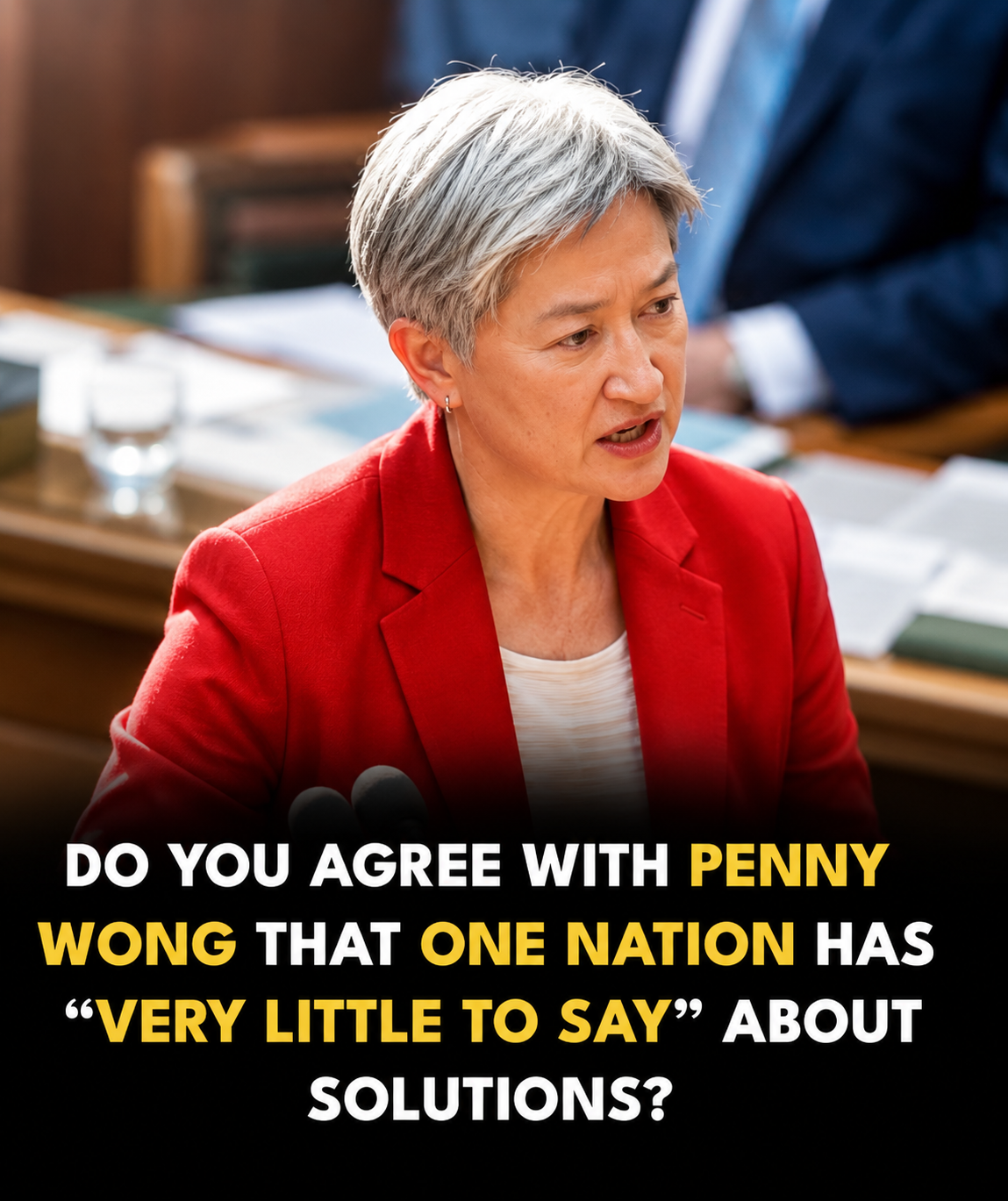
She also accused One Nation of being highly effective at generating anger and frustration among voters while offering relatively few practical solutions.
That criticism echoes arguments increasingly being used by Labor figures as they seek to counter the party’s growing popularity.
One Nation supporters reject that characterisation.
They argue the party’s recent growth reflects genuine public concern about issues such as migration, housing affordability, energy prices and the rising cost of living.
According to this view, the party is succeeding because it is willing to discuss topics that many voters believe the major parties have failed to address adequately.
That disagreement now sits at the centre of the political conflict.
Labor argues One Nation thrives on dissatisfaction without presenting workable answers.
One Nation argues dissatisfaction exists because the major parties have failed to deliver results.
The fundraising controversy has intensified that debate.
Claims that One Nation attracted more than $1.5 million in donations within a day generated enormous media attention and prompted questions from both government and opposition figures.
The party has maintained that the donations came from ordinary Australians making relatively small contributions rather than a handful of wealthy backers.
Supporters point to the fundraising success as evidence of grassroots enthusiasm.
Critics continue to question what that enthusiasm means for the future direction of Australian politics.
Wong’s comments suggest Labor is becoming increasingly concerned about the answer.
Recent weeks have seen a growing number of senior ministers publicly discussing One Nation’s influence, polling strength and political messaging.
That attention alone illustrates how seriously the government is taking the party’s recent rise.
The debate also highlights a broader shift occurring within Australian politics.
Minor parties are attracting greater support from voters frustrated with traditional political institutions.
That trend has created new challenges for both Labor and the Coalition.
Parties that once existed on the political margins are increasingly shaping national conversations.
One Nation has become one of the clearest examples of that change.
Whether the party can convert fundraising success into long-term electoral gains remains uncertain.
However, the fact that senior figures such as Penny Wong are now dedicating significant attention to the party demonstrates how much the political landscape has shifted.
For Wong, the message was straightforward.
The donation figures may dominate headlines.
But in her view, the more important story is what One Nation would do with greater political power if voters choose to give it to them.






