Australia is racing to become a major player in the global artificial intelligence revolution.
Billions of dollars are flowing into new data centres.
Global technology giants are expanding their footprint.
Governments are welcoming investment and talking about the economic opportunities that AI could create.
But a growing number of Australians are asking a simple question.
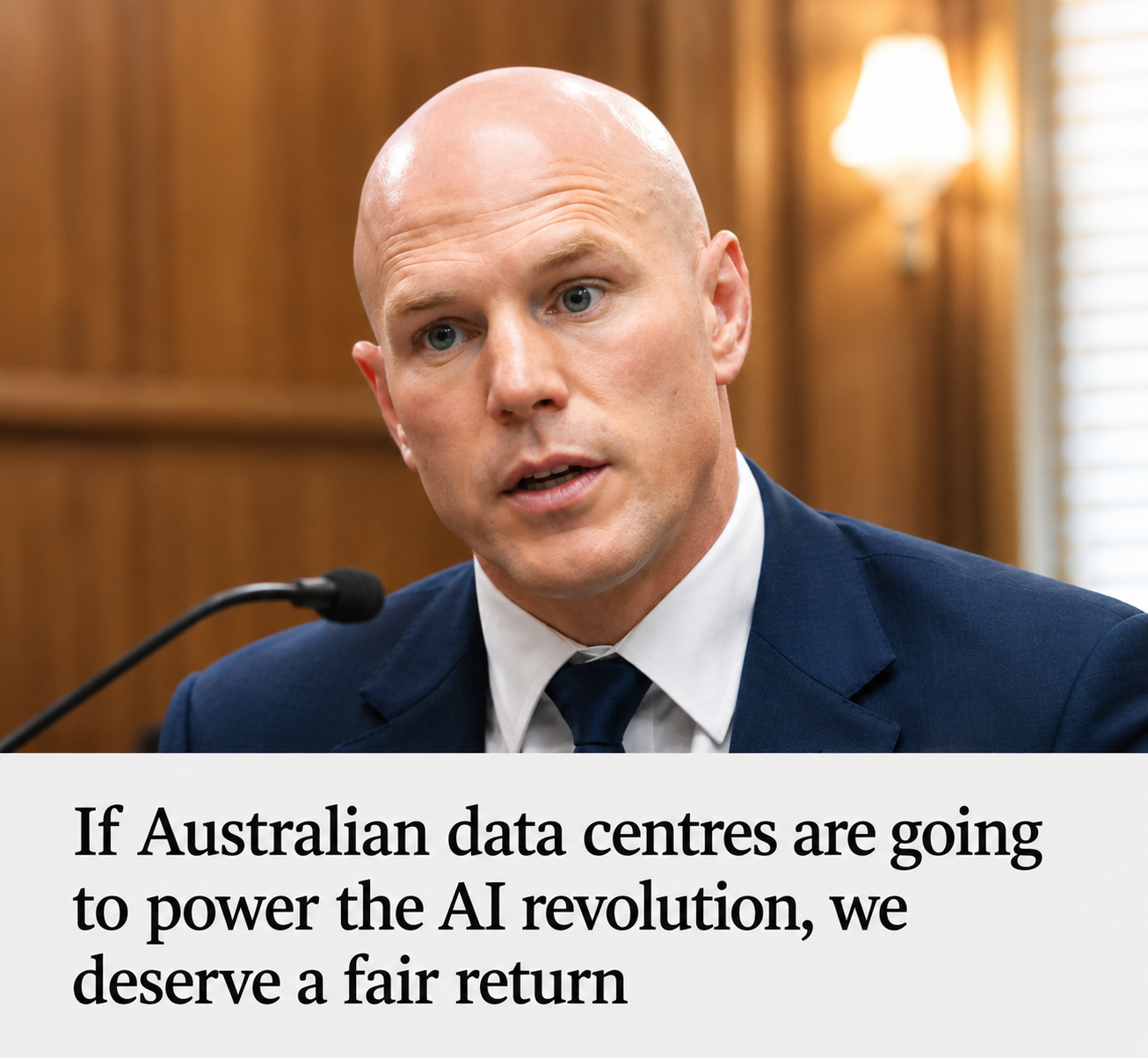
If multinational technology companies are using Australian land, Australian electricity and Australian water to power their AI systems, what does Australia get in return?
The question is becoming increasingly important as the scale of the AI build-out becomes clearer.
Data centres are no longer niche pieces of infrastructure hidden away in industrial estates.
They are becoming some of the largest consumers of electricity in the country.
New projects are being proposed across multiple states as technology companies compete to secure the computing power needed for the next generation of AI products.
Supporters argue the investment boom could create jobs, attract capital and help position Australia as an important digital economy.
Few people dispute that AI will play a major role in the future.
The debate is increasingly focused on whether Australia has learned the lessons of previous resource booms.
Many Australians remember similar promises being made during the gas expansion years.
Australia became one of the world’s largest gas exporters.
Yet many households still faced rising energy bills.
Critics argue that enormous wealth was generated while ordinary consumers saw fewer benefits than expected.
That history is why some policymakers are warning against repeating the same mistakes with AI infrastructure.
The concern is not about stopping investment.
It is about ensuring that the public receives a fair return when national resources are used to generate private profits.
For many households, this debate connects directly to cost-of-living pressures.
Electricity prices remain a major concern.
Families are watching every dollar spent on power bills.
Small businesses are facing higher operating costs.
Manufacturers are already competing with some of the highest energy prices in the developed world.
Against that backdrop, large AI facilities requiring enormous amounts of power inevitably attract scrutiny.
People want to know whether expanding data centre capacity will place additional pressure on electricity networks.
They want to know who pays for new infrastructure.
And they want to know whether the benefits will flow back into local communities.
The water question is also becoming harder to ignore.
Many modern data centres require significant cooling systems to keep equipment operating safely.
While technology continues to improve, concerns remain about how large facilities may affect local water resources, particularly in areas already facing environmental pressures.
Communities are increasingly asking for transparency around projected water use and long-term environmental impacts.
The conversation is no longer purely technological.
It is economic.
It is environmental.
And it is increasingly political.
Another issue attracting attention is taxation.
Australians generally support businesses making profits.
What many object to is the perception that global corporations can generate enormous revenues while contributing relatively little compared with the value extracted from local resources and infrastructure.
That concern has appeared repeatedly across different industries over the past two decades.
Mining.
Energy.
Digital platforms.
Now AI is entering the same conversation.
Supporters of stronger tax settings argue that additional revenue could help fund infrastructure upgrades, energy projects, education programs and workforce training.
Others warn that excessive regulation could drive investment elsewhere and leave Australia behind in the global AI race.
Both sides agree on one thing.
The decisions made today will shape Australia’s economic position for years to come.
That is why the stakes are so high.
Artificial intelligence is expected to transform industries ranging from healthcare and education to finance and manufacturing.
The countries that successfully capture the economic benefits could enjoy substantial growth.
The countries that fail to secure a fair share of the value may find themselves providing resources while others collect most of the rewards.
For ordinary Australians, the issue is ultimately much simpler than debates about algorithms or computing power.
People want to know whether their electricity bills will rise.
They want to know whether public resources are being used responsibly.
They want to know whether taxpayers will receive a fair return.
And they want confidence that the next economic boom will not leave them wondering, years later, why so much wealth was created while everyday financial pressures continued to grow.
Australia may be on the verge of becoming an AI powerhouse.
The challenge now is ensuring the benefits are shared as widely as the costs.






