Australian politics has once again found itself debating where the line should be drawn between legitimate criticism and personal attacks.
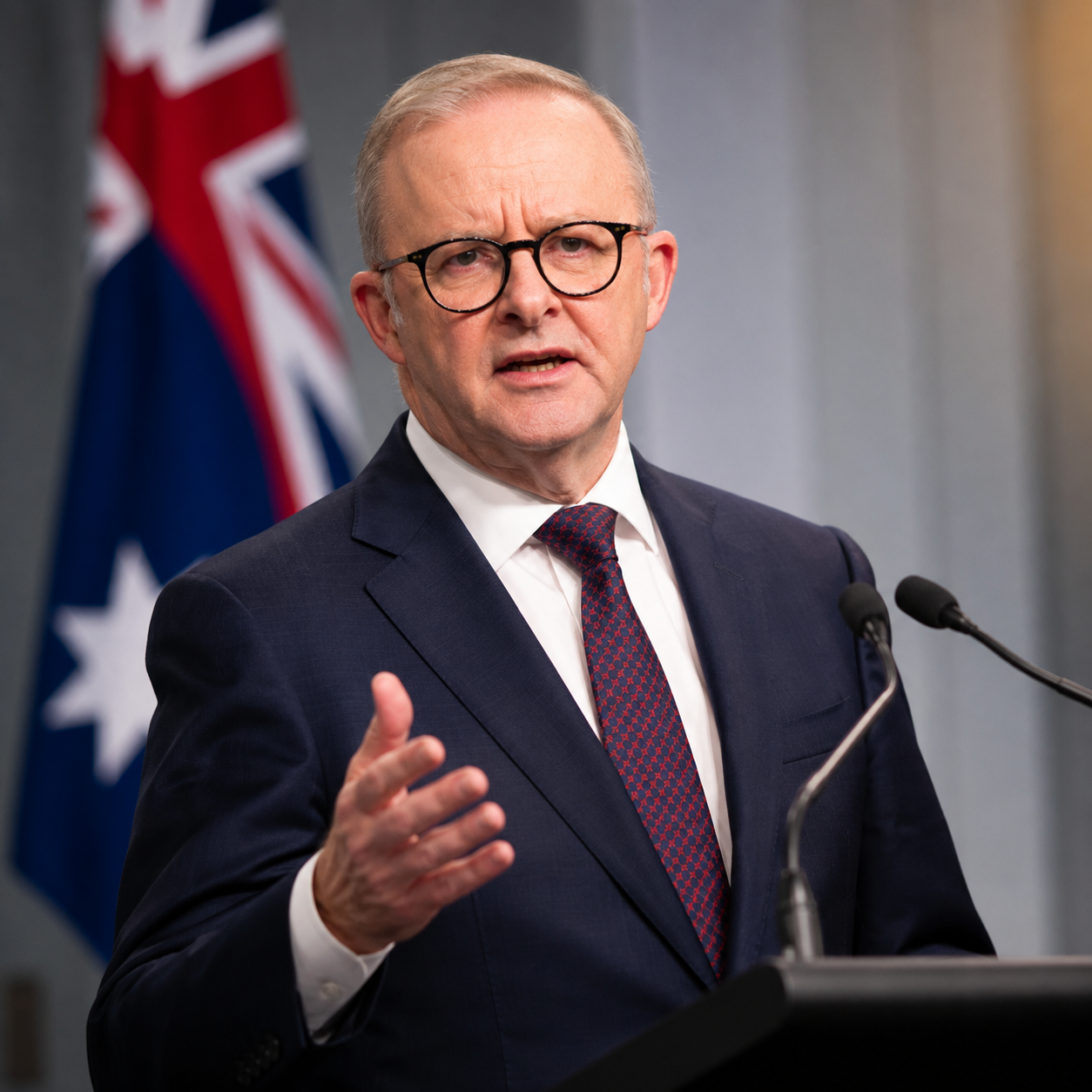
The latest controversy emerged after Prime Minister Anthony Albanese condemned a highly publicised campaign targeting Victorian Premier Jacinta Allan, describing personal attacks on political figures as unacceptable. Political leaders from multiple parties also criticised the campaign and warned about the impact such rhetoric can have on women in public life.
On the surface, few Australians would disagree with that principle.
Most voters expect political disagreements to focus on policies, decisions and leadership rather than personal abuse.
The challenge is that public debates rarely stop there.
What often matters just as much is whether those standards are applied consistently.
That is where political controversies tend to become more complicated.
When leaders condemn one incident while remaining silent on another, critics inevitably begin asking questions about fairness and consistency.
The argument quickly shifts away from the original controversy and toward a broader issue.
Do the same rules apply regardless of who is involved?
For many Australians, trust in politics is closely tied to the answer.
Voters may accept that politicians make mistakes.
They may even accept that heated language occasionally appears in public debate.
What they often find harder to accept is the perception that different standards exist for different people.
This is one reason why accusations of double standards resonate so strongly.
The issue is not always the original comment or incident itself.
It is whether public figures respond with the same level of concern regardless of which side of politics is involved.
That expectation has become increasingly important in an era of constant media scrutiny.
Every statement is recorded.
Every response is analysed.
Every silence is noticed.
Social media has accelerated that process dramatically.
Political leaders are no longer judged solely by what they say.
They are also judged by what they choose not to say.
The debate surrounding Jacinta Allan highlights another issue that continues to shape Australian politics.
The treatment of women in public life.
Female politicians across the political spectrum have regularly spoken about the abuse, harassment and personal attacks they encounter.
Many argue that such behaviour discourages talented people from entering public service.
Others warn that increasingly hostile political environments can damage democratic participation more broadly.
These concerns are not limited to one party or ideology.
Women from Labor, the Coalition, the Greens and independent ranks have all raised similar complaints over the years.
The result is a growing expectation that political leaders should speak out against unacceptable behaviour regardless of who is targeted.
That expectation is where consistency becomes critical.
Australians generally support strong political debate.
They expect leaders to challenge each other vigorously.
But they also expect basic standards of conduct to apply equally.
If political leaders condemn one form of abuse while appearing indifferent to another, public confidence can suffer.
The consequences extend beyond politics itself.
Trust remains one of the most valuable assets any government possesses.
Without trust, even popular policies can struggle to gain support.
Without trust, voters become more cynical about political motivations.
And without trust, public institutions often find it harder to maintain legitimacy.
This explains why debates about political standards often generate such strong reactions.
People are not merely arguing about a single comment, advertisement or controversy.
They are arguing about the broader culture of politics.
They are asking what behaviour should be considered acceptable.
And they are asking whether leaders are willing to apply those standards consistently.
The challenge facing all political parties is that voters increasingly expect principle rather than convenience.
They expect politicians to defend respectful public discourse even when doing so may be politically uncomfortable.
They expect fairness even when it benefits opponents.
And they expect consistency even when it creates difficult headlines.
Ultimately, the controversy surrounding Jacinta Allan may fade from the news cycle.
But the larger question will remain.
In a political environment where accusations of hypocrisy travel faster than ever, Australians want to know whether the standards leaders defend today are the same standards they will defend tomorrow.
For many voters, the answer to that question matters far more than any single political dispute.






