Australia is mourning the loss of one of its most remarkable medical minds.
Professor Richard Scolyer, the internationally respected cancer researcher and former Australian of the Year, has died at the age of 59 after an extraordinary battle against glioblastoma, one of the most aggressive forms of brain cancer known to medicine.
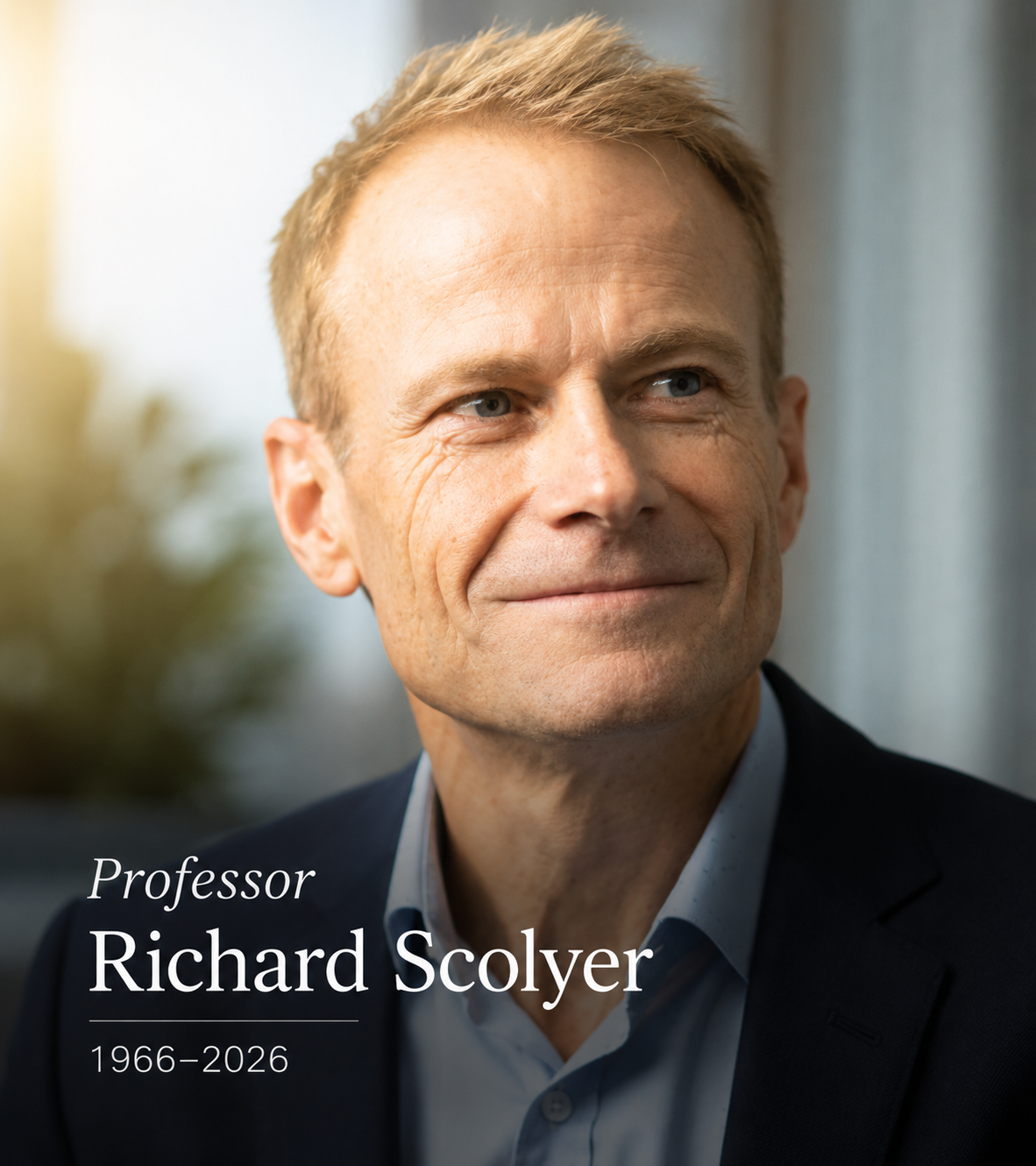
His death marks the end of a personal fight that inspired millions.
But it may also mark the beginning of a new chapter in cancer treatment.
For decades, Professor Scolyer was known throughout the medical world as a pioneer in melanoma research.
His work helped transform survival rates for patients facing advanced skin cancer.
Together with fellow researcher Professor Georgina Long and their teams, he helped establish Australia as a global leader in cancer immunotherapy.
Then, in 2023, everything changed.
At the age of 56, Professor Scolyer was diagnosed with glioblastoma, an aggressive brain cancer that typically leaves patients with very limited time.
The prognosis was devastating.
Most patients survive little more than a year.
Many survive far less.
For a man who had spent his career fighting cancer, he suddenly found himself facing one of the most difficult diagnoses imaginable.
Yet his response was unlike anything medicine had seen before.
Rather than accepting conventional treatment alone, Professor Scolyer and his colleagues decided to attempt something revolutionary.
They would adapt the breakthrough immunotherapy strategies used against melanoma and apply them to brain cancer.
The approach carried significant risks.
No patient had previously undergone the exact treatment pathway.
No one knew whether it would work.
No one knew whether it would fail.
Professor Scolyer chose to proceed anyway.
In doing so, he effectively became the world’s first patient to receive a treatment strategy specifically designed from years of melanoma immunotherapy research before surgery for glioblastoma.
He became both doctor and patient.
Researcher and research subject.
Scientist and experiment.
The gamble paid off in ways few expected.
Despite being given only months to live, Professor Scolyer survived far beyond the normal outlook for patients with his diagnosis.
His treatment delayed the progression of the disease and generated valuable scientific data that researchers around the world are now studying.
For almost two years, the experimental approach appeared to hold the cancer at bay.
When the disease eventually returned, the lessons learned had already begun influencing future research.
That may ultimately become his greatest contribution.
Medical breakthroughs rarely happen overnight.
They emerge from decades of research, countless failures and the willingness of courageous individuals to push beyond existing limits.
Professor Scolyer understood that reality better than most.
Even while facing his own mortality, he continued thinking about future patients.
Future treatments.
Future possibilities.
Throughout his illness, Australians watched his journey unfold in public.
He shared updates with honesty.
He spoke openly about fear, uncertainty and hope.
He never pretended the journey was easy.
That transparency resonated deeply with families across the country.
Cancer touches almost every Australian family in some way.
Many people saw their own struggles reflected in his story.
Others found inspiration in his refusal to stop contributing even during the most difficult periods of his life.
His influence extended far beyond laboratories and hospitals.
He became a symbol of resilience.
A reminder that courage does not require certainty.
And proof that one individual can continue making a difference even while confronting impossible odds.
The impact of his work is likely to continue for decades.
Researchers are now exploring how immunotherapy approaches similar to those pioneered in his treatment might be used against other forms of cancer.
Clinical trials inspired by his experience are already underway.
The data generated from his case may help unlock new treatment pathways for future patients facing diseases that currently have few effective options.
For the scientific community, that possibility is profound.
For patients and families, it offers something equally valuable.
Hope.
Professor Scolyer often spoke about the importance of thinking boldly.
Of refusing to accept that current limitations must define future outcomes.
His life embodied that philosophy.
Not only through his research, but through the way he faced his own illness.
Australia has lost a brilliant scientist.
The medical world has lost a pioneer.
His family has lost a husband, father and loved one.
Yet the legacy he leaves behind is extraordinary.
Every future brain cancer patient who benefits from treatments inspired by his work will carry a small part of that legacy forward.
Every scientific breakthrough that builds upon the knowledge gained from his journey will stand as a reminder of what he was willing to risk in pursuit of progress.
In the end, Richard Scolyer did far more than fight cancer.
He challenged medicine to think bigger.
He challenged researchers to be bolder.
And he showed an entire nation what courage looks like when science, hope and determination come together.






