The murder of teenager Henry Nowak shocked Britain.
It triggered national headlines, political debate and widespread public anger.
But in the weeks following the conviction of his killer, another story has quietly emerged from Southampton.
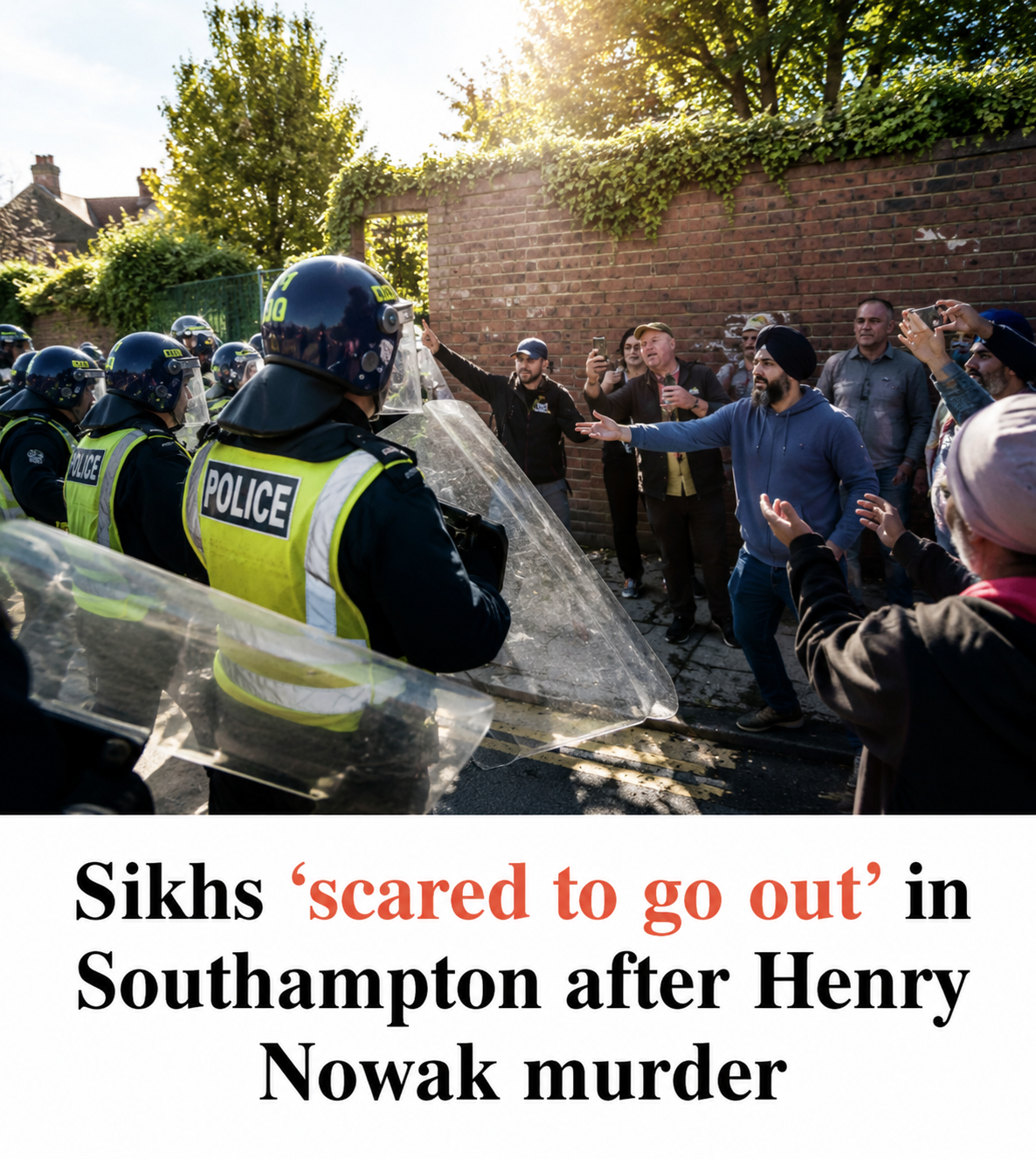
Members of the local Sikh community say they are now afraid to go about their normal lives.
Some report being subjected to racial abuse.
Others say they have become reluctant to attend community events or even visit places of worship.
What began as a criminal case involving one individual has evolved into a broader conversation about blame, identity and social cohesion.
The concern raised by community leaders is not that people are angry about the crime.
Few would dispute the seriousness of the tragedy or the devastation experienced by Henry Nowak’s family.
The concern is that anger directed at a convicted offender is now being transferred onto people who had no involvement whatsoever in the crime.
That distinction matters.
Modern multicultural societies depend on the principle that individuals are responsible for their own actions.
When entire communities become associated with the behaviour of one person, trust can begin to erode.
Fear replaces confidence.
Suspicion replaces understanding.
And ordinary people can find themselves paying a price for events they neither caused nor supported.
Community leaders in Southampton have reportedly described a climate of anxiety following the case.
Some public events have reportedly been cancelled or scaled back because of safety concerns.
Places that would normally bring people together have become noticeably quieter.
Families who previously felt secure now find themselves questioning how they will be treated in public.
The situation highlights a challenge faced by many Western countries.
High-profile crimes often create intense emotional reactions.
Social media accelerates those reactions.
Information spreads rapidly.
So do rumours, assumptions and misinformation.
In emotionally charged environments, entire groups can become targets despite having no connection to the crime itself.
The impact can be profound.
Children may feel uncomfortable at school.
Workers may experience hostility in their workplaces.
Families may avoid public gatherings.
Community organisations may become more cautious about events they would normally host without concern.
The consequences extend beyond those directly affected.
Social cohesion relies on people feeling that they belong.
When groups begin feeling isolated or targeted, divisions can deepen.
That outcome benefits nobody.
History shows that moments of national anger often test the resilience of diverse societies.
Communities are forced to decide whether they will judge people as individuals or as representatives of broader groups.
The answer can shape relationships for years.
The Henry Nowak case has already prompted wider discussion about policing, public safety and the handling of violent crime.
It has also sparked debate about how authorities and political leaders should respond when public outrage threatens to spill over into broader community tensions.
Many community advocates argue that acknowledging the horror of a crime and protecting innocent people from backlash are not contradictory goals.
Both can be achieved simultaneously.
A society can condemn criminal behaviour without condemning an entire faith, ethnicity or community.
That principle becomes especially important during periods of heightened emotion.
Britain, like Australia, is home to people from diverse cultural and religious backgrounds.
Those communities contribute to local economies, schools, charities and civic life.
Most simply want the opportunity to live peacefully and raise their families in safety.
When tensions rise, maintaining that sense of belonging becomes increasingly important.
For policymakers, community leaders and law enforcement agencies, the challenge is ensuring that justice for victims does not give way to collective blame.
The overwhelming majority of people want safe streets, accountable policing and strong communities.
Those goals are not mutually exclusive.
The tragedy that took Henry Nowak’s life will continue to leave a deep mark on Southampton.
His family will live with that loss forever.
Yet many local residents hope another lasting legacy will emerge from the aftermath.
A recognition that crimes are committed by individuals, not entire communities.
And a reminder that moments of anger are often when societies most need unity, restraint and common sense.






