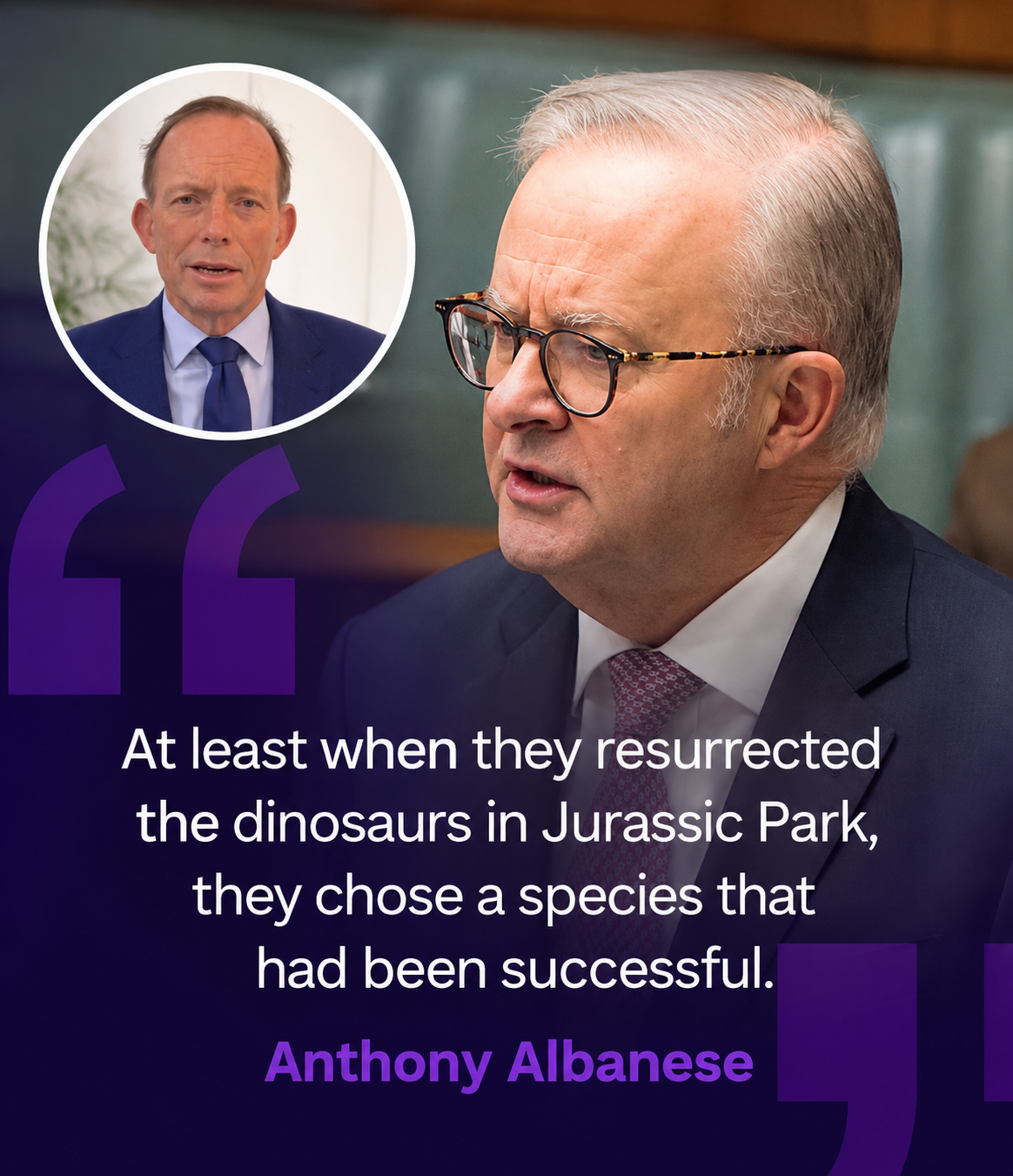
Anthony Albanese has seized on Tony Abbott’s election as federal president of the Liberal Party, using Question Time to portray the move as a step backwards rather than a fresh start for the opposition.
The Prime Minister’s remarks were designed to highlight what Labor sees as a Coalition struggling to move beyond its past after suffering a damaging election defeat.
But the political significance of Abbott’s return extends far beyond the exchange of barbs inside Parliament House.
The development has reignited a much larger debate about where the Liberal Party goes next and what Australians want from an opposition trying to rebuild.
For Labor, the political strategy is obvious.
By linking the modern Coalition to one of its most recognisable former leaders, the government hopes to frame the opposition as focused on old battles rather than future solutions.
Whether that argument succeeds may depend less on Tony Abbott himself and more on the issues currently dominating voters’ lives.
Australians remain deeply concerned about housing affordability, rising living costs, energy bills and economic security.
Those concerns continue to shape political attitudes far more than internal party structures or leadership appointments.
The Coalition’s challenge is therefore bigger than rebuilding after an election loss.
It must convince voters that it understands the pressures facing households and has a credible plan to address them.
That task has become increasingly difficult in an era where political loyalty is weaker and voters are more willing to switch support between elections.
Recent polling has suggested growing frustration with both major parties.
Many Australians feel economic conditions have become tougher despite repeated promises from governments and oppositions alike.
As a result, voters are increasingly focused on outcomes rather than political branding.
Questions about housing have become particularly important.
Home ownership remains one of the most powerful aspirations for Australian families, yet many younger Australians believe it is becoming harder to achieve.
Property prices remain elevated in many regions while rents continue to place pressure on household budgets.
This reality is reshaping political expectations.
Voters want practical solutions that improve affordability rather than endless political point-scoring.
Energy policy has also become a major battleground.
Businesses and households continue to monitor power prices closely as cost-of-living pressures remain a dominant issue across the country.
Any party hoping to gain political momentum must demonstrate how it intends to manage those pressures while maintaining economic growth.
For the Coalition, this raises important strategic questions.
Should it lean more heavily on familiar figures and established political traditions, or should it pursue a broader renewal designed to attract new voters?
Supporters of experienced leadership argue that seasoned political figures bring valuable knowledge and organisational strength during periods of rebuilding.
Critics often counter that renewal requires new faces, fresh ideas and a clear break from previous political eras.
That tension is not unique to Australia.
Political parties around the world frequently face similar choices after suffering electoral setbacks.
Some attempt to reconnect with their traditional base.
Others focus on expanding their appeal to voters who may have drifted away.
The Liberal Party’s future direction will likely involve balancing both objectives.
It must retain core supporters while convincing undecided Australians that it can offer a compelling alternative government.
The stakes are significant because a healthy democracy depends on effective competition between major political parties.
Governments perform best when they face strong scrutiny and credible alternatives.
That reality means developments within the opposition matter even to Australians who do not normally support the Coalition.
The broader political environment is also becoming more competitive.
Minor parties and independents continue to attract support from voters dissatisfied with traditional political choices.
This trend places additional pressure on both Labor and the Coalition to remain relevant to changing community expectations.
For Albanese, highlighting Abbott’s return offers an opportunity to reinforce Labor’s preferred narrative about the opposition.
For the Coalition, the challenge is proving that its future cannot be defined solely by personalities from the past.
Ultimately, most voters are unlikely to judge either side based on political symbolism alone.
They are more likely to focus on issues that affect everyday life.
Can they afford a home?
Are household bills becoming more manageable?
Do they feel more financially secure than they did a year ago?
Those questions will shape the next political contest far more than parliamentary exchanges or internal party elections.
The debate triggered by Tony Abbott’s return may dominate headlines today, but the real contest is about which political movement can present the most convincing vision for Australia’s future.
As economic pressures continue to weigh on households, that challenge is likely to become even more important in the years ahead.






