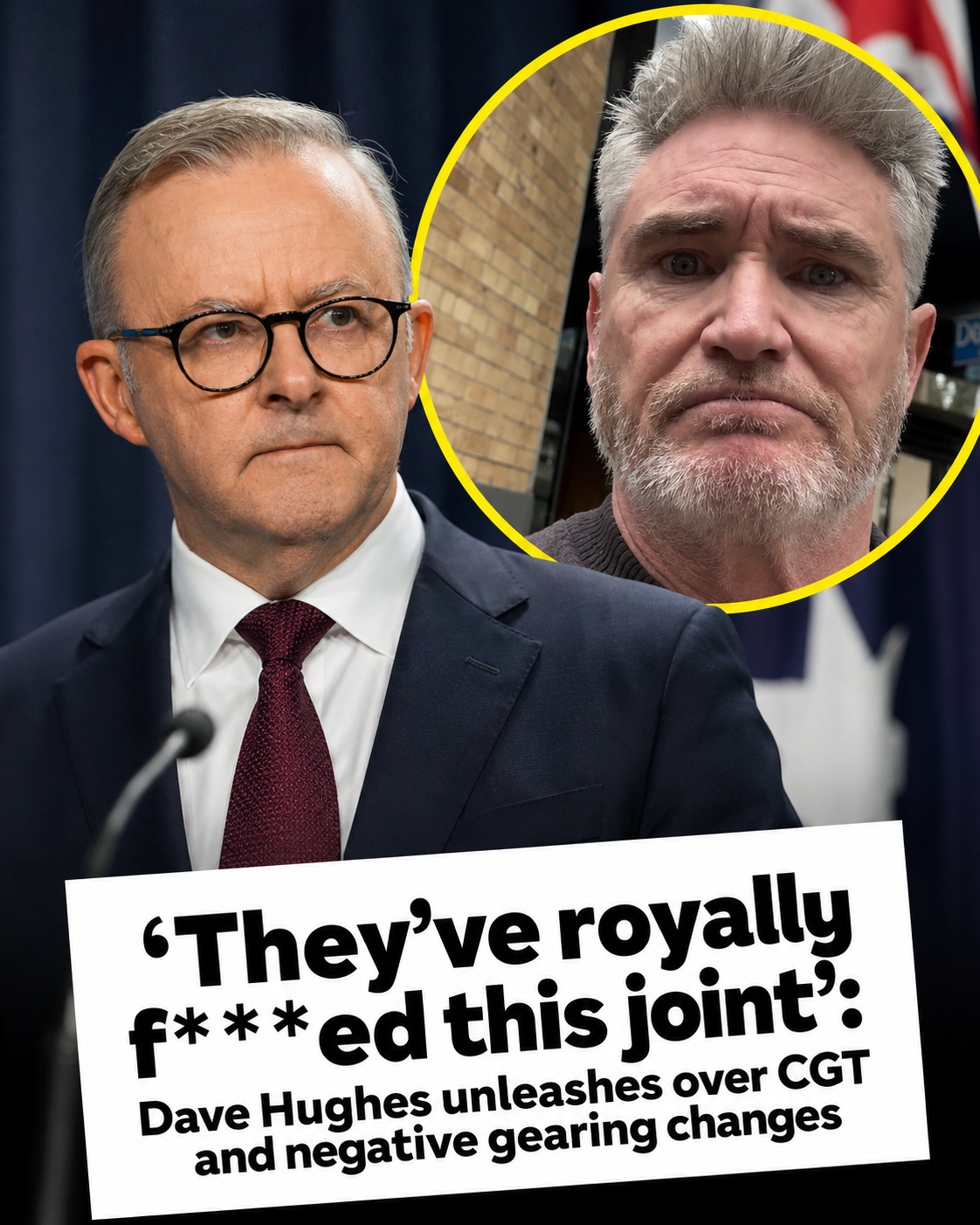
When a lifelong Labor supporter publicly declares that Australians are angrier than he has ever seen before, politicians tend to pay attention.
That is exactly why recent comments from comedian Dave Hughes have resonated far beyond the entertainment world and into the centre of Australia’s economic and political debate.
Hughes’ criticism of proposed changes to capital gains tax and negative gearing has struck a nerve because it reflects concerns already being voiced by many investors, business owners and households struggling with mounting financial pressure.
For countless Australians, the debate is no longer simply about tax policy.
It is about whether the country is becoming harder to invest in, harder to build wealth in and harder to call home.
The reaction to the government’s proposed changes reveals how closely housing and taxation have become linked to broader concerns about the economy.
Property ownership has long been one of the primary ways Australians build financial security over time. Families invest not only for immediate returns but also for retirement planning, future stability and wealth creation across generations.
Any proposal that affects those calculations inevitably attracts strong reactions.
Supporters of tax reform argue the current system has contributed to housing affordability problems by encouraging investment demand that pushes prices beyond the reach of many first-home buyers.
Critics counter that reducing investment incentives risks discouraging housing supply and making affordability challenges even worse over the long term.
That disagreement sits at the heart of one of Australia’s most important economic debates.
The housing crisis remains a defining issue for millions of Australians.
Young families continue to struggle with deposit requirements. Renters face increasing competition for available properties. Mortgage holders are navigating elevated repayments while balancing rising household expenses.
Against that backdrop, every housing policy is now examined through a simple lens.
Will it make things better or worse?
Many business owners have also become increasingly vocal about the broader economic environment.
Small businesses remain under pressure from higher operating costs, insurance premiums, wages, compliance expenses and weaker consumer spending.
For entrepreneurs already facing a challenging landscape, uncertainty surrounding future tax settings can add another layer of concern.
This helps explain why discussions about investment incentives often extend well beyond the property sector itself.
Business confidence plays a critical role in economic growth.
When investors and business operators become uncertain about future returns, they may delay expansion plans, hiring decisions or new projects.
Supporters of maintaining existing tax settings frequently argue that confidence and certainty are essential ingredients for long-term prosperity.
Others believe reform is necessary if Australia is serious about improving housing accessibility for younger generations.
They argue that preserving the status quo may simply entrench existing inequalities while making it harder for first-home buyers to compete.
The challenge for policymakers is that both sides can point to legitimate concerns.
Housing affordability remains a genuine problem.
At the same time, Australia continues to rely heavily on private investment to deliver housing supply.
Balancing those competing realities has proven politically difficult for governments of all persuasions.
The debate has become even more intense because it intersects with migration policy.
Population growth creates additional demand for housing, particularly in major cities where supply is already constrained.
As Australia’s population expands, governments face increasing pressure to ensure infrastructure, housing construction and community services keep pace.
For many voters, the question is not whether migration should occur but whether housing supply is expanding quickly enough to accommodate demand.
That concern has become a recurring theme in public discussions across the country.
Housing shortages affect more than just property prices.
They influence rental costs, household budgets, workforce mobility and overall economic confidence.
When people feel less secure about housing, broader concerns about financial wellbeing often follow.
This is one reason housing policy consistently ranks among the issues Australians care about most.
It affects everyday life in tangible ways.
Whether someone owns a home, rents an apartment or runs a small business, changes in the housing market often have direct consequences.
The political implications are significant.
Governments are increasingly judged not only on economic growth figures but also on whether ordinary Australians feel they are getting ahead.
Rising asset values may look positive on paper, but they can create frustration if younger generations feel locked out of ownership.
Likewise, reforms designed to improve affordability can trigger concern if investors believe they will reduce supply or weaken confidence.
The result is a policy environment where every decision involves trade-offs.
There are no easy solutions.
Building more housing takes time. Expanding infrastructure requires investment. Tax changes often produce winners and losers.
Yet voters increasingly expect governments to deliver meaningful progress rather than explanations.
The intensity of the reaction surrounding the latest proposals reflects that reality.
Australians are looking for answers to problems that have been building for years.
They want affordable housing.
They want economic opportunity.
They want confidence that hard work will still lead to financial security.
Whether the current reforms ultimately help or hinder those goals remains the subject of fierce debate.
What is clear is that housing, taxation and cost-of-living pressures have become deeply interconnected political issues.
And as long as Australians continue to feel financial strain, arguments about investment, migration and housing affordability are likely to remain at the centre of national politics.
For many households, the outcome matters far more than any political slogan.
It could help determine whether the dream of owning a home becomes more achievable or continues drifting further out of reach.






