Political leadership is often judged by more than speeches, media appearances or election results.
For many voters, one of the simplest questions is also one of the most important: does a politician consistently show up for the job?
That question has returned to the national spotlight following renewed scrutiny of One Nation leader Pauline Hanson after reports revealed she was absent from the vast majority of Senate estimates hearing days over the past decade.
The debate comes at a time when Hanson continues to position herself as one of Australia’s most recognisable political figures and has publicly argued that she possesses the qualities needed to serve at the highest levels of government.
Supporters view her as a politician willing to challenge the political establishment. Critics argue that leadership claims should be measured against participation, accountability and parliamentary performance.
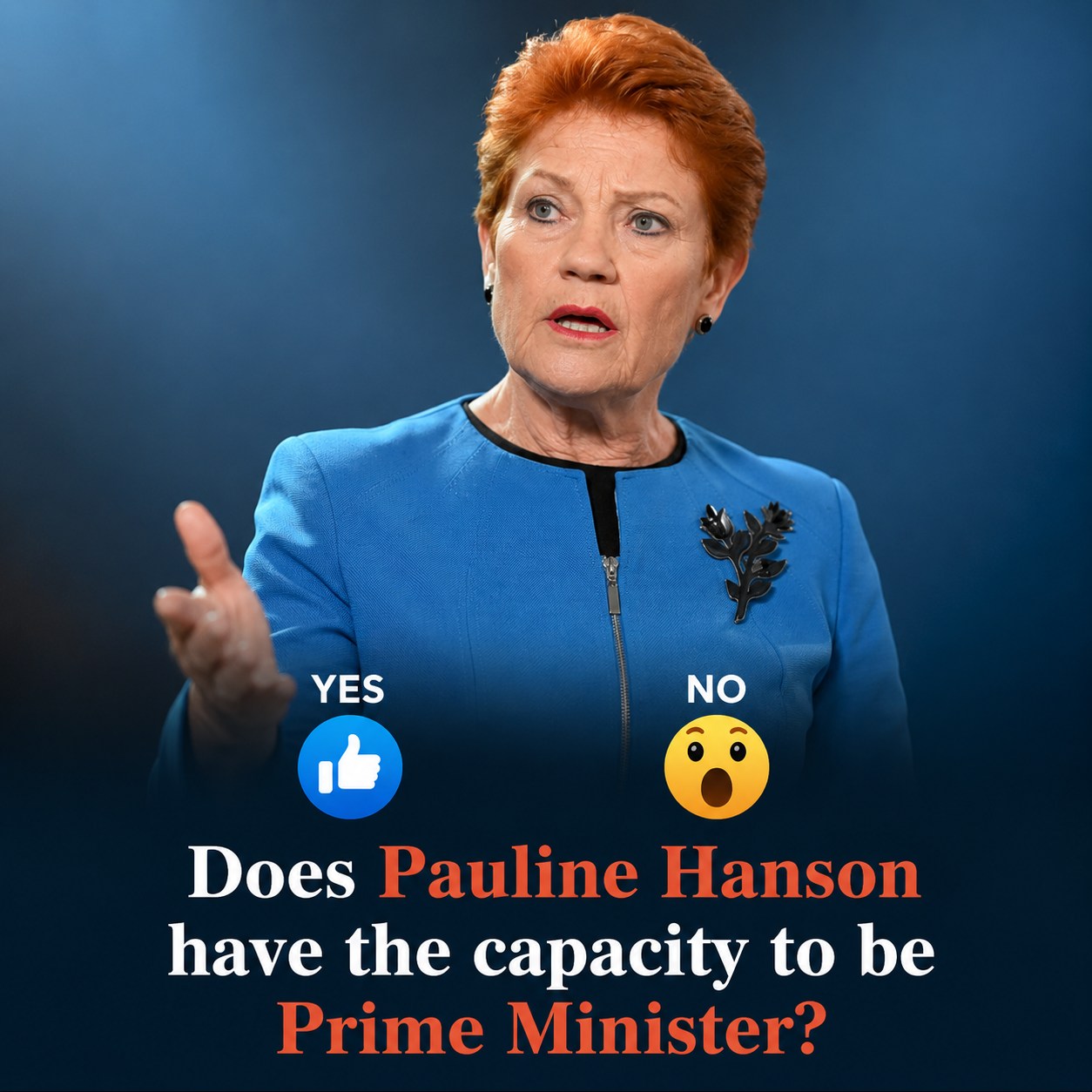
Pauline Hanson has once again become the focus of debate over political accountability and parliamentary participation.
The latest discussion was triggered by reports examining attendance records for Senate estimates hearings, one of the most significant accountability mechanisms within Australia’s federal parliament.
According to the reports, Hanson was absent from approximately 88 per cent of Senate estimates hearing days over the past ten years.
The figures have drawn attention because Senate estimates hearings play a crucial role in Australia’s political system.
During these sessions, government departments, agencies and public officials are questioned by senators about spending decisions, policy implementation and the performance of government programs.
While these hearings rarely generate the same public attention as Question Time or election campaigns, many political observers regard them as some of the most important accountability exercises in the parliamentary calendar.
For voters, estimates hearings often represent the behind-the-scenes work of government oversight.
They may not produce dramatic headlines every day, but they frequently uncover information that shapes future policy debates, budget decisions and public understanding of how taxpayer money is spent.
The controversy surrounding Hanson’s attendance is therefore not simply about statistics.
It raises a broader question about what Australians expect from elected representatives once they arrive in Canberra.
Modern politics increasingly rewards visibility.
Politicians are often judged by television appearances, social media engagement, interviews and their ability to dominate public conversations.
Yet many voters continue to place value on less visible forms of political work, including committee participation, legislative review and parliamentary oversight.
The tension between those two expectations sits at the centre of this debate.
For some Australians, a politician’s effectiveness is measured primarily by their ability to influence national discussions and represent public concerns.
Others place greater emphasis on attendance, procedural involvement and direct participation in parliamentary processes.
Both perspectives reflect different views of what political representation should look like in practice.
Hanson has remained one of the most recognisable figures in Australian politics for decades.
Few politicians have maintained a national profile for as long or generated as much public debate across multiple election cycles.
Her supporters often argue that her influence extends beyond parliamentary attendance figures because she has consistently shaped discussions on immigration, cost-of-living pressures, regional concerns and government accountability.
Critics, however, contend that influence and visibility do not eliminate the responsibility to participate in the formal processes designed to scrutinise government actions.
The discussion has gained additional attention because of Hanson’s recent comments suggesting she possessed the capability to serve as prime minister.
Leadership aspirations naturally invite closer examination of a politician’s record.
Whether in politics, business or public service, claims about leadership often lead audiences to review past performance, attendance, decision-making and engagement with core responsibilities.
That is precisely why attendance figures can become politically significant.
Voters frequently use them as a simple benchmark when evaluating commitment and accountability.
Even when attendance statistics do not tell the entire story, they can influence public perceptions because they provide a measurable indicator that is easy to understand.
The debate also highlights a broader challenge facing democratic systems around the world.
Citizens increasingly expect transparency from elected officials. They want to know not only what politicians say but also how they spend their time, where they focus their efforts and whether their actions align with their public messaging.
Technology has amplified those expectations.
Information that once remained buried in parliamentary records can now become a national talking point within hours.
As a result, politicians from all parties face greater scrutiny than ever before regarding attendance, expenses, voting records and public commitments.
For voters attempting to assess political performance, attendance should generally be considered as one factor among many rather than the sole measure of effectiveness.
Policy achievements, legislative influence, constituent engagement, leadership ability and accountability all contribute to a more complete picture.
At the same time, participation in formal parliamentary processes remains an important part of the role taxpayers expect elected representatives to fulfil.
The renewed focus on Hanson demonstrates how quickly questions about attendance can evolve into larger conversations about leadership standards and public expectations.
Ultimately, the issue extends beyond any single politician.
It touches on a broader democratic principle: how should voters measure performance once election campaigns are over?
For some, the answer begins with results. For others, it begins with participation.
As debate continues, Australians will likely reach their own conclusions about which standard matters most.






