A shocking murder case in the United Kingdom has sparked fresh debate in Australia over whether existing exemptions allowing the carrying of religious knives should be reviewed in the interests of public safety.
The discussion follows the killing of British student Henry Nowak, a case that has attracted international attention and prompted renewed scrutiny of laws surrounding the carrying of kirpans, ceremonial blades traditionally worn by initiated Sikhs as an article of faith.
While the crime occurred overseas, the incident has quickly become part of a broader Australian conversation about how governments should balance religious freedom with community safety in an increasingly diverse society.
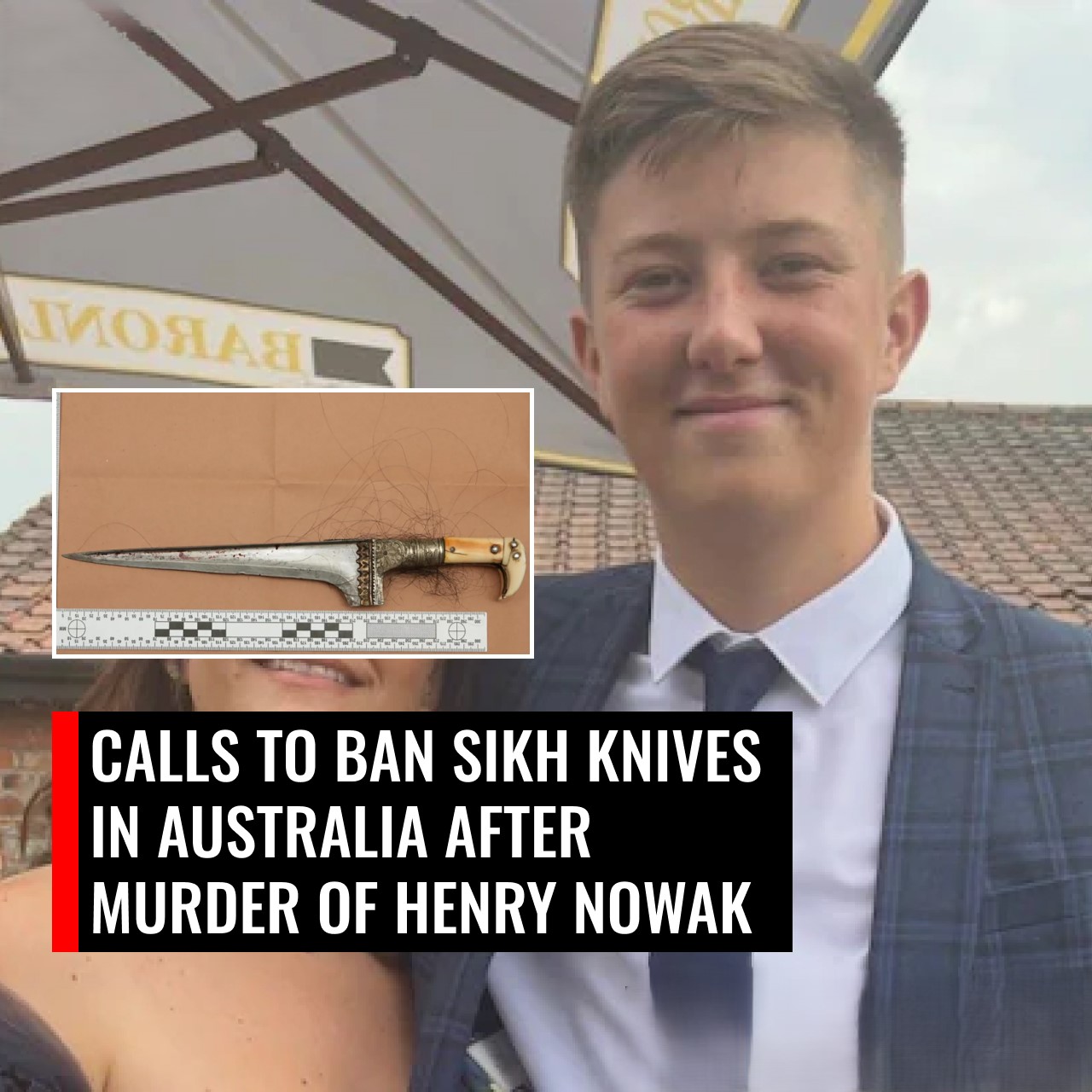
The kirpan holds deep religious significance within Sikhism. For many practising Sikhs, it is not regarded as a weapon but as a symbol of duty, justice, courage and the responsibility to protect others. Around the world, many legal systems have developed exemptions that allow Sikhs to carry kirpans under certain conditions despite broader restrictions on knives.
Australia has historically adopted a similar approach. Various states and territories have provided exemptions or accommodations in specific circumstances, particularly within educational, religious or community settings. The exact rules differ between jurisdictions, reflecting Australia’s federal legal structure.
However, incidents involving bladed weapons inevitably reignite debate about whether such exemptions remain appropriate in a modern security environment.
Supporters of tighter restrictions argue that public safety laws should apply equally to everyone regardless of the reason a blade is carried. They contend that police and security personnel often face difficult decisions when determining whether an item should be treated as a religious symbol or as a potentially dangerous weapon.
Some advocates believe the safest approach would be to prohibit the public carrying of all knives beyond narrowly defined occupational requirements. They argue that clear and consistent rules would reduce ambiguity and eliminate loopholes that could potentially be exploited.
Others reject that position and warn against responding to a single criminal act by restricting the religious practices of an entire community.
Representatives from Sikh organisations have frequently emphasised that millions of Sikhs worldwide wear kirpans responsibly and peacefully. They argue that criminal behaviour should be judged on the actions of individuals rather than being used as a basis for limiting religious expression.
Many legal scholars point out that democratic societies routinely face difficult questions when individual rights intersect with public safety concerns. Similar debates have emerged over religious dress, ceremonial objects and cultural practices in numerous countries.
The challenge for policymakers is determining where reasonable accommodation ends and where public safety considerations should take priority.
Australia’s legal framework already attempts to balance those competing interests. Existing laws regulate weapons and dangerous items while also recognising protections for religious freedom. Courts and lawmakers have historically sought to navigate these issues on a case-by-case basis rather than through blanket prohibitions.
Yet public attitudes can shift rapidly following high-profile crimes.
When violent incidents receive extensive media coverage, pressure often mounts on governments to demonstrate action. Political leaders may face calls to strengthen laws, tighten exemptions or commission reviews into existing regulations.
That dynamic has been seen repeatedly in debates surrounding firearms, edged weapons and public security measures both in Australia and overseas.
Critics of immediate legislative responses caution that emotionally charged events can sometimes lead to policies that are broader than necessary. They argue that effective lawmaking requires evidence-based assessment rather than reactions driven primarily by public anger or fear.
Supporters of reform counter that governments have a responsibility to evaluate whether current laws adequately reflect modern security risks. From their perspective, reviewing exemptions does not automatically amount to restricting religious freedom but rather ensuring that safety standards remain appropriate.
The broader discussion also touches on changing perceptions of security in Australia.
Over recent years, public concern about violent crime, knife-related offences and community safety has become increasingly prominent in political debate. While crime trends vary significantly across regions and offence categories, perceptions of personal safety often influence voter attitudes regardless of statistical realities.
As a result, issues involving weapons tend to attract strong public interest.
For governments, the challenge is rarely straightforward. Any proposed changes affecting religious practices would likely attract intense scrutiny from civil liberties organisations, multicultural groups and faith communities. Policymakers would need to demonstrate that any restrictions were proportionate, justified and consistent with broader legal principles.
Australia’s multicultural model has long relied on accommodating diverse traditions while maintaining common legal standards. That balance is generally regarded as one of the country’s strengths, but incidents that test the boundaries of those accommodations can generate significant public debate.
The discussion surrounding kirpans is unlikely to be resolved quickly.
Some Australians believe current arrangements strike an appropriate balance between religious freedom and public safety. Others argue that exemptions involving blades should be reconsidered regardless of tradition or intent.
What remains clear is that the tragic death of Henry Nowak has become far more than a criminal case. It has evolved into a wider conversation about how modern democracies manage competing values, protect individual rights and maintain public confidence in community safety.
Whether Australian governments ultimately choose to review existing exemptions or maintain the current framework, the issue is likely to remain part of the national debate in the months ahead. As lawmakers, community leaders and the public weigh the competing arguments, the discussion will continue to centre on one fundamental question: how best to balance freedom, faith and safety in contemporary Australia.






