Australians have spent years hearing that the economy is improving, inflation is easing and conditions are gradually getting better. Yet for millions of households, daily life still feels like a constant financial battle. A new report has thrown fresh fuel onto that debate after revealing that while millions of people continue to struggle with housing costs, grocery bills and energy prices, Australia’s wealthiest individuals have become dramatically richer.
The findings have reignited questions about whether economic growth is being shared evenly across the country, or whether an increasing share of wealth is flowing toward a small group at the very top.
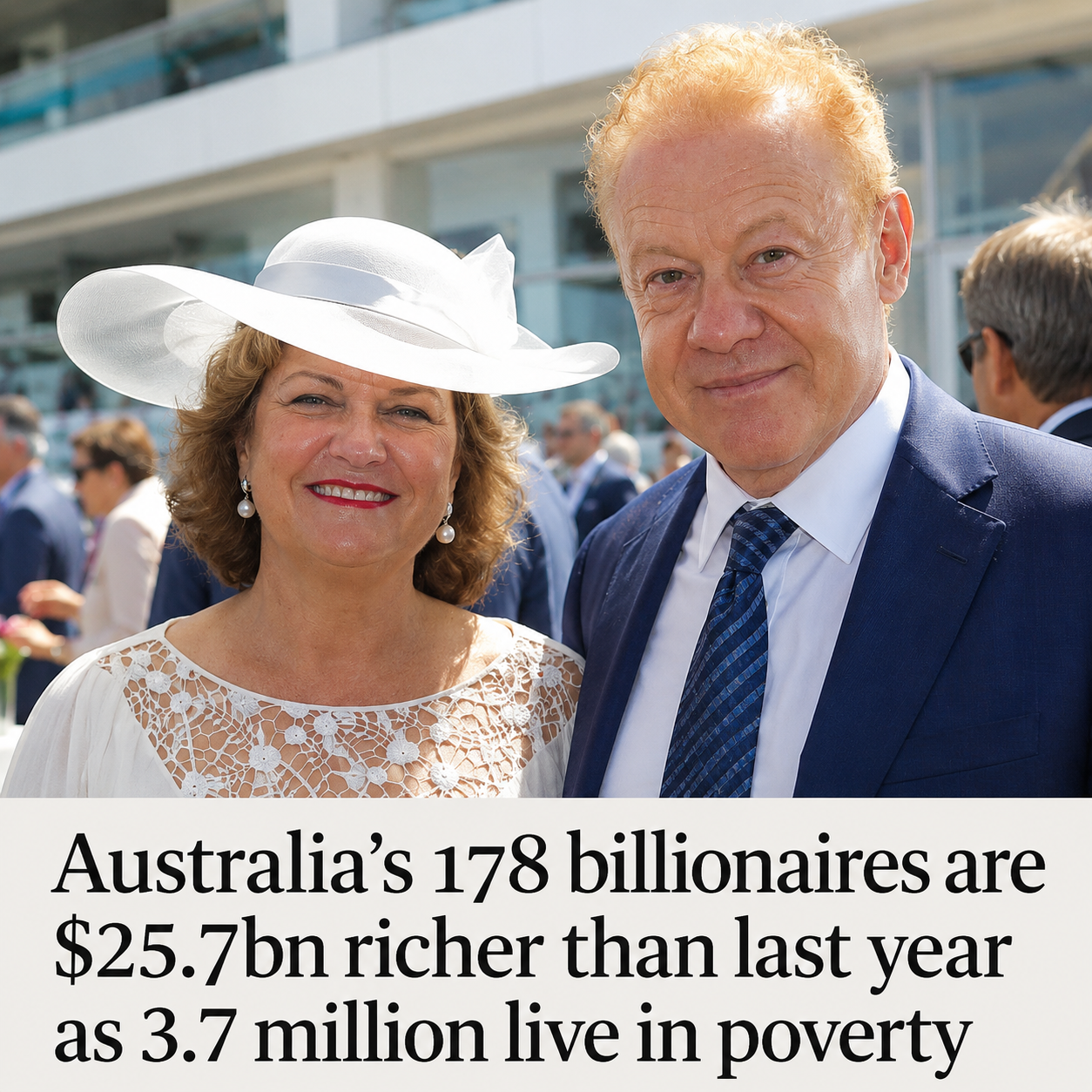
According to new analysis released by Oxfam Australia, the combined wealth of Australian billionaires increased by more than $25 billion over the past year. The figure equates to almost $50,000 every minute. At the same time, an estimated 3.7 million Australians continue to live below the poverty line, including more than 750,000 children under the age of 15. One in three households also experienced some form of food insecurity during the past year.
For many Australians, those numbers are difficult to reconcile with everyday reality. Over the past few years, families have been forced to absorb higher mortgage repayments, rising rents, more expensive groceries and increasing utility bills. Even with inflation easing from its peak, many costs remain substantially higher than they were before the cost-of-living crisis began.
Food charities, community organisations and welfare groups have repeatedly reported growing demand for assistance. More households are seeking emergency relief, while many working Australians who previously considered themselves financially secure are finding it harder to balance household budgets.
Against that backdrop, the growth in billionaire wealth has become a flashpoint in the national conversation.
Australia now has a record number of billionaires. Oxfam’s analysis found there are currently 178 billionaires across the country, up from the previous year. New fortunes have emerged from sectors including artificial intelligence, data centres, mining, property development and technology.
The report also found that the country’s richest individuals continue to control an extraordinary concentration of wealth. According to Oxfam, the 20 wealthiest Australians now possess more combined wealth than the lowest three million Australian households.
Supporters of the current economic system argue that wealth creation is not inherently a problem. Successful businesses create jobs, generate investment and contribute tax revenue. Many of Australia’s largest employers were built by entrepreneurs who took significant risks and helped develop major industries.
Critics, however, argue that the issue is not wealth itself but the speed at which wealth is accumulating at the top while financial hardship remains widespread across the broader population.
That debate has become increasingly political.
Over the past year, cost-of-living pressures have dominated Australian politics. Housing affordability remains one of the biggest concerns for voters. Renters continue to face historically high rental costs in many cities, while first-home buyers often struggle to enter the property market.
At the same time, governments at both federal and state levels have faced growing pressure to increase spending on healthcare, housing, infrastructure and social services.
Advocacy groups argue that the widening wealth gap demonstrates a need for deeper structural reform. Some organisations have called for changes to tax settings that they believe disproportionately favour wealth accumulation through assets rather than income earned through work.
The discussion has intensified following recent political debates surrounding negative gearing, capital gains tax concessions and housing affordability policies.
Supporters of reform argue that existing settings can make it easier for wealthy investors to expand asset portfolios while younger Australians and lower-income households face increasingly difficult financial conditions.
Opponents of major changes warn that aggressive reforms could discourage investment, reduce economic activity and create unintended consequences throughout the property market and broader economy.
As a result, policymakers continue to walk a delicate line between addressing inequality and maintaining economic growth.
The issue extends beyond simple income comparisons. Wealth inequality often compounds over time because assets such as property, shares and businesses can appreciate faster than wages.
For households that already own significant assets, rising property values and investment returns can create substantial gains. For those without assets, the same economic conditions may simply translate into higher costs and reduced opportunities.
This dynamic has become particularly visible in Australia’s housing market.
Property remains one of the primary sources of wealth creation across the country. Over decades, strong housing growth has helped many Australians build financial security. Yet that same growth has also created barriers for those trying to buy their first home.
Younger Australians often face the challenge of saving for a deposit while paying high rents. In many metropolitan areas, house prices remain far beyond the reach of average incomes despite recent market slowdowns.
Economic uncertainty has also contributed to public frustration.
Recent data suggests Australia’s economy has slowed compared with previous years, with growth moderating as households adjust to higher interest rates and ongoing financial pressures. While unemployment remains relatively low by historical standards, many workers feel that wage growth has not fully restored purchasing power lost during the inflation surge.
For families dealing with these pressures, headlines about billionaires adding billions of dollars to their fortunes can appear disconnected from everyday experience.
That perception matters politically.
Historically, periods of rising inequality have often fuelled demands for economic reform. Governments across the world have faced increasing scrutiny over how wealth is distributed and whether existing economic systems deliver fair outcomes for the broader population.
Australia is not unique in confronting these questions. Similar debates are taking place across North America, Europe and parts of Asia as wealth concentration reaches levels that many economists describe as historically significant.
The challenge for Australia is determining how to balance prosperity, investment and economic growth with social cohesion and opportunity.
Most Australians do not expect everyone to have the same level of wealth. What many voters appear to be questioning is whether the gap between the top and the rest of society is becoming too large.
As living costs continue to dominate household budgets, the conversation around wealth inequality is unlikely to disappear anytime soon.
For some Australians, the latest figures represent evidence that the economy is rewarding success and innovation. For others, they are a warning sign that too many people are being left behind.
Either way, the numbers have landed at a moment when Australians remain deeply focused on affordability, housing and financial security. With millions still struggling to make ends meet, the contrast between record billionaire wealth and widespread economic pressure is likely to remain a powerful political issue well beyond this year.