A Melbourne court case involving an alleged ISIS bride has triggered a fresh wave of public anger after prosecutors outlined claims that she attempted to indoctrinate her own children, supported extremist violence and expressed views endorsing the killing of non-believers.
The allegations are among the most disturbing to emerge from Australia’s recent wave of ISIS-related prosecutions.
But the growing controversy is rapidly expanding beyond the courtroom itself.
Because the biggest question now being asked is no longer only about one individual.
It is about whether Australians still believe people linked to Islamic State should ever have been allowed to return at all.
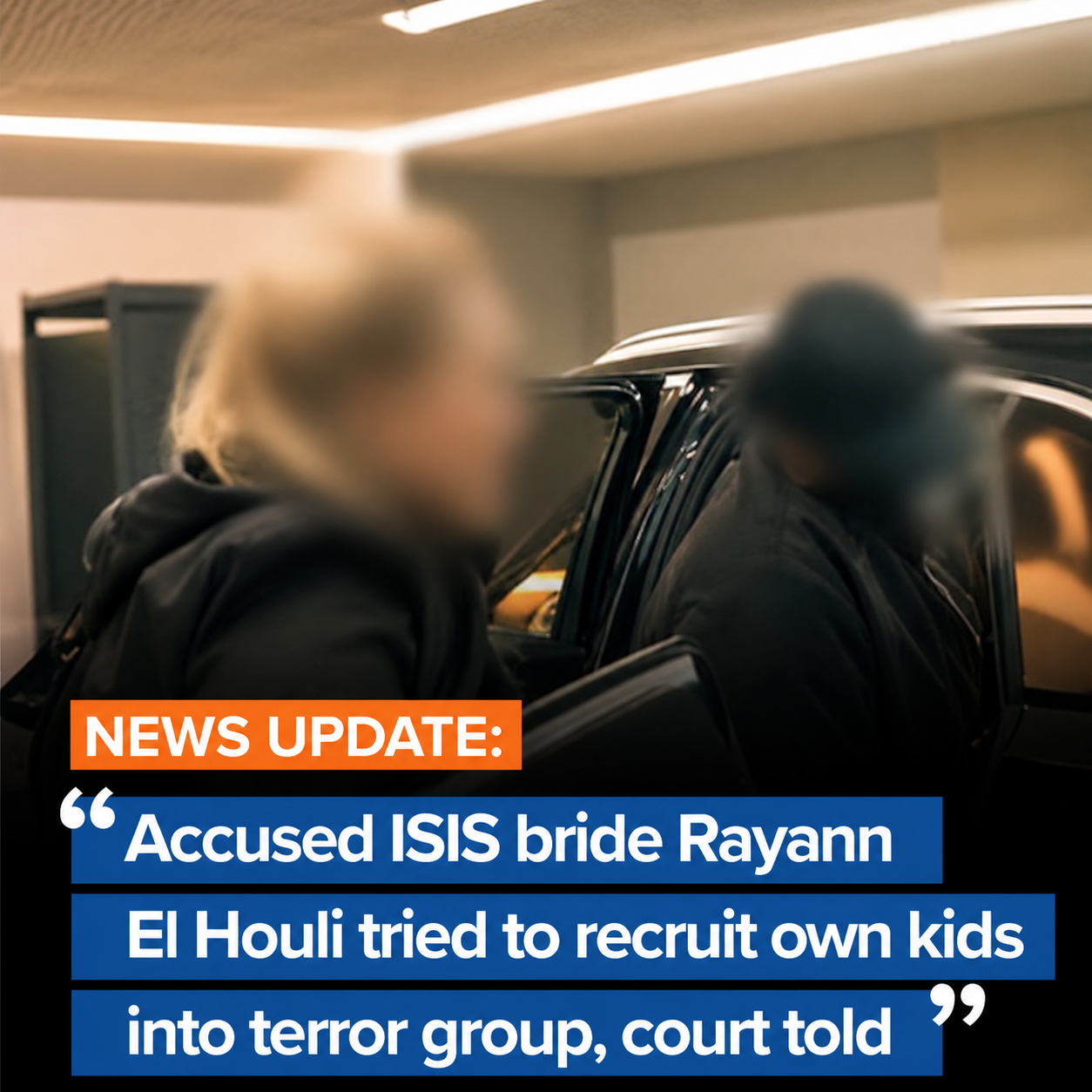
The Melbourne case has reignited debate about national security, deradicalisation programs, public trust and the long-term consequences of bringing ISIS-linked Australians back home.
The woman is facing serious terrorism-related allegations connected to her time in Syria during the height of the Islamic State caliphate.
Court proceedings have heard claims that she travelled to the region more than a decade ago and remained there for years while living within territory controlled by the terrorist organisation.
Prosecutors allege she supported violent extremist ideology, encouraged terrorist beliefs and attempted to influence her children using those views.
The allegations also include claims that she maintained support for extremist principles while Islamic State remained operational.
The case has become especially controversial because of claims that her departure from ISIS-controlled territory only occurred after the organisation’s collapse rather than because of any ideological change.
That distinction is now sitting at the centre of public concern.
Because many Australians are not simply asking what happened in the past.
They are asking whether the beliefs behind those actions have genuinely disappeared.
That is where the debate becomes much larger than a criminal trial.
The issue moves into questions of trust.
Trust in deradicalisation.
Trust in rehabilitation.
Trust in government assessments.
And trust that public safety remains the highest priority.
Those concerns have intensified following claims that the woman had not participated in formal deradicalisation programs after returning to Australia.
For critics, that detail became politically explosive.
Because many people view deradicalisation as the minimum expectation following involvement with a terrorist organisation.
Without visible evidence of change, suspicion often remains.
That suspicion helps explain why the case has generated such strong reactions.
The debate is no longer only about guilt or innocence.
It is about risk.
People often respond differently to terrorism cases than to ordinary criminal matters.
Because the consequences associated with failure are viewed as potentially much larger.
That creates a different public mindset.
Many Australians instinctively ask a simple question.
What happens if authorities get it wrong?
That question sits beneath much of the current backlash.
Supporters of repatriation policies argue Australian citizens should face Australian justice.
They argue courts, police and security agencies are better equipped to manage potential risks when individuals are returned and monitored under Australian law.
Others reject that argument entirely.
They believe anyone who voluntarily joined Islamic State forfeited the right to return.
That disagreement has existed for years.
The current case has brought it back into public focus.
That is partly because the allegations strike directly at issues people find deeply confronting.
Children.
Radicalisation.
Violence.
Extremist ideology.
Each carries strong emotional weight.
Together, they create a story capable of generating far broader concern than an ordinary court proceeding.
The debate also connects to a larger question already sitting beneath Australian politics.
How should governments balance security, legal rights and rehabilitation?
That balance becomes especially difficult when terrorism is involved.
One side argues democratic societies must remain committed to legal principles even in difficult cases.
The other argues public safety should outweigh almost every other consideration.
Both sides believe they are protecting something important.
That is why the argument remains so intense.
The financial dimension is also attracting attention.
Questions surrounding security monitoring, court proceedings, welfare support, rehabilitation programs and long-term supervision continue generating public debate whenever ISIS-linked individuals return to Australia.
Many taxpayers increasingly ask who pays for those systems and how long those costs continue.
That concern connects directly to fairness.
People often judge controversial government decisions through a simple lens.
Who bears the consequences?
If public resources are required for monitoring and rehabilitation, many voters want reassurance that those investments genuinely reduce risk.
Without that confidence, frustration grows.
That frustration is visible throughout the current debate.
Because for many Australians, the issue is no longer only about one accused woman.
It is about a broader question.
Can extremist beliefs truly be reversed?
And how should governments respond when uncertainty remains?
Those questions are unlikely to disappear once the court case ends.
The legal process may determine criminal responsibility.
It will not necessarily resolve the public argument.
Because the larger conflict sits beyond the courtroom.
It sits inside competing ideas about security, justice, rehabilitation and national responsibility.
That may ultimately be why the case is attracting such intense attention.
Not simply because of the allegations themselves.
But because they force Australians to confront a much larger question.
What should happen when someone linked to one of the world’s most notorious terrorist movements wants to come home?
And if the country still cannot agree on that answer, the political debate surrounding ISIS repatriations may be far from over.






