Pauline Hanson has unleashed on her political opponents after fresh criticism over her attendance record in Senate estimates hearings, dismissing critics as “bastards” while defending her decision to spend more time speaking directly with Australians outside Canberra.
The clash comes at a remarkable moment in Australian politics.
One Nation is experiencing its strongest polling surge in years.
Recent national polling has even placed the party ahead of Labor in primary support.
That reality is what makes the controversy so politically significant.
Because the biggest question may not be why Hanson is missing hearings.
It may be why so many voters appear willing to support her despite it.
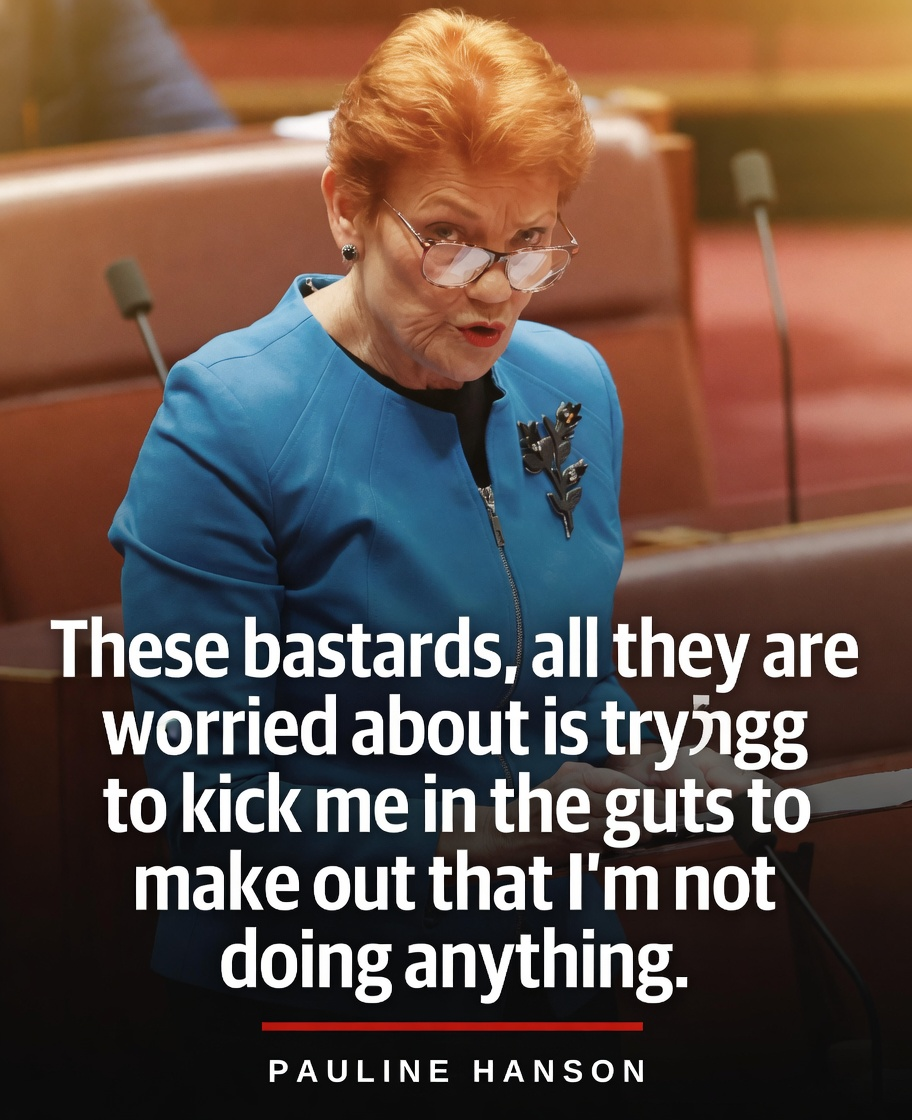
Pauline Hanson’s latest clash with critics has reignited debate about political accountability, voter frustration and the growing disconnect between Canberra and many Australians.
The criticism intensified after claims Hanson had missed a large majority of Senate estimates hearing days during her time back in federal parliament.
Opponents argue parliamentary scrutiny is a core responsibility of elected representatives.
From their perspective, attendance is part of the job taxpayers expect politicians to perform.
That argument has become a central line of attack from Labor figures and political rivals.
Hanson rejects the criticism entirely.
She argues estimates hearings often deliver little value because bureaucrats avoid giving direct answers and routinely defer responses.
Instead, she insists her time is better spent travelling, meeting voters and hearing concerns directly from ordinary Australians.
That defence may sound controversial within political circles.
Outside political circles, however, it touches on something much larger.
Distrust.
Many Australians already feel disconnected from political institutions.
They feel major decisions are increasingly made inside government departments, committees and bureaucratic systems that seem far removed from everyday life.
Whether that perception is fair or not, it remains politically powerful.
People often respond positively to politicians who appear willing to challenge the system itself.
That helps explain why the debate is no longer simply about attendance records.
It has become a debate about representation.
Who is actually listening?
Who understands public frustration?
Who spends more time with voters than political insiders?
Those questions increasingly shape modern political movements.
Australia remains under significant economic pressure.
Cost-of-living concerns continue dominating public discussion.
Housing affordability remains one of the country’s biggest challenges.
Many households feel financial security is becoming harder to achieve.
Against that backdrop, public patience for political process often weakens.
People become less interested in procedure.
They become more interested in outcomes.
That creates opportunities for outsider-style political figures.
One Nation has spent years positioning itself as a voice for Australians who believe mainstream politics no longer reflects their priorities.
The latest polling suggests that message is resonating more strongly than ever.
Recent national surveys placed One Nation ahead of both Labor and the Coalition in primary support, marking one of the most dramatic shifts in Australian politics in recent memory.
That is why Hanson’s attendance controversy carries broader significance.
For critics, the issue raises questions about accountability and parliamentary responsibility.
For supporters, the criticism reinforces a belief that political insiders are attacking someone who challenges the establishment.
Both sides are effectively arguing about the same thing.
Fairness.
But they define fairness differently.
One side believes fairness means showing up and participating in parliamentary oversight.
The other believes fairness means spending time understanding the concerns of voters rather than sitting through hearings they see as ineffective.
That conflict is becoming increasingly visible across democratic politics.
People are no longer only debating policy.
They are debating legitimacy.
They are debating trust.
They are debating who truly represents public concerns.
That is why controversies involving figures like Hanson often become much larger than the immediate issue.
The attendance figures themselves are only one part of the story.
The bigger issue is what voters think those figures actually mean.
If people believe parliamentary hearings are essential accountability tools, Hanson’s absences become a serious problem.
If they believe Canberra has become disconnected from reality, her explanation may sound reasonable.
That distinction matters.
Because politics is often shaped more by perception than procedure.
The latest polling suggests many Australians are already questioning traditional political structures.
Minor parties continue gaining support.
Trust in major institutions remains under pressure.
Voters increasingly appear willing to look beyond conventional political choices.
That environment helps explain why Hanson’s support can rise even while criticism intensifies.
For some voters, attacks from political opponents may reinforce rather than weaken her appeal.
Because they see the criticism as evidence she is challenging a system they already distrust.
That may ultimately be the larger story behind the controversy.
Not whether Pauline Hanson attended enough hearings.
But whether growing numbers of Australians are beginning to judge politicians by a completely different standard than Canberra does.
Because if that shift continues, the political landscape may change far more dramatically than any attendance record ever could.






