A fierce debate is erupting over Australia’s AUKUS submarine program after Defence Minister Richard Marles defended a major shift that will see Australia receive only second-hand Virginia-class submarines from the United States instead of a mix of new and used vessels.
Marles insists the decision will save money and simplify operations.
Critics say it raises a far more uncomfortable question.
Why is Australia spending hundreds of billions on a defence project only to end up receiving older military hardware?
That question is now driving growing scrutiny across the country.
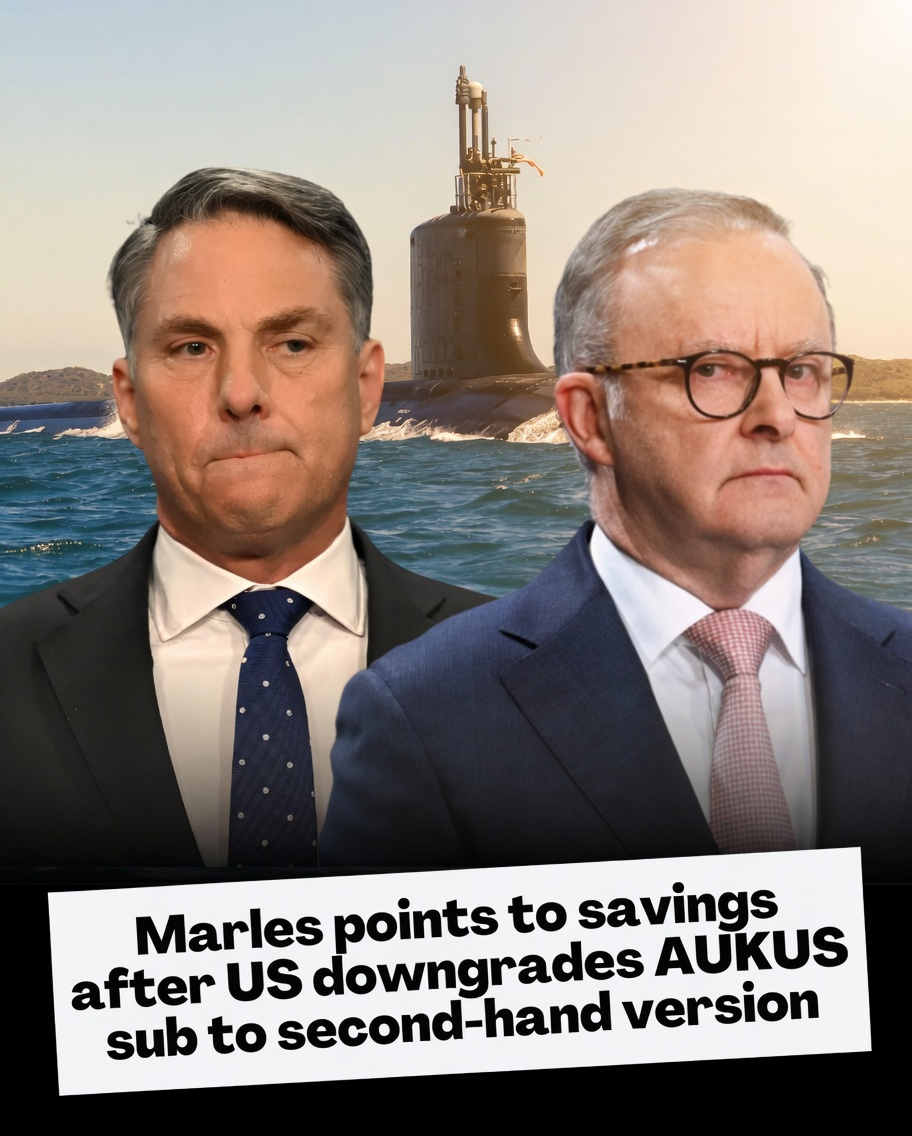
The decision to acquire only second-hand Virginia-class submarines has intensified debate about defence spending, military capability and whether Australians are getting value for money.
Under the latest AUKUS changes, Australia will now receive three in-service Virginia-class nuclear submarines from the United States rather than the earlier plan involving both new and used vessels.
The shift was announced as part of a move designed to streamline the program and reduce complexity.
Marles argued the revised arrangement would create significant savings while simplifying training, logistics and maintenance requirements.
He described AUKUS as an enormously complicated project where simplicity carries major value.
But the announcement immediately triggered criticism.
For many Australians, the issue is not simply whether the submarines can still operate effectively.
It is whether Australia is receiving the capability it was originally led to expect.
That distinction matters.
Because defence spending is not judged the same way as ordinary government programs.
National security projects are often justified on the basis that Australia must acquire the best capability available.
That is why critics argue the debate goes far beyond cost savings.
It goes to value.
And value is where the controversy becomes politically dangerous.
Former senior defence official Michael Shoebridge has argued newer Virginia-class submarines would provide stronger capability and easier long-term maintenance.
Other defence analysts have also raised concerns about the operational lifespan of older vessels and the risks attached to relying on ageing platforms while waiting for future SSN-AUKUS submarines.
The criticism has intensified because Australia is not purchasing inexpensive equipment.
The broader AUKUS program remains one of the most expensive defence projects in Australian history.
That reality is shaping public reaction.
People often accept large government spending when they believe they are receiving the highest available standard.
But when expectations shift, questions quickly emerge.
Who benefits?
Who made the decision?
And is Australia receiving what taxpayers believed they were funding?
Those questions are becoming increasingly central to the debate.
The controversy also arrives at a time when cost-of-living pressure remains a major concern across Australia.
Households continue dealing with rising expenses.
Housing affordability remains under strain.
Government spending decisions now receive far greater public scrutiny than they may have received several years ago.
That environment changes how defence projects are viewed.
People start comparing priorities.
They start comparing costs.
They start asking whether every dollar is delivering maximum value.
That is why the submarine debate is attracting attention far beyond defence circles.
For supporters of the revised AUKUS plan, the decision reflects practical reality.
The United States submarine production system is under pressure.
Delivery timelines remain challenging.
Simplifying the fleet may reduce logistical risks and improve operational readiness.
From that perspective, the decision represents strategic pragmatism rather than weakness.
Critics see something very different.
They argue Australia is gradually lowering expectations while maintaining enormous financial commitments.
From that perspective, the issue is not merely about submarines.
It is about accountability.
Because once governments begin changing major promises attached to large public investments, trust becomes part of the conversation.
That may be the larger issue now emerging behind the submarine debate.
The argument is no longer only about military hardware.
It is about confidence.
Confidence that long-term national projects are delivering what was promised.
Confidence that taxpayers are receiving value.
Confidence that strategic decisions are being made in Australia’s best interests.
Those concerns help explain why the issue is generating such strong reactions.
Many Australians are not defence experts.
Most will never compare submarine production blocks or maintenance schedules.
But they do understand one simple idea.
If something costs an enormous amount of money, people expect the best version available.
That expectation is now sitting at the centre of the controversy.
Whether the revised AUKUS plan ultimately proves successful remains uncertain.
The submarines will still provide significant military capability.
The broader partnership continues moving forward.
Future SSN-AUKUS vessels remain part of the long-term strategy.
But the political challenge may already be visible.
Because public debate is no longer focused only on national security.
It is focused on value for money.
And once voters begin asking whether they are getting what they paid for, every major project faces a much tougher test.
That may ultimately become the biggest challenge facing Richard Marles.
Not proving the submarines can operate.
But proving Australians are still receiving the capability they were originally promised.






