Pauline Hanson has lashed out at critics questioning her attendance record in Senate estimates hearings, dismissing rival politicians as “bastards” and insisting her time is better spent listening to everyday Australians than sitting in Canberra dealing with bureaucrats.
The comments have triggered a fresh political fight.
Critics argue parliamentary attendance is part of the job.
Supporters argue voters care more about results than procedure.
But beneath the argument sits a much larger question.
What matters more to Australians right now — parliamentary process or political connection?
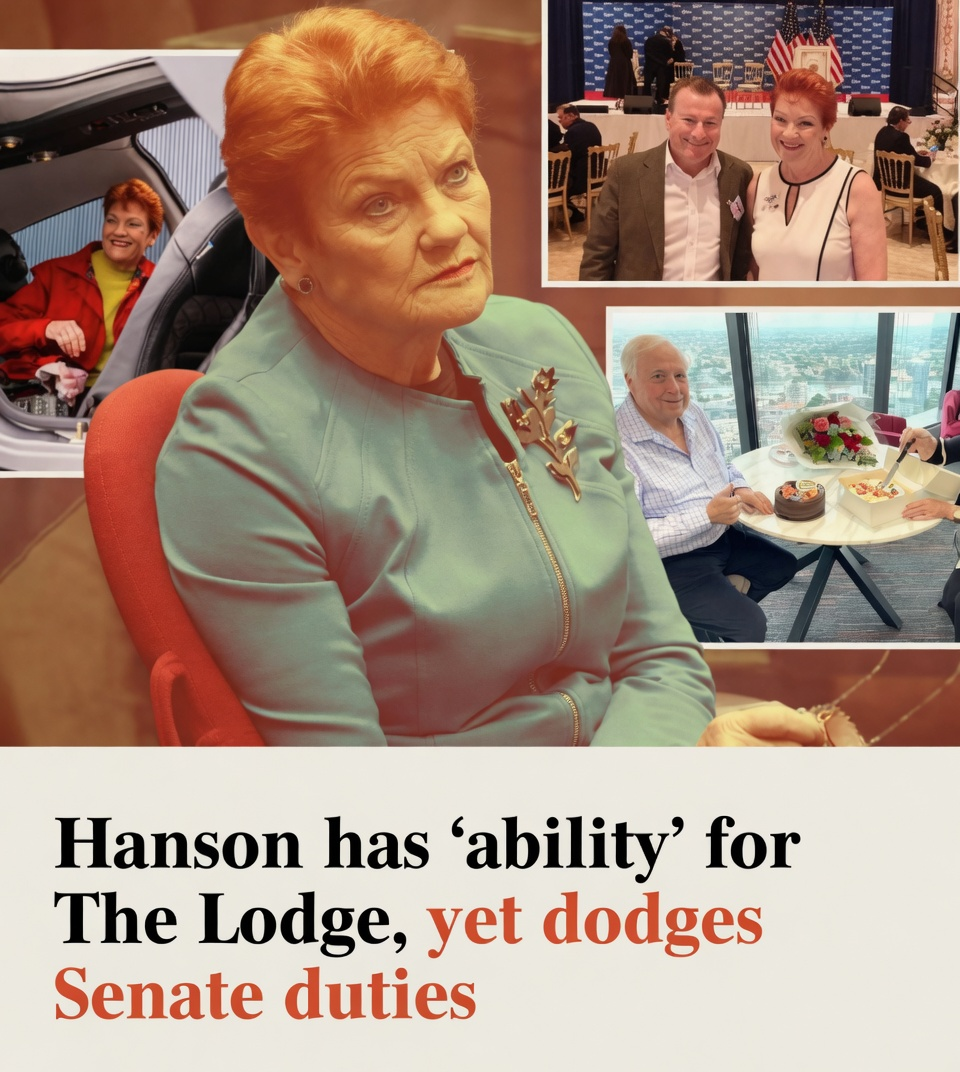
Pauline Hanson’s defence of her Senate attendance record has reignited debate about political accountability, voter frustration and what Australians expect from elected representatives.
The controversy erupted after scrutiny intensified around Hanson’s attendance at Senate estimates hearings.
Parliamentary analysis showed she attended only a small fraction of estimates hearing days since returning to federal parliament in 2016.
That immediately sparked criticism from both Labor and Coalition figures.
For many politicians, the issue appears straightforward.
If elected representatives are paid by taxpayers, they should attend parliamentary hearings.
That is the argument her critics continue making.
Hanson sees the situation very differently.
She argues estimates hearings often produce little value because bureaucrats avoid giving direct answers and regularly take questions on notice.
From her perspective, travelling throughout Queensland and speaking directly with voters provides more useful information than spending long periods inside parliamentary committee rooms.
That defence may sound controversial inside Canberra.
But outside Canberra, it touches on something politically powerful.
Distrust.
Many Australians already feel disconnected from political institutions.
They feel major decisions are increasingly made by governments, departments and bureaucracies that seem distant from everyday life.
Whether that perception is accurate or not, it remains influential.
People often respond positively to politicians who appear willing to challenge the system itself.
That helps explain why debates like this can become larger than attendance records.
Because the argument quickly shifts away from procedure.
It becomes a debate about representation.
Who is actually listening?
Who understands public frustration?
And who is spending more time with voters than with political insiders?
Those questions are increasingly shaping modern politics.
Australia is facing significant pressure across multiple fronts.
Cost-of-living concerns remain high.
Housing affordability continues creating anxiety.
Many households feel financial pressure has become harder to escape.
Against that backdrop, public patience for political process often weakens.
People start focusing less on procedure and more on outcomes.
That creates opportunities for outsider-style political movements.
One Nation has spent years positioning itself in exactly that space.
The party frequently presents itself as a voice for Australians who believe mainstream politics no longer reflects their concerns.
Its recent polling surge suggests that message may now be resonating more strongly than ever.
That is why the attendance controversy carries broader significance.
For critics, Hanson’s record raises questions about accountability and responsibility.
For supporters, the criticism reinforces a belief that political insiders are attacking someone who challenges the established system.
Both sides are effectively arguing about the same thing.
Fairness.
But they define fairness differently.
One side believes fairness means fulfilling parliamentary obligations.
The other believes fairness means prioritising direct engagement with voters.
That conflict is becoming increasingly common across democratic politics.
People are no longer only debating policy.
They are debating legitimacy.
They are debating trust.
They are debating who truly represents public concerns.
That is why the issue continues generating attention.
The attendance numbers themselves are only part of the story.
The larger issue is what voters think those numbers mean.
If people believe parliamentary hearings are essential accountability mechanisms, Hanson’s absences become a problem.
If they believe Canberra is disconnected from reality, her defence may appear reasonable.
That distinction matters.
Because political success is often shaped less by institutional expectations than by public perception.
The latest polling suggests a growing number of Australians are already questioning traditional political structures.
Minor parties continue gaining support.
Trust in major institutions remains under pressure.
Voters increasingly appear willing to look beyond conventional political pathways.
That environment helps explain why controversies involving figures like Hanson often become much larger than the immediate issue.
They tap into broader frustrations already present across society.
Questions about representation.
Questions about accountability.
Questions about whether political systems still reflect the priorities of ordinary Australians.
That may ultimately be the bigger story here.
Not whether Pauline Hanson attended enough hearings.
But whether voters still judge politicians using the same standards political institutions expect them to.
Because if those standards are changing, Australian politics may be changing with them.






