A fresh political and cultural storm is building after Sall Grover blamed former Prime Minister Julia Gillard for legal changes she says helped create Australia’s ongoing battle over the definition of a woman.
The comments have reignited one of the country’s most divisive debates.
Supporters argue the laws expanded protections and modernised anti-discrimination rules.
Critics argue they fundamentally changed how sex and gender are interpreted under Australian law.
But the reason the controversy continues generating such strong reactions may have less to do with legal wording itself.
It is about trust.
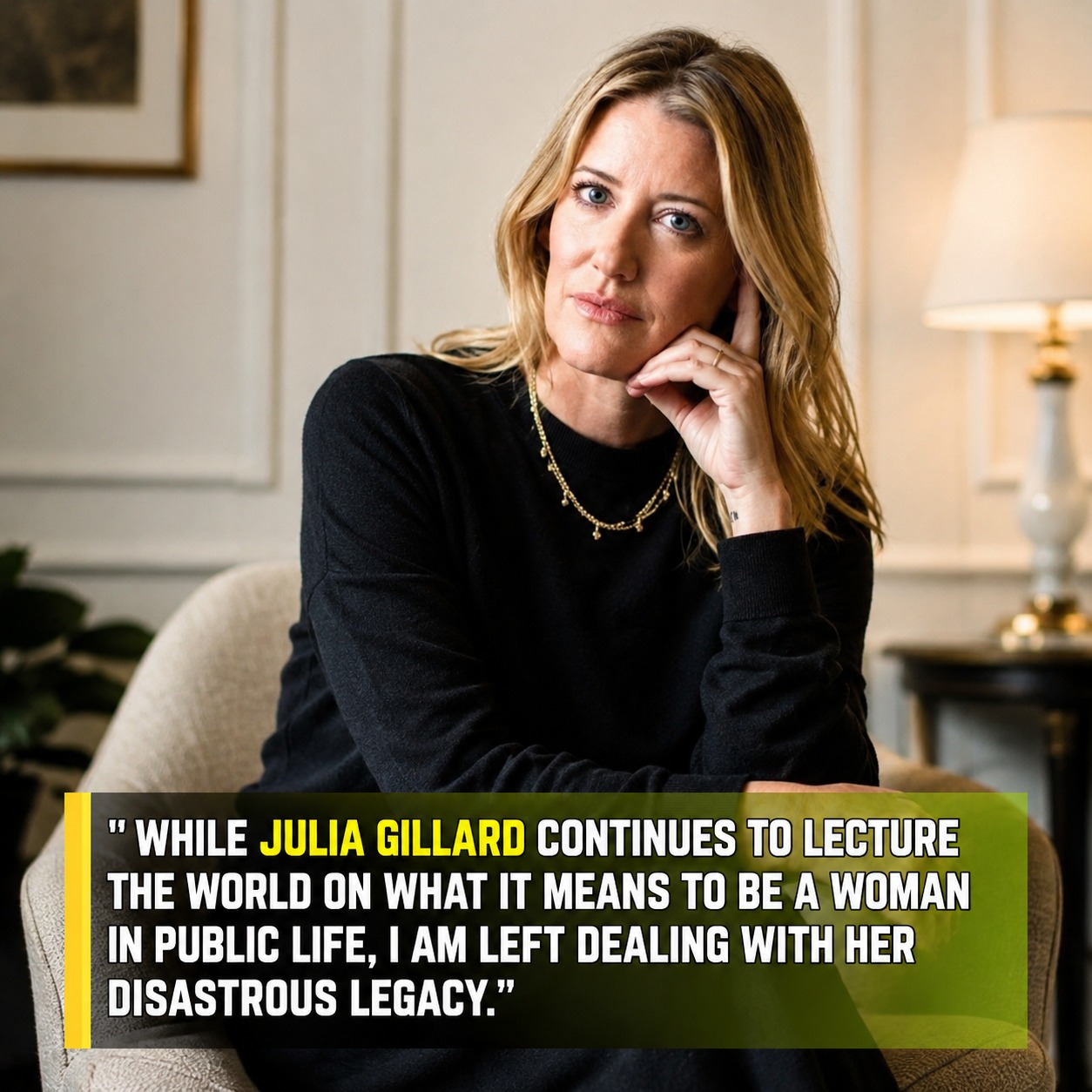
The debate surrounding Australia’s Sex Discrimination Act has reignited broader questions about fairness, women’s rights and who gets to shape major social change.
Grover has become one of the most prominent figures in Australia’s increasingly heated debate over sex-based rights and gender identity law.
Her criticism focuses on amendments introduced during the Gillard era that added gender identity protections to the Sex Discrimination Act.
Those amendments have become central to ongoing legal disputes involving women-only spaces and the interpretation of sex-based protections.
The issue gained even more attention following the widely discussed Giggle legal case.
That case intensified national arguments over whether biological sex or gender identity should determine access to certain spaces and protections under Australian law.
For Grover and her supporters, the controversy is about what they see as the erosion of sex-based rights.
They argue legal definitions have moved beyond what many Australians believed the law originally meant.
Some believe major social changes have occurred through courts and institutions rather than through direct public debate.
That perception is helping fuel public frustration.
Supporters of the existing framework strongly reject those claims.
They argue anti-discrimination protections exist to prevent exclusion and ensure vulnerable groups receive equal treatment under the law.
From their perspective, the reforms represent progress rather than decline.
That clash reveals why the debate has become so difficult to resolve.
Both sides believe they are defending fairness.
But they define fairness in completely different ways.
That is why the issue continues generating such intense reactions.
The argument is no longer only about legislation.
It is about consequences.
Many Australians are now asking whether the outcomes produced by the law match what voters originally expected.
That question sits at the centre of the controversy.
The debate has also become tied to wider concerns already building across Australian society.
Questions surrounding identity, free speech, women’s rights and institutional credibility continue dominating public discussion.
As a result, disputes involving gender law rarely remain limited to legal circles.
They quickly become political.
And once they become political, they often evolve into something much larger.
A debate about public trust itself.
Trust in governments.
Trust in courts.
Trust in regulators.
Trust that ordinary concerns are still being heard.
Those concerns help explain why stories like this continue spreading far beyond legal communities.
Many voters increasingly feel major cultural shifts are happening without broad public consensus.
Whether that perception is accurate or not, it remains politically powerful.
People often react strongly when they feel decisions affecting everyday life were made without their involvement.
That feeling is helping drive engagement around the controversy.
The issue has now become bigger than Julia Gillard.
Bigger than Sall Grover.
And bigger than any individual court case.
It has become a broader argument about who gets to define fairness in modern Australia.
One side sees expanded protections.
The other sees the weakening of existing rights.
Neither side believes the stakes are small.
That is why the debate continues intensifying rather than fading.
Because beneath the legal language sits a much larger question.
Who gets to decide where the balance should sit between competing rights?
That question now lies at the centre of Australia’s gender law debate.
And for many Australians, it remains far from settled.
The controversy also highlights a deeper political reality.
When questions of identity become linked to questions of fairness, public reactions often become far more emotional.
People stop debating technical legal details.
They begin debating values.
And once debates become about values, compromise becomes much harder.
That is exactly why the discussion continues generating so much attention.
Because for many Australians, the issue is no longer simply about what the law says.
It is about whether they believe the law still reflects the society they think they live in.
That may ultimately be the larger reason the argument refuses to disappear.
Not because the country is still debating one amendment.
But because it is still debating what fairness itself should mean.






