Pauline Hanson has declared she believes she has what it takes to become Prime Minister of Australia, reigniting debate about the future of Australian politics and the growing frustration many voters feel toward the major parties.
The One Nation leader confirmed she is considering a move into the House of Representatives at the next federal election, a step widely seen as necessary for anyone hoping to seriously pursue the nation’s top political position.
The announcement immediately generated strong reactions.
Supporters described it as evidence that Australians are becoming increasingly open to alternatives outside the traditional political establishment.
Critics dismissed the idea as unrealistic.
But the most important part of the story may not be Pauline Hanson’s ambition itself.
It may be why the idea is attracting attention in the first place.
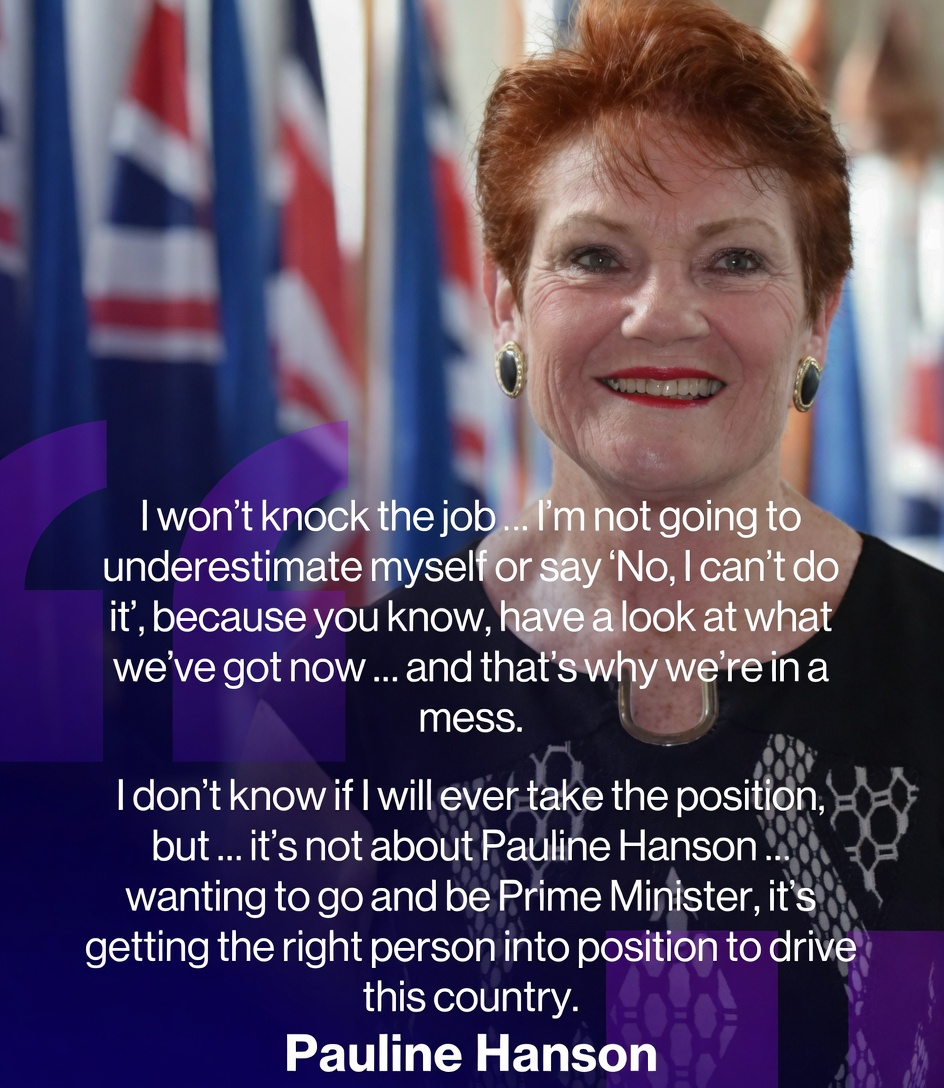
Pauline Hanson’s latest political declaration has reignited debate about voter dissatisfaction and the future direction of Australian politics.
For decades, Hanson has remained one of the most recognisable and controversial figures in Australian public life.
She has built her political brand around challenging the major parties and presenting herself as a voice for Australians who believe the political system no longer reflects their concerns.
That message appears to be finding a larger audience in the current environment.
Housing affordability remains one of the biggest issues facing households.
Cost-of-living pressures continue squeezing family budgets.
Public trust in political institutions has become increasingly fragile.
Those pressures have created fertile ground for outsider political movements.
That reality may be the bigger force driving attention around Hanson’s comments.
The discussion quickly expanded beyond whether she could realistically become Prime Minister.
Instead, many Australians began debating why support for parties outside Labor and the Coalition appears to be growing.
That question sits at the centre of the broader political conversation.
When voters feel financially secure and politically represented, major parties often dominate comfortably.
When frustration begins building, political alternatives tend to attract more attention.
That pattern has appeared repeatedly in democracies around the world.
Australia may now be experiencing a version of the same shift.
Many voters increasingly feel neither major party is offering convincing answers to the pressures they face.
Rising rents.
Housing shortages.
Migration debates.
Energy costs.
Economic uncertainty.
All of those issues continue driving public anxiety.
Against that backdrop, politicians positioning themselves as challengers to the system often find a more receptive audience.
That does not automatically translate into electoral victory.
But it can create momentum.
And momentum itself can reshape political conversations.
That is why Hanson’s comments generated such strong interest.
The story is not only about whether she wants the top job.
It is about whether a growing number of Australians are searching for something different.
Supporters argue One Nation speaks to frustrations many voters believe are ignored by the political mainstream.
Critics argue the party remains deeply divisive and continues relying on political outrage to generate attention.
Neither side appears willing to change its position.
That divide helps explain why Hanson remains such a powerful political figure despite years of controversy.
People rarely react to her with indifference.
And in modern politics, strong reactions often translate into influence.
The growing attention around minor parties has also created new pressure for Labor and the Coalition.
Every sign of voter dissatisfaction raises questions about whether the traditional two-party structure is weakening.
Political strategists closely watch those trends because they can reshape election outcomes long before governments realise the scale of the shift.
That possibility is helping keep attention focused on Hanson’s next move.
If she decides to contest a lower house seat, the campaign would likely attract enormous media attention.
Not simply because of Hanson herself.
But because it would become a test of how much voter frustration is translating into support for political alternatives.
That is the question sitting beneath the entire story.
Australians are not only debating Pauline Hanson.
They are debating trust.
Representation.
Political identity.
And whether the existing system is still delivering what voters expect.
Those concerns reach far beyond one politician.
They reflect a broader uncertainty about where the country is heading next.
That uncertainty is what gives stories like this their political power.
Because once voters begin seriously exploring alternatives, the conversation stops being about a single candidate.
It becomes a conversation about the system itself.
And that may be why Hanson’s declaration is generating so much attention.
Not because Australians suddenly expect her to become Prime Minister.
But because her comments have exposed a deeper question many voters are already asking.
If frustration with the major parties continues growing, where does that frustration eventually go?
That question may end up shaping far more than Pauline Hanson’s political future.






