Health authorities have issued a fresh warning after a sudden spike in Mpox cases across Western Australia, with officials now racing to contain new infections as contact tracing efforts intensify.
The increase has triggered renewed concern because case numbers have climbed far faster than many expected.
In just the first months of the year, Western Australia has already recorded almost as many Mpox cases as it saw during the whole of last year.
That statistic alone has raised an uncomfortable question.
Have people stopped paying attention while the virus continues spreading in the background?
For many health officials, that may be the biggest concern right now.
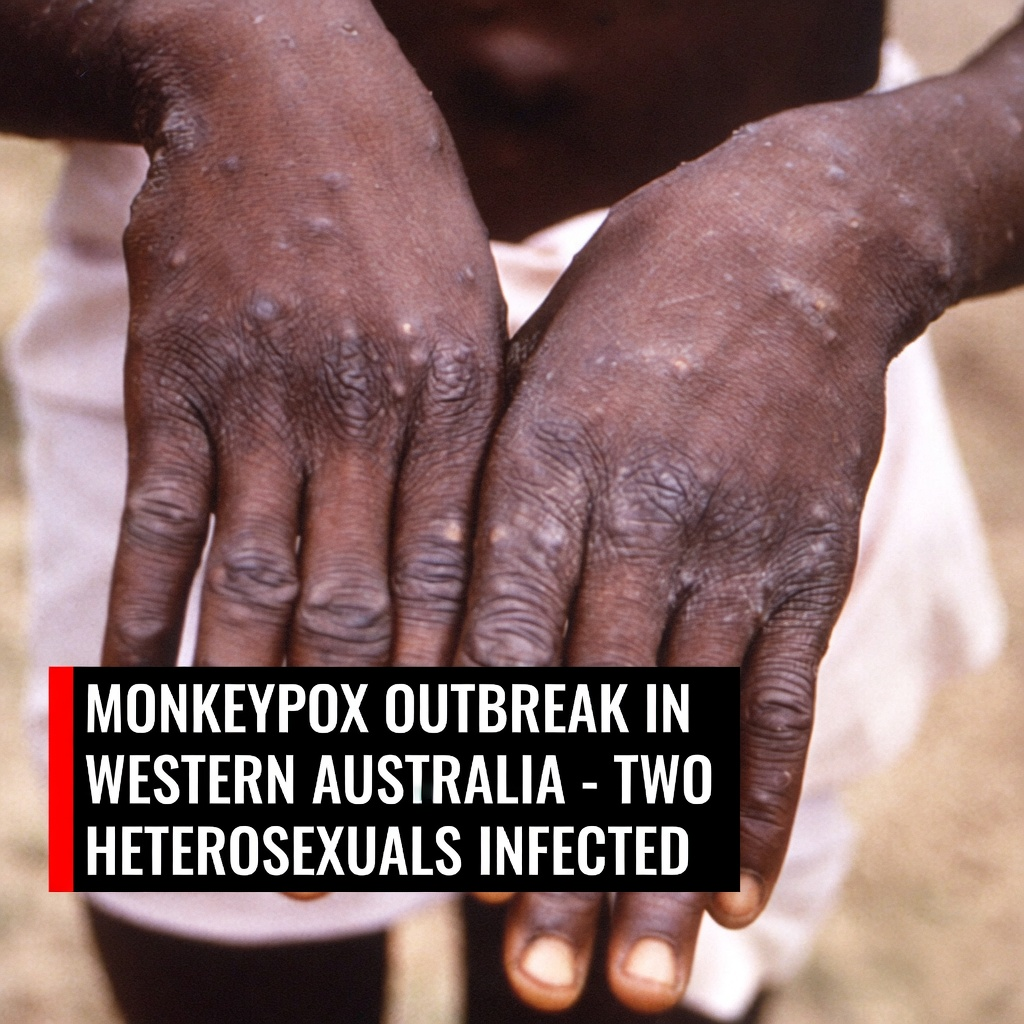
Health authorities have issued a renewed warning after a rapid increase in Mpox infections across Western Australia.
Recent figures show a sharp rise in reported infections, prompting health authorities to launch fresh public alerts and contact tracing operations.
The sudden increase has placed Mpox back into public discussion after months in which many Australians barely heard about the virus.
That is part of what makes the situation so striking.
The virus never fully disappeared.
Public attention simply moved elsewhere.
Now health authorities are trying to make sure awareness catches up again before infections rise further.
Officials say several of the recent cases were acquired locally, reinforcing concerns that community transmission remains active.
That development is important because locally acquired infections often create greater challenges for health authorities attempting to track transmission chains.
The more difficult it becomes to identify where infections originated, the harder outbreaks can be to contain.
That reality is helping drive the latest warning.
Health experts stress that Mpox is generally spread through very close physical contact with an infected person.
Symptoms can include fever, fatigue, swollen lymph nodes, headaches and skin lesions.
Most people recover, but authorities remain focused on limiting further spread and ensuring infections are identified quickly.
What is drawing additional attention is the growing concern that many Australians may no longer recognise the symptoms.
After years dominated by pandemic-related headlines, public health fatigue has become a real challenge.
People naturally stop focusing on risks that are no longer appearing in front-page news every day.
That can create dangerous gaps in awareness.
And awareness often plays a major role in how quickly outbreaks are detected.
The current warning reflects exactly that concern.
Health authorities are not only trying to manage infections.
They are trying to prevent complacency.
That task becomes harder every year a virus remains outside the public spotlight.
Many Australians still associate Mpox with the large global headlines that emerged during previous outbreaks.
But health agencies have repeatedly warned the virus has continued circulating internationally even after media attention faded.
That means new spikes can still emerge unexpectedly.
The latest increase in Western Australia is now serving as a reminder of that reality.
The situation has also reignited broader questions about preparedness.
How quickly would people seek medical advice if symptoms appeared?
Would they recognise the warning signs?
And how effectively can health systems respond if case numbers continue increasing?
Those questions are becoming part of the public discussion once again.
For health authorities, the challenge is balancing awareness with reassurance.
Officials are not suggesting widespread panic is necessary.
At the same time, they clearly want people to understand that the virus remains present and should not be ignored.
That balance is often difficult.
If warnings appear too strong, public anxiety rises.
If warnings appear too weak, people may not pay attention.
The latest alert reflects an attempt to navigate that middle ground.
Authorities are encouraging people experiencing symptoms or concerned about possible exposure to seek medical advice and follow public health guidance.
They are also continuing efforts to identify potential contacts linked to recent infections.
For now, officials insist the situation remains manageable.
But the recent surge has made one thing very clear.
Mpox has not disappeared simply because public attention shifted elsewhere.
And that may be the biggest reason this latest warning is generating concern.
Not because the outbreak is the largest Australia has faced.
But because it highlights how quickly public health risks can return to the spotlight when awareness starts falling behind reality.
As infections continue rising, authorities are now working to ensure that does not happen again.






