One of Britain’s most recognisable surviving Second World War veterans has died at the age of 101.
Alec Penstone spent more than eight decades carrying the memories of war, loss and sacrifice.
From the bombing raids of the Blitz to the dangerous waters surrounding the Normandy landings, his life became intertwined with some of the defining moments of the twentieth century.
Now, tributes are pouring in following the death of the Royal Navy veteran whose story resonated with millions of people across Britain.
For many, Alec represented something increasingly rare.
A direct link to a generation that experienced war firsthand and helped shape the modern world.
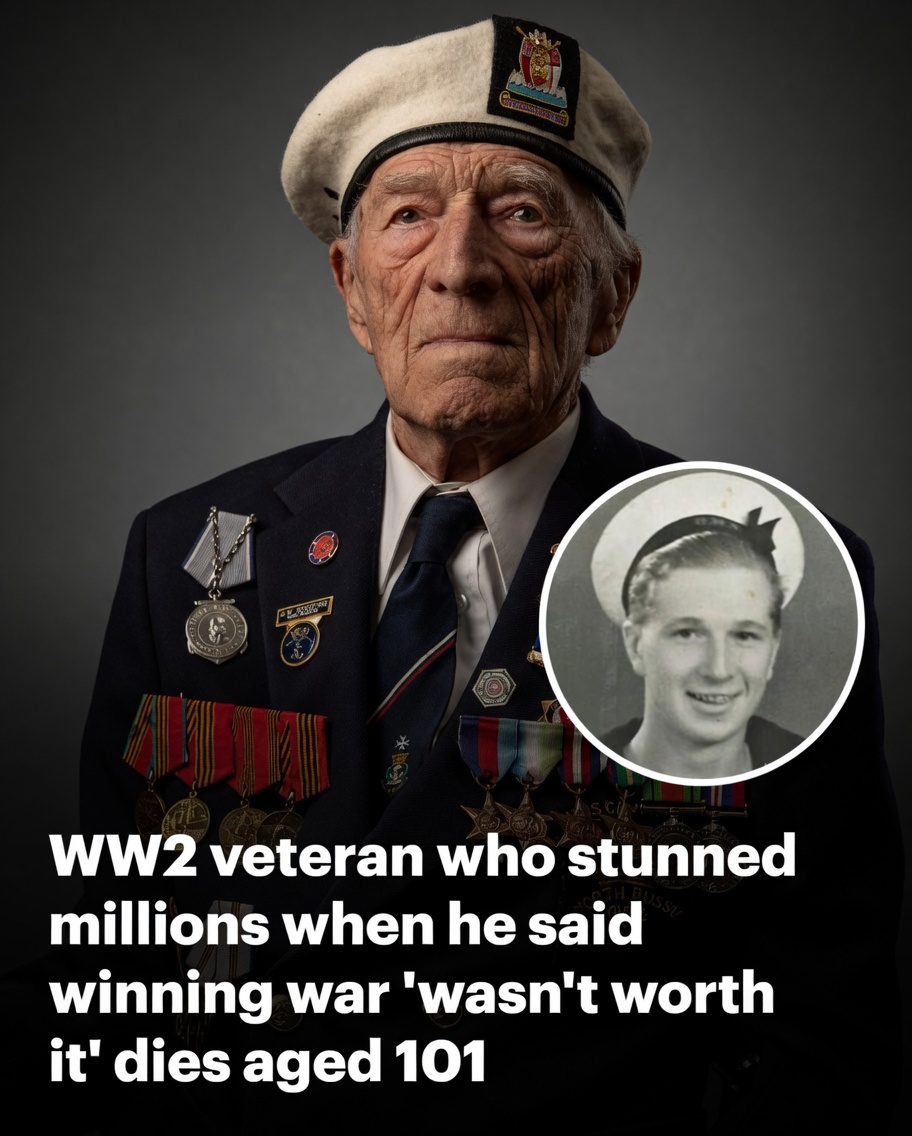
Royal Navy veteran Alec Penstone has died aged 101 after a life defined by wartime service, remembrance and dedication to honouring fallen comrades.
Born in London in 1925, Alec grew up during a period of extraordinary upheaval.
As a teenager he witnessed the devastation of the Blitz as German bombs fell across Britain.
Rather than standing on the sidelines, he volunteered as an air raid messenger, helping communities during some of the darkest days of the war.
The experiences would shape the rest of his life.
By the time he was old enough to join the military, Britain was locked in a fight for survival across Europe and beyond.
Alec enlisted in the Royal Navy and began a journey that would place him in the middle of some of the conflict’s most dangerous operations.
He eventually served aboard HMS Campania, an escort carrier tasked with protecting Allied forces during critical stages of the war.
His duties included helping detect enemy submarines that threatened Allied shipping and military operations.
The work was demanding, dangerous and often carried out far from public attention.
Yet missions like these played a crucial role in protecting the vast naval forces required for the liberation of Europe.
During the Normandy campaign, Allied commanders faced the constant threat of German submarines targeting ships carrying troops, vehicles and supplies.
Every successful detection helped reduce that danger.
Alec later reflected on those years with a mixture of pride and sadness.
Like many veterans, he rarely focused on his own achievements.
Instead, he spoke about the young men who never returned home.
Those memories remained with him for the rest of his life.
After serving through D-Day operations, he also completed Arctic convoy missions, some of the most hazardous assignments undertaken by Allied sailors during the war.
Crews faced freezing conditions, enemy attacks and the constant possibility of disaster.
Many ships never completed the journey.
Alec survived them all.
When the war finally ended, he returned home and built a life in peace.
Yet he never left the wartime generation behind.
Throughout the decades that followed, he became a passionate supporter of remembrance events and veterans’ causes.
He attended commemorations, spoke to younger generations and worked to ensure the sacrifices made during the war would never be forgotten.
Friends often described him as humble despite the respect he commanded.
He remained approachable, generous and deeply committed to preserving the stories of those who served.
As the number of surviving veterans declined, Alec became increasingly well known across Britain.
His appearances at commemorative events attracted attention because he spoke openly and honestly about both the past and the present.
He believed remembrance was more than ceremony.
For him, it was about understanding the cost of freedom and recognising the sacrifices made by ordinary people during extraordinary times.
That message resonated strongly with audiences.
Many people who met him were struck by his ability to describe historic events in deeply personal terms.
Rather than discussing battles and statistics, he spoke about friendship, duty and loss.
Those themes became central to his legacy.
In his later years, Alec’s reflections on modern society attracted widespread attention and sparked significant public discussion.
Regardless of where people stood on those debates, few questioned the sincerity behind his views.
He spoke as someone who had experienced war firsthand and spent decades reflecting on what it meant.
That authenticity helped turn him into one of Britain’s most recognised veteran voices.
Yet even as public attention grew, Alec continued directing focus away from himself.
He frequently reminded audiences that countless others had made far greater sacrifices.
Many of the friends he served alongside never had the opportunity to grow old.
That reality remained central to his outlook.
The final years of his life were spent continuing the work he believed mattered most.
He attended remembrance services, supported veterans’ organisations and shared stories from a generation that is gradually passing into history.
His death marks the loss of another member of that remarkable generation.
For Britain, it is the end of a life that stretched from the aftermath of the First World War to the middle of the twenty-first century.
For veterans, it is the loss of a respected comrade.
For younger generations, it is the passing of someone who helped keep history alive through personal experience rather than textbooks.
Tributes continue to arrive from across the country.
Many have described Alec as courageous, resilient and devoted to remembrance.
Others have remembered his warmth, humour and willingness to share his experiences with strangers.
Those qualities ensured his influence extended far beyond military circles.
As Britain reflects on his life, Alec Penstone leaves behind a legacy built on service, sacrifice and memory.
A teenager who volunteered during the Blitz.
A sailor who helped protect Allied forces during the Second World War.
A veteran who spent decades ensuring the fallen were never forgotten.
And a man whose story continued inspiring people more than eighty years after the guns of war finally fell silent.






