The man accused of murdering university student Henry Nowak has been found guilty, bringing a dramatic end to one of Britain’s most controversial criminal trials in recent years.
Vickrum Digwa was convicted after jurors rejected claims that he acted in self-defence during the fatal confrontation that left 18-year-old Henry Nowak dead on a Southampton street.
The verdict has reignited anger over the police response on the night of the killing, with the case continuing to generate fierce public debate months after the attack.
For Henry’s family, the decision finally delivered a measure of justice after a case that attracted attention far beyond the courtroom.
The first-year university student had been returning home after a night out with friends when his path crossed with Digwa.
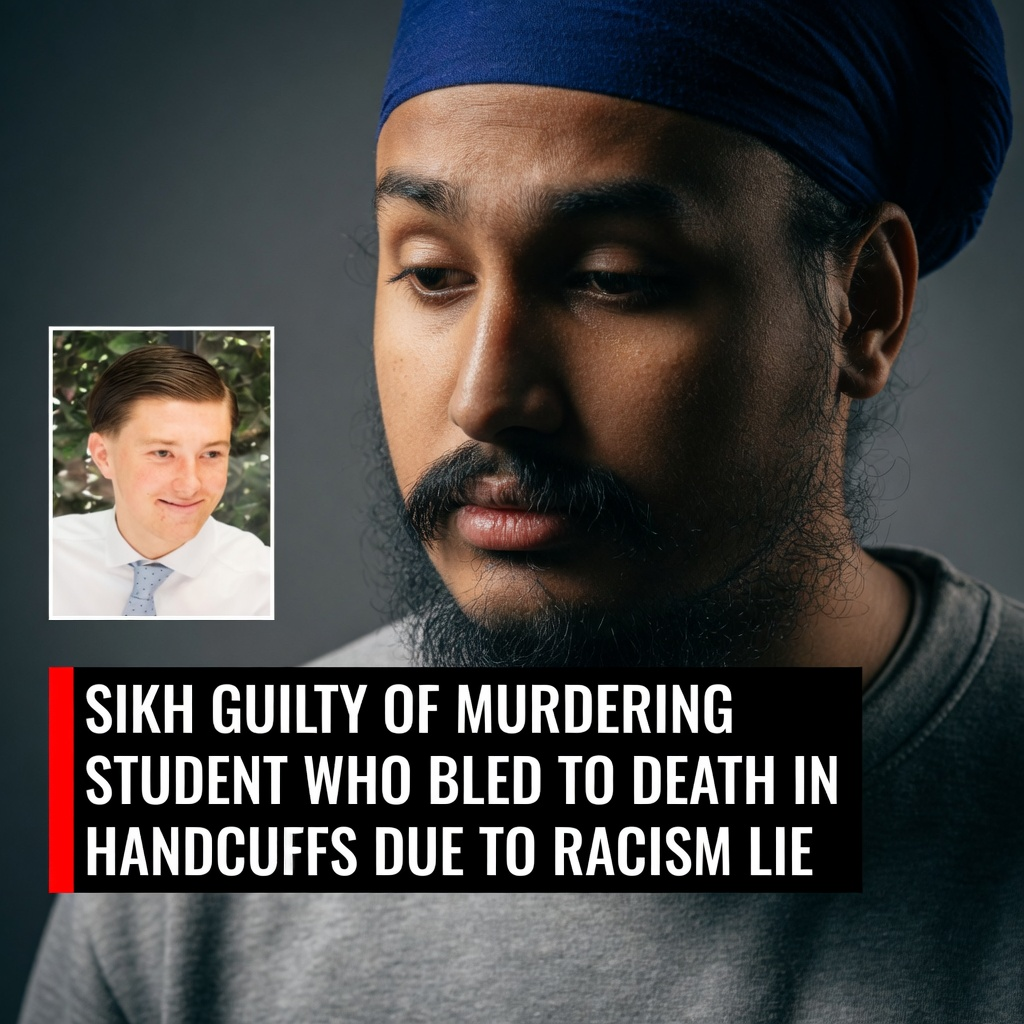
A jury has found Vickrum Digwa guilty of murdering university student Henry Nowak following a trial that examined the fatal stabbing and the controversial police response that followed.
Prosecutors told the court that Digwa stabbed Henry multiple times with a large bladed weapon during the confrontation.
Jurors heard that Henry suffered catastrophic injuries and collapsed shortly afterwards.
The prosecution argued the attack was unlawful and entirely disproportionate.
Digwa denied murder and maintained he acted in self-defence.
His legal team claimed the confrontation escalated rapidly and argued he feared for his own safety.
The jury ultimately rejected that version of events.
The guilty verdict marked the conclusion of weeks of evidence, witness testimony and forensic analysis.
Yet the killing itself was only part of what made the case so controversial.
Much of the public attention centred on what happened after police arrived.
Officers responding to the scene were told that Henry had allegedly made racist remarks and had been the aggressor.
As emergency services attempted to establish what had happened, Henry was briefly treated as a suspect.
By the time the true extent of his injuries became clear, the teenager was critically wounded.
He later died from blood loss.
That sequence of events became one of the most disputed aspects of the entire case.
The allegations made against Henry were strongly challenged during the trial.
Prosecutors argued the claims were false and formed part of an attempt to shift blame away from the attacker.
The jury’s verdict indicates they accepted the prosecution’s case.
For Henry’s family, the outcome represented the end of a long and painful legal battle.
The teenager had only recently begun university studies and was described by those who knew him as a popular young man with his future ahead of him.
Friends recalled the shock that swept through the university community when news of the stabbing spread.
What began as an ordinary night out ended with a fatal encounter that would dominate headlines for months.
The case also placed intense scrutiny on the conduct of responding officers.
Questions were raised about how the initial information provided at the scene influenced decision-making during the crucial first minutes of the incident.
Those concerns grew as details emerged during the trial.
Public criticism intensified after evidence suggested investigators had been given an inaccurate account of what had occurred.
The police response has since become the subject of separate scrutiny.
That scrutiny continued even after the jury returned its verdict.
The conviction itself closed one chapter of the case.
It did not end the debate surrounding the events that unfolded after the stabbing.
The trial also heard evidence about the weapon used during the attack.
Prosecutors argued Digwa was carrying a large blade that went far beyond any ceremonial requirement.
The court heard extensive evidence regarding the circumstances in which the weapon was carried and ultimately used.
Jurors were asked to assess competing accounts of the confrontation before reaching their decision.
After considering the evidence, they found Digwa guilty of murder.
The verdict immediately shifted attention to sentencing.
Henry’s family now face another court appearance as the legal process moves toward its final stage.
The conviction means Digwa will spend years behind bars, with the precise length of his sentence to be determined by the court.
For many observers, however, the lasting image of the case remains Henry himself.
An 18-year-old student setting out on what should have been the beginning of adult life instead became the victim at the centre of a tragedy that shocked Britain.
The jury’s decision has resolved the question of criminal responsibility.
But the wider questions raised by the case, particularly about the response in the immediate aftermath of the attack, are likely to remain part of the public discussion long after sentencing is complete.






