A handwritten message on a public staircase might look like something easy to ignore.
Just another sign in the background of a busy suburb.
But sometimes the smallest public warnings point toward the darkest private realities.
And in parts of Sydney, that reality is becoming harder to dismiss.
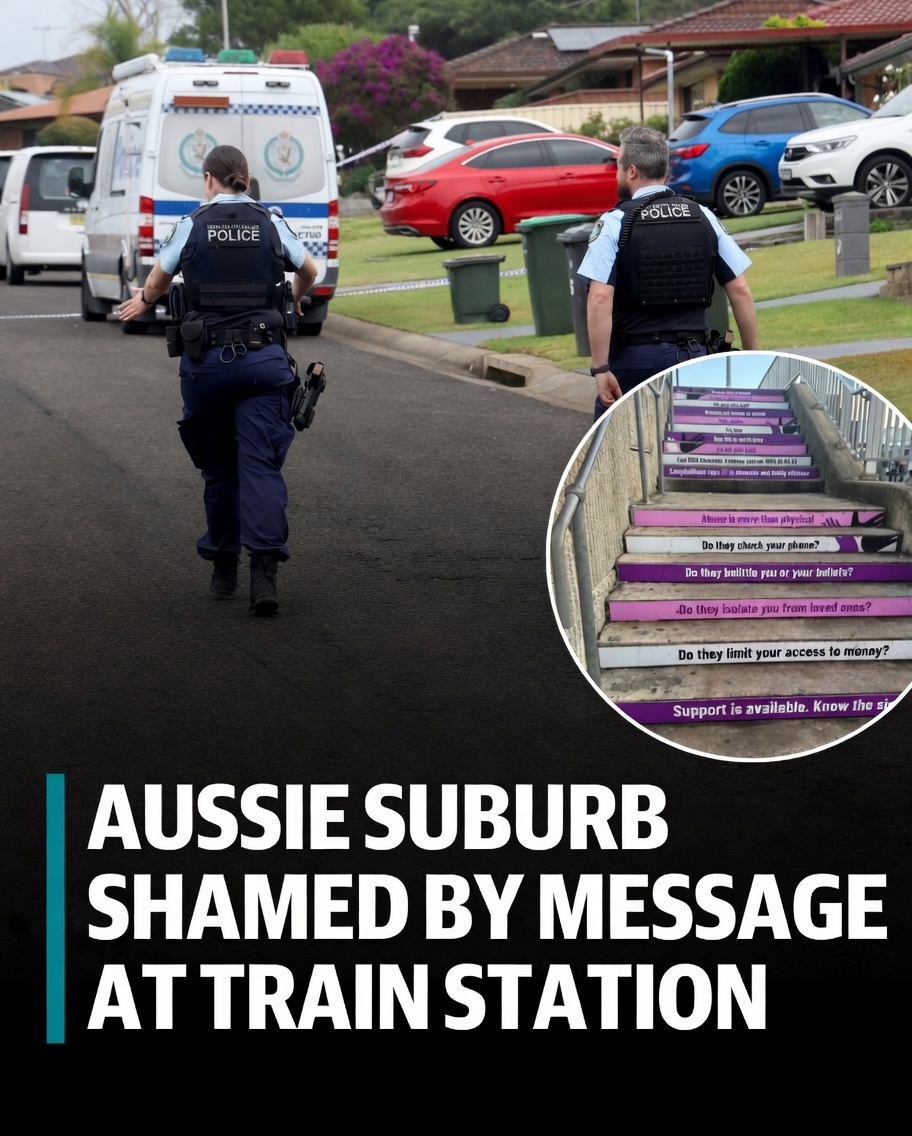
A growing domestic violence crisis in Sydney is forcing harder questions about prevention, early intervention and whether warning signs are still being recognised too late.
A renewed spotlight on domestic violence in Sydney’s south-west has reopened one of Australia’s most confronting social failures.
Not because domestic violence is new.
But because despite years of political promises, public campaigns and legal reform, many Australians still feel the warning signs are being recognised only after damage has already become severe.
The immediate focus has fallen on Campbelltown, where domestic violence reports have continued rising over recent years, adding pressure to already stretched support systems and frontline services.
Yet the deeper story is much bigger than one postcode.
Domestic violence does not belong to a single suburb, class or demographic.
It is a national crisis that becomes visible through local flashpoints.
That distinction matters because public conversation often makes the mistake of treating these stories as isolated community failures rather than symptoms of a wider structural problem.
The hidden nature of domestic violence remains one of the biggest barriers to prevention.
Many people still instinctively picture domestic abuse as visible physical assault.
But abuse often begins long before violence becomes obvious.
Control over finances.
Isolation from friends.
Monitoring movements.
Threats disguised as concern.
Emotional intimidation.
Behaviour designed to slowly strip independence until leaving feels dangerous or impossible.
That pattern is what makes early intervention so difficult.
Because by the time abuse becomes externally undeniable, the victim may already have been trapped inside the situation for months or years.
This is where public frustration grows.
Australians have heard repeated national conversations about violence against women, stronger intervention systems and cultural change.
Yet stories continue emerging that suggest the system still struggles to get ahead of the problem rather than reacting after escalation.
Part of that failure is practical.
Leaving an abusive environment is not simply an emotional decision.
It is often a financial calculation.
And in modern Australia, that calculation has become even harsher.
Housing affordability pressure has transformed escape into an even steeper challenge.
Rising rents, childcare costs, legal expenses and day-to-day living pressure can make the prospect of leaving feel financially impossible, even when personal safety is at risk.
That means domestic violence increasingly intersects with the broader cost-of-living crisis.
This is no longer purely a policing conversation.
It is a housing issue.
A financial security issue.
A legal access issue.
A healthcare issue.
A public trust issue.
And ultimately a leadership issue.
Because when structural barriers make escape harder, prevention systems carry even more responsibility.
There is also a cultural recognition problem.
Many communities still underestimate coercive control because it does not always resemble traditional crime narratives.
No broken doors.
No emergency sirens.
No dramatic public confrontation.
Just sustained psychological domination that can be devastating precisely because outsiders struggle to identify it.
That invisibility helps abusive dynamics survive.
Legal reforms around coercive control reflect a broader recognition that domestic abuse is not always about a single violent event.
It is often about repeated patterns of control.
But legislation alone cannot fix social blindness.
The emotional burden of domestic violence extends well beyond immediate victims.
Children living inside abusive households can carry long-term trauma.
Families become destabilised.
Workplaces absorb productivity loss.
Healthcare systems absorb consequences.
Communities absorb grief.
The economic and human costs compound long after the original abuse ends.
That is why this issue keeps returning to national political debate.
The public increasingly wants more than reactive statements after tragedy.
They want systems that identify warning patterns earlier.
Support pathways that are accessible faster.
Legal responses that are practical.
And housing solutions that do not trap vulnerable people through economic dependency.
The hardest truth is that domestic violence often depends on silence to survive.
Silence from victims afraid of retaliation.
Silence from bystanders unsure what they are seeing.
Silence from systems that struggle under pressure.
Silence from communities uncomfortable confronting difficult realities.
Breaking that silence is not simple.
But waiting until a crisis becomes unmistakable is clearly not working well enough.
The most uncomfortable question may also be the most important.
How many warning signs are still being seen, but not fully understood?
Because if Australia is serious about reducing domestic violence, intervention has to begin before the worst headline arrives.






