The return of Australians linked to one of the world’s most notorious extremist movements was always going to trigger a fierce public reaction.
What may deepen that reaction is not simply the return itself, but the political silence that followed.
After six Australian women linked to ISIS returned alongside children through Sydney and Melbourne without immediate criminal charges being laid, the political debate shifted quickly from operational security to public accountability.
For many Australians, the first question is straightforward. If a security-sensitive repatriation operation has taken place involving individuals linked to Islamic State history, why has there been so little direct public explanation from the country’s senior political leadership?
That question is now becoming the real political story.
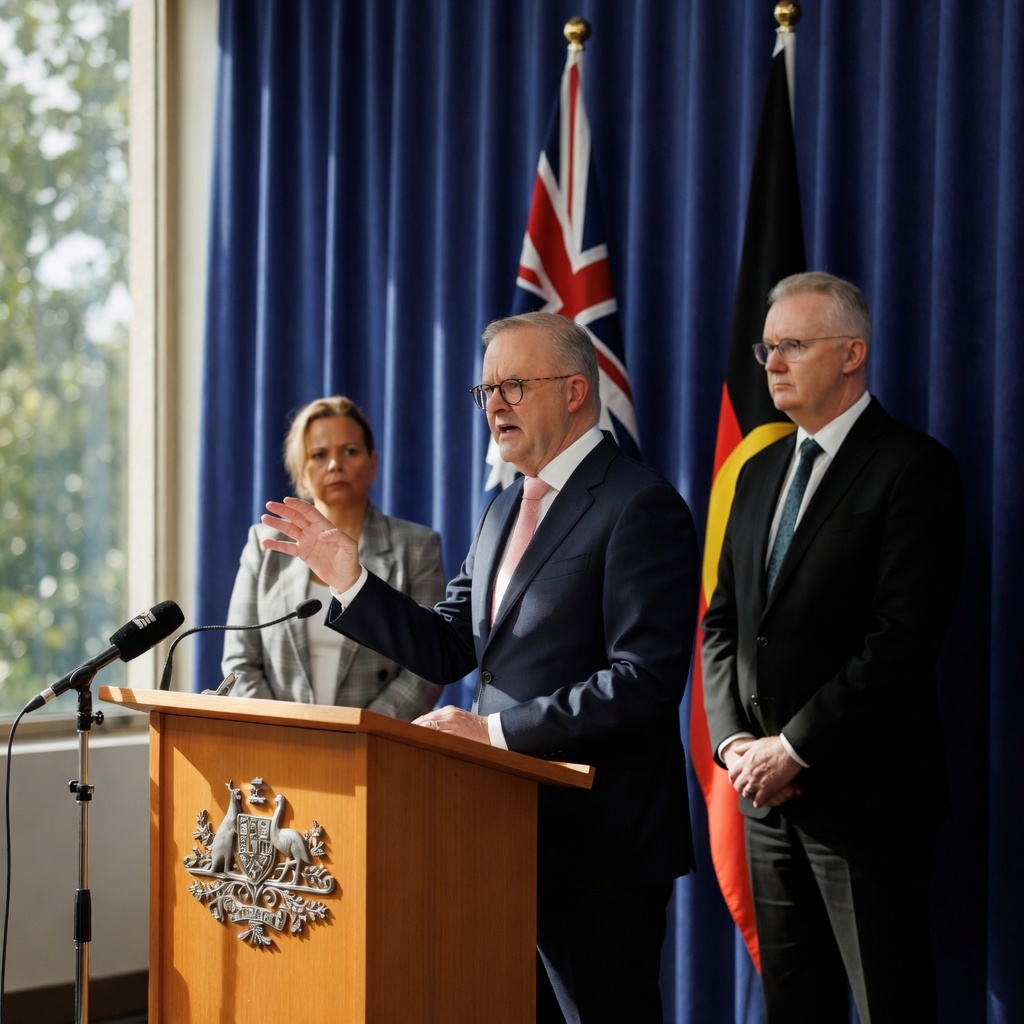
The latest ISIS-linked repatriation operation has reopened difficult questions around public trust, national security communication and whether political leaders owe Australians clearer answers.
The operational facts are serious enough on their own.
A group of Australian women and children linked to Syria’s detention camp system arrived back in Australia under security oversight, with law enforcement conducting checks and searches as part of the arrival process. No immediate arrests were announced in connection with this latest arrival cohort.
That alone would have guaranteed public attention.
But the political optics became more complicated once questions emerged about public communication.
National security stories are rarely judged only by legal process. They are also judged by confidence, messaging and whether the public believes institutions are being transparent about risk.
That is where the pressure begins.
The legal reality is more complicated than emotional public reaction often assumes.
Citizenship creates legal obligations that governments cannot simply ignore, even in politically toxic circumstances. If individuals hold Australian citizenship and legal thresholds for exclusion, prosecution or detention are not met, the government’s options become narrower than public anger might suggest.
That distinction matters enormously inside the justice system.
Politically, however, it is much harder to communicate.
Many Australians will instinctively ask a blunt question. If people who once travelled to territory controlled by Islamic State are now back in Australia, how confident should the public feel that every relevant risk has been properly assessed?
That concern does not automatically imply guilt.
But it does reflect a real public trust issue.
The problem for governments in cases like this is that silence can create its own narrative.
Security agencies may prefer operational discretion. Ministers may avoid detailed public commentary while investigations continue. Legal sensitivities may constrain public statements.
All of those explanations can be institutionally rational.
But in the absence of visible explanation, political speculation fills the vacuum.
That is exactly why sensitive security matters often become communications challenges as much as operational ones.
Public trust is not built only through successful operations. It is also built through confidence that leaders are prepared to explain difficult decisions when public concern is obvious.
That confidence becomes even more fragile when the subject involves terrorism-linked history.
The ISIS label still carries enormous emotional weight in Australia.
For many people, it immediately evokes memories of extremist violence, global terror attacks, radicalisation fears and years of public anxiety about domestic security threats.
That emotional backdrop changes how every detail of this story is interpreted.
Even routine legal language can sound inadequate when filtered through national security fear.
This is what makes the communication challenge so politically difficult.
Governments must avoid prejudicing investigations or implying criminal guilt without evidence. At the same time, they must reassure a public that expects leadership visibility during security-sensitive events.
Balancing those obligations is never easy.
But avoiding the conversation entirely can create its own political cost.
That is where the accountability debate becomes sharper.
Opposition critics will inevitably frame silence as avoidance, opacity or political discomfort. Government defenders will argue responsible leadership means allowing security agencies to do their work without political theatre.
Both arguments are predictable.
Both will resonate with different audiences.
The broader issue is whether the public feels informed enough to maintain confidence.
This is also not occurring in a vacuum.
Australia has already seen previous repatriation debates involving ISIS-linked families, with earlier cases producing criminal charges in some circumstances and no charges in others. That history makes public interpretation more complicated because people naturally compare one case to another, often without full access to legal distinctions between them.
That comparison can fuel confusion.
If some returnees faced prosecution and others did not, many citizens will assume inconsistency even when legal evidence thresholds differ dramatically.
That is why public explanation matters.
Without context, inconsistency becomes the dominant perception.
The children involved introduce another layer of complexity.
For many policymakers, children returning from conflict-linked environments are viewed through a fundamentally different lens than adults. Child welfare, trauma recovery, safeguarding and long-term reintegration become central policy considerations alongside security management.
That humanitarian dimension is real.
But it does not eliminate public safety concerns.
Instead, it makes the policy balancing act more politically difficult.
Governments are not only managing legal citizenship questions. They are managing community reassurance, intelligence oversight, social reintegration and long-term public confidence simultaneously.
That is a difficult governing challenge under any administration.
The communications risk, however, remains avoidable.
Australians do not necessarily expect every operational detail to be disclosed.
But they do generally expect acknowledgment when major security-sensitive developments occur.
Even a limited statement affirming that agencies have assessed the situation, safeguards are in place and investigations remain ongoing can materially affect public confidence.
That is why leadership silence often becomes a bigger political issue than intended.
The most important long-term issue is trust.
Do Australians believe security agencies are fully in control?
Do they believe ministers are being candid?
Do they believe risk assessments are rigorous?
Do they believe political communication matches the seriousness of the event?
Those questions often outlast the operational incident itself.
This case will ultimately be judged through legal facts, intelligence assessments and long-term outcomes rather than headlines alone.
But in politics, public confidence is shaped in real time.
And when leadership visibility feels absent during a sensitive national security story, the trust debate can quickly become just as important as the underlying operation itself.






