A violent incident in one of Australia’s most isolated communities has once again pushed uncomfortable questions about remote policing, public safety and long-term law and order back into the national conversation.
What began as a local confrontation reportedly involving a vehicle being driven into a house escalated into a violent clash that left an alleged senior gang-linked figure injured, immediately drawing wider attention to deeper concerns about crime and security in remote parts of the country.
On the surface, this may look like another isolated regional crime story.
It is unlikely to stay that way.
Because incidents like this rarely remain just about one fight, one location or one night of violence. They quickly become part of a much larger public debate about whether authorities have enough resources, enough reach and enough long-term solutions to maintain order in communities that are geographically distant and often logistically difficult to police.
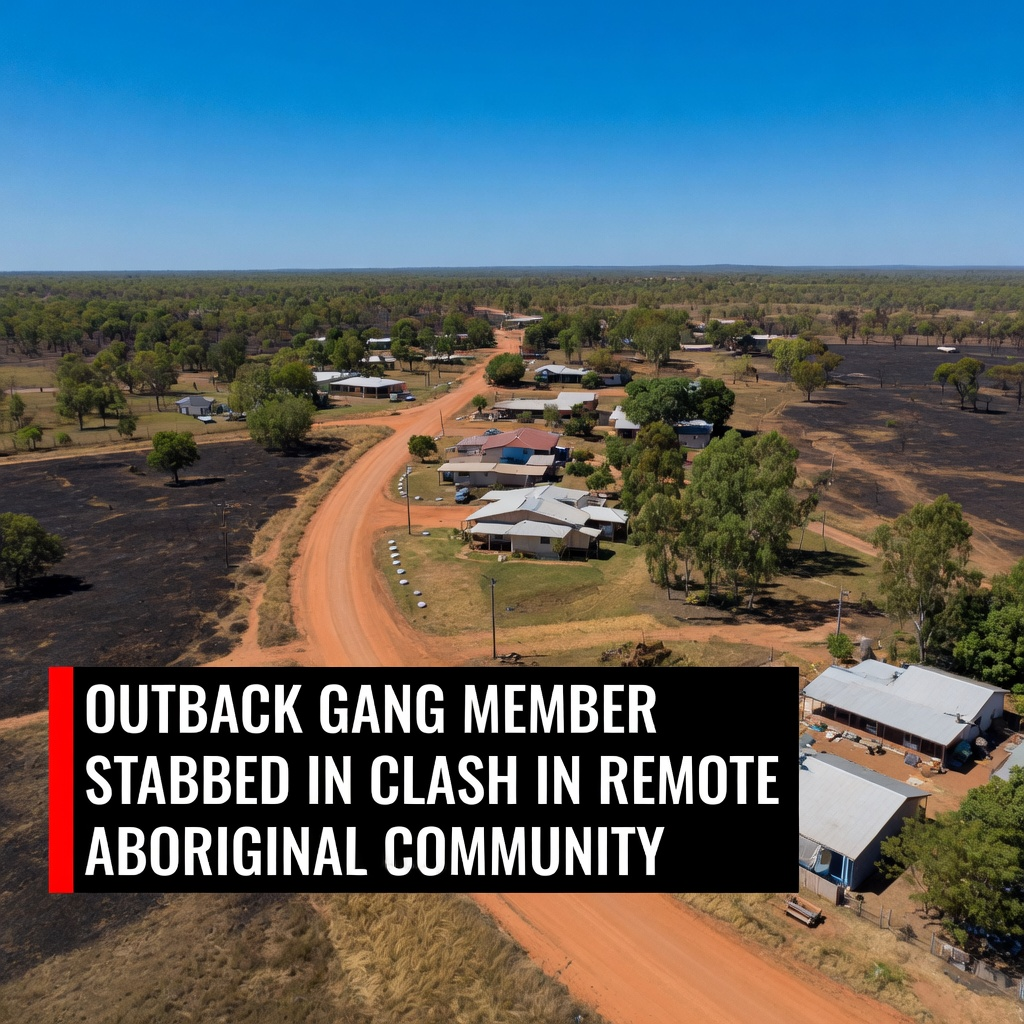
A violent confrontation in remote Australia is reigniting wider questions about policing, public safety and long-term law and order challenges in isolated communities.
The immediate facts are confronting enough.
According to the source reporting, a violent confrontation erupted in a remote Aboriginal community after a Toyota LandCruiser was allegedly used to ram a house, with the incident escalating into a physical clash that left a reportedly gang-linked individual with serious injuries.
Regardless of the exact circumstances that investigators ultimately establish, the broader public reaction is predictable.
People see violent disorder, reports of gang involvement and remote community instability, then ask a straightforward question. How often is this happening beyond the view of most Australians?
That question is politically potent because remote crime stories create a very particular public response.
Unlike urban crime, where police visibility is familiar and response expectations are immediate, remote incidents often trigger concerns about delayed intervention, limited infrastructure and whether law enforcement can realistically maintain consistent control across vast distances.
Australia’s geography makes that challenge uniquely difficult.
Remote communities are not simply smaller versions of metropolitan suburbs. They often involve extraordinary logistical complexity, long travel times, staffing constraints, cultural considerations, infrastructure limitations and service delivery challenges that city-based audiences rarely think about until a major incident forces attention.
That does not excuse violence.
But it does explain why responses can look very different from urban policing expectations.
The deeper issue is public confidence.
When stories involving violent clashes, repeat offending or organised group intimidation emerge from isolated regions, trust becomes a central question.
Do local residents feel adequately protected?
Do police have sufficient resources?
Do governments have sustainable long-term plans rather than reactive crisis responses?
And perhaps most importantly, how visible is the true scale of the challenge to Australians living far away from these communities?
Those are difficult questions because remote public safety debates are rarely politically simple.
Law enforcement capacity is only one part of the equation.
Broader issues often include housing stress, alcohol-related harm, intergenerational disadvantage, limited service access, youth offending pressures, community governance complexity and the persistent difficulty of implementing durable reforms across geographically isolated regions.
That is why simple slogans rarely solve these problems.
Still, public patience can wear thin quickly when violence dominates headlines.
For many readers, broader social complexity does not erase immediate concern about safety. A resident worried about a violent confrontation near their home is unlikely to prioritise policy nuance over personal security.
That tension sits at the centre of nearly every serious law and order debate in remote Australia.
There is also a political communications challenge here.
Governments often frame remote safety issues through longer-term social investment, service coordination and community engagement strategies. Critics tend to frame the same issues through policing strength, enforcement visibility and accountability.
Both narratives have political audiences.
That is exactly why incidents like this gain traction quickly.
The alleged gang angle adds another layer.
Stories involving organised groups, repeat intimidation or entrenched local influence create a stronger emotional reaction than isolated interpersonal disputes. Even where facts remain contested, the suggestion of organised criminal behaviour shifts public interpretation significantly.
People instinctively ask whether authorities are dealing with one incident or a deeper structural threat.
That distinction matters enormously.
If the public sees violence as random but isolated, concern remains localised.
If the public sees violence as recurring, organised or beyond effective control, political pressure escalates sharply.
That is when remote incidents stop being local stories and become broader law and order debates.
Northern Australia has periodically seen these cycles before. Violent incidents, youth offending concerns, alcohol restrictions, emergency interventions and law enforcement resource debates have repeatedly pushed remote community safety into national headlines.
The challenge is that media attention often arrives in bursts, while long-term structural reform requires sustained effort over years rather than news cycles measured in days.
That disconnect helps explain why public frustration persists.
Short-term outrage creates demand for immediate action.
Long-term solutions rarely move at the same speed.
Business confidence can also be affected.
Even communities far from major commercial centres rely on stable public order for local operations, service delivery, supply chains and workforce retention. Persistent perceptions of instability can make already difficult staffing and investment conditions even harder.
That is why law and order debates are not only social policy issues. They can also become economic confidence issues.
The most politically sensitive question is whether incidents like this reflect isolated breakdowns or evidence of a broader systemic failure.
That is where public trust becomes decisive.
If Australians believe authorities understand the scale of the challenge and have credible strategies in place, individual incidents remain concerning but manageable.
If they believe governments are repeatedly reacting rather than leading, frustration compounds.
That trust gap can become politically damaging very quickly.
For residents in affected communities, the issue is far less abstract.
Policy debates about long-term reform matter, but immediate personal safety matters first.
That reality is what gives stories like this emotional weight.
The national conversation will inevitably split between those emphasising stronger enforcement, those pushing deeper structural intervention and those arguing both approaches must work together.
That broader argument is unlikely to disappear after one violent incident.
Because the core issue is bigger than one confrontation.
It is about whether Australians believe remote communities can be kept safe consistently, fairly and sustainably over the long term.






