A court ruling in Europe has reopened one of the most difficult debates in modern democratic politics.
Where does political speech end and unlawful hate speech begin?
That question has returned to the spotlight after a Belgian court ruling involving former MP and nationalist activist Dries Van Langenhove, a politically divisive figure whose legal battles have already drawn significant attention across Europe.
What makes the latest controversy notable is not simply the individual at the centre of it, but the much larger argument the case now feeds.
For supporters, this is a free speech issue.
For critics, it is a legal accountability issue.
For many ordinary observers, it becomes a broader question about how democratic societies define acceptable political expression in an increasingly polarised era.
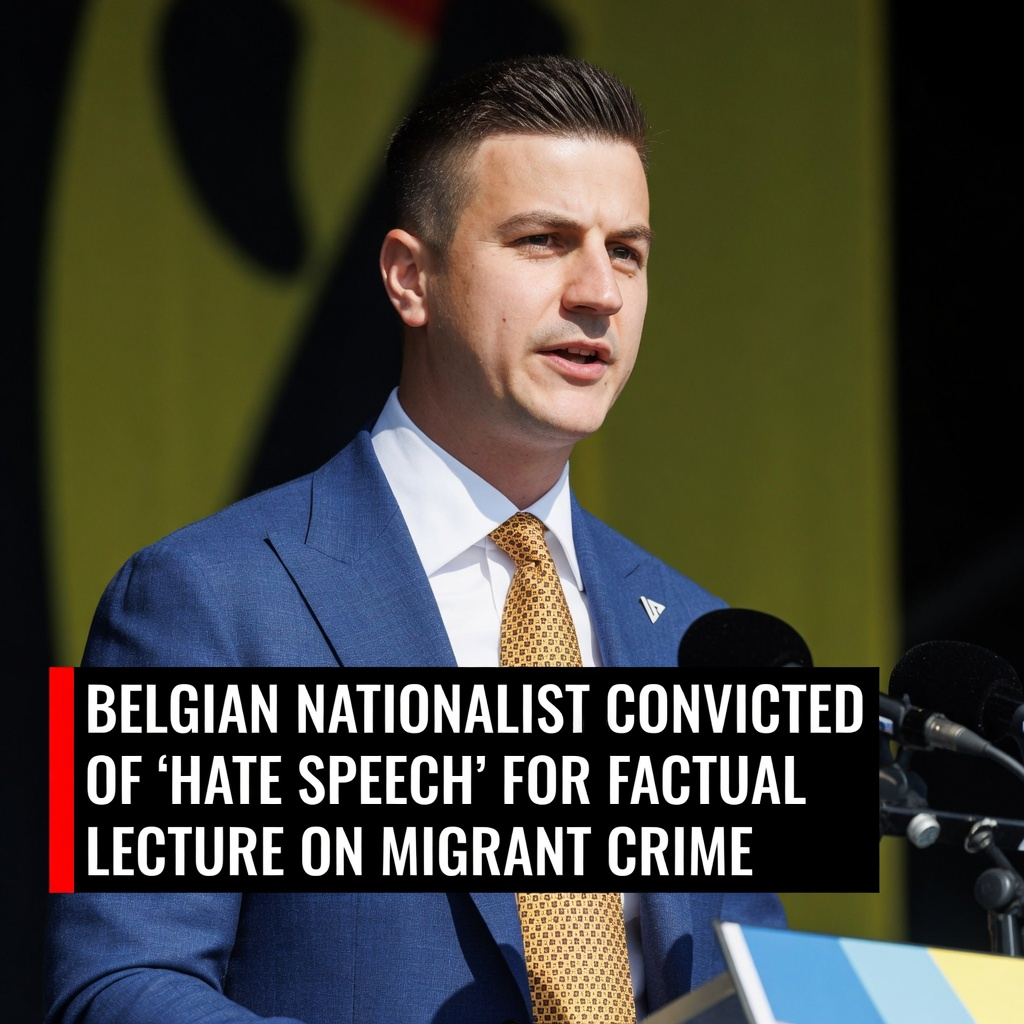
A politically sensitive court case in Belgium is fuelling a wider debate over speech, democratic standards and the legal boundaries of political expression.
The immediate controversy centres on legal findings against Van Langenhove, a former Belgian parliamentarian long associated with nationalist politics and public controversy. His broader legal history has already included convictions linked to anti-racism law violations and extremist speech cases, making any fresh ruling politically explosive in European political circles.
That background matters because this is not a dispute emerging from a politically neutral vacuum. It arrives in an environment where Europe is already wrestling with migration pressure, rising populist politics, identity debates and growing concern over political polarisation.
That means even a technically narrow court case can quickly become symbolic.
And symbolic cases often travel much further than the original legal dispute.
The central argument now dividing audiences is relatively clear.
One side sees rulings like this as evidence that modern European democracies are becoming increasingly aggressive in policing political speech, particularly around contentious subjects such as migration, national identity and demographic change.
The opposing view is equally forceful.
Critics argue hate speech laws exist precisely because unrestricted political rhetoric can legitimise discrimination, social hostility and real-world harm when directed at minority communities.
That is why these cases rarely stay confined to legal circles.
They quickly become ideological battlegrounds.
The legal distinction between protected speech and unlawful incitement is rarely as simple as public debate suggests.
Democratic legal systems generally protect political expression strongly, but those protections are not absolute. Most Western democracies recognise limits where speech crosses into unlawful incitement, discriminatory conduct or other prohibited harms.
The difficult part is not acknowledging that limits exist.
The difficult part is defining exactly where the boundary should sit.
That is where public trust becomes central.
If citizens believe legal systems are applying rules consistently and proportionately, controversial rulings may still command institutional legitimacy even among people who disagree politically.
If citizens instead conclude that legal frameworks are being applied selectively or ideologically, trust deteriorates quickly.
That is what makes cases like this politically dangerous.
The issue also resonates because migration remains one of Europe’s most politically combustible policy debates.
Questions around border control, integration, crime, demographic change and cultural identity already dominate political discussion in multiple countries.
Any legal case touching speech around migration inevitably lands inside that existing emotional environment.
That dramatically increases public reaction.
Timing also matters.
Across Europe, establishment political parties are facing stronger pressure from populist challengers, while public trust in traditional institutions remains uneven in many jurisdictions.
Against that backdrop, court rulings involving controversial nationalist figures are almost guaranteed to be interpreted through broader ideological narratives rather than purely legal reasoning.
That does not automatically mean either side is correct.
It does mean public interpretation becomes politically loaded almost immediately.
There is also a deeper democratic tension here.
Healthy democracies depend on robust political disagreement, including uncomfortable disagreement. Restricting speech too aggressively can create genuine concerns about overreach, institutional bias and the narrowing of democratic debate.
At the same time, democracies also place obligations on institutions to protect citizens from unlawful discrimination, organised hatred and incitement that can move beyond rhetoric into social harm.
Balancing those two principles is where democratic governance becomes difficult.
Simple slogans rarely solve that problem.
This is why emotionally charged headlines often obscure the harder institutional question.
The real issue is not whether controversial political speech should exist. Democracies clearly allow significant room for controversial expression.
The harder issue is how courts distinguish between legitimate political advocacy and conduct deemed unlawful under existing legal frameworks.
That distinction matters enormously.
Because vague boundaries create uncertainty not just for political activists, but for media organisations, public institutions, advocacy groups and broader civil society.
Unclear enforcement standards can create chilling effects, even where formal protections remain in place.
Equally, weak enforcement can create perceptions that anti-discrimination laws are meaningless.
That is why legal consistency matters so much.
The commercial media angle also helps explain why these cases gain traction quickly.
Stories involving free speech, censorship, nationalism and court rulings reliably trigger strong engagement because audiences already arrive with emotional priors.
Some readers instinctively see suppression.
Others instinctively see accountability.
Few approach the subject without pre-existing assumptions.
That creates a highly reactive public environment where nuance struggles.
Australia may be geographically distant from Belgium, but the underlying questions are hardly foreign.
Debates around hate speech regulation, public discourse, identity politics and institutional trust are increasingly visible across Western democracies, including Australia.
That gives international cases broader relevance.
They become proxy debates for domestic anxieties.
This is particularly true when questions around migration and political identity are already politically active at home.
The broader lesson is not that one controversial politician’s legal outcome should automatically validate sweeping ideological conclusions.
That would be simplistic.
The more serious lesson is that democratic trust becomes fragile when large sections of the public lose confidence in how legal boundaries are drawn and enforced.
That trust question often outlives the original case.
For some, this ruling will reinforce faith in democratic safeguards against extremism.
For others, it will reinforce suspicion that legal institutions are narrowing acceptable political discourse.
Neither reaction is politically trivial.
Because once speech regulation becomes a trust issue, the debate expands well beyond a single courtroom.
It becomes a broader argument about democracy itself.






