A political controversy that many assumed would quickly fade is still hanging in the air months later.
Pauline Hanson’s comments about Muslims continue attracting attention after it emerged that the Australian Federal Police is still assessing complaints linked to remarks she made earlier this year, keeping a politically sensitive debate alive far longer than most short-cycle media controversies usually last.
That alone is enough to keep public interest alive.
But the bigger reason this story continues generating attention is because it sits at the uncomfortable intersection of free speech, political rhetoric, religion and public accountability.
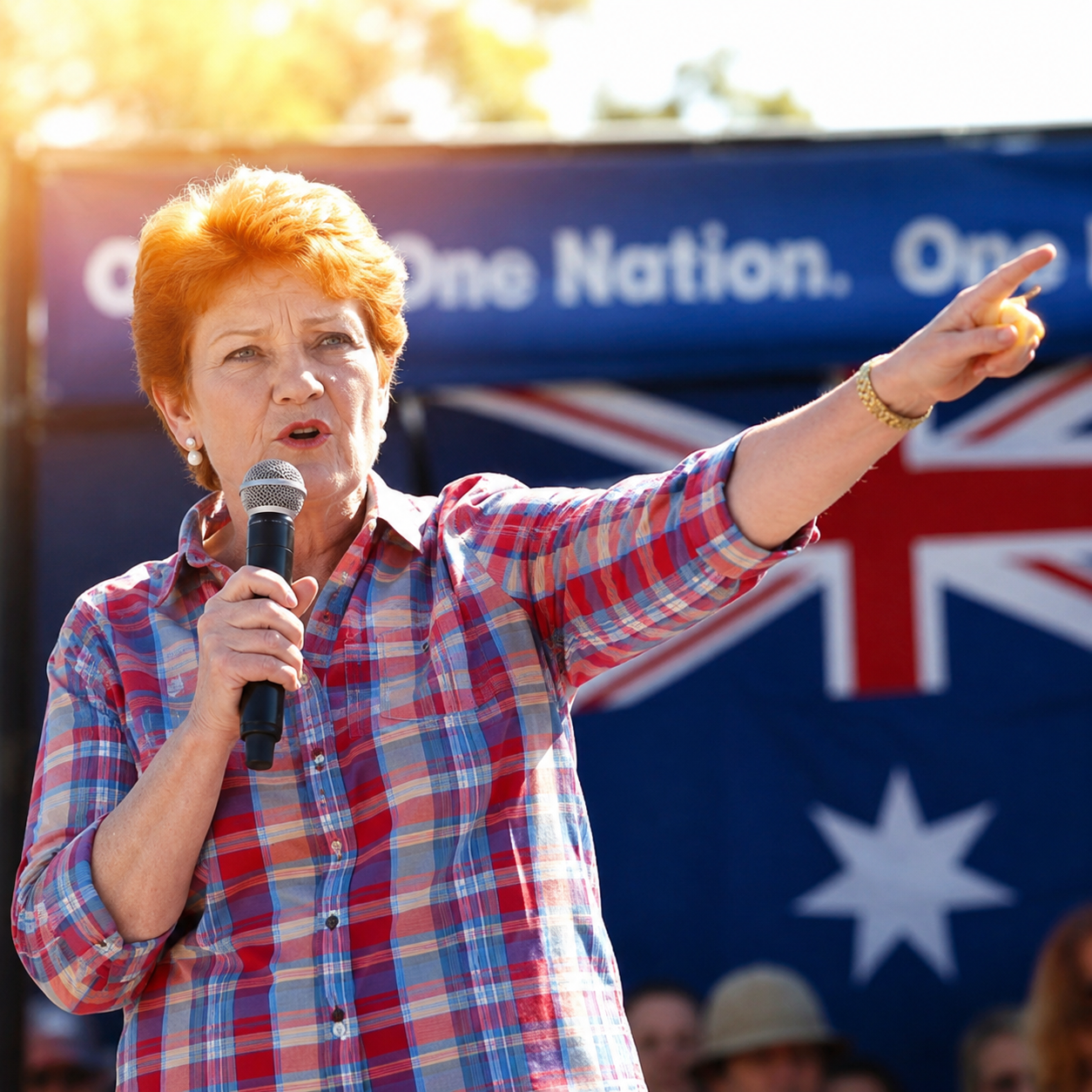
A political controversy involving Pauline Hanson has evolved into a wider debate about speech, accountability and public trust.
The original controversy erupted after Hanson made remarks questioning how people could claim there were “good Muslims,” comments that immediately triggered backlash and formal complaints.
Now, months later, the fact that authorities are reportedly still assessing the matter has revived the broader conversation rather than allowing it to disappear.
That shift changes the nature of the story.
Because once official review enters the picture, public debate moves beyond simple outrage cycles and into questions about institutional response, political standards and what public figures can reasonably say without triggering formal scrutiny.
For supporters of Hanson, the issue is straightforward.
They see the controversy through the lens of political free expression. From that perspective, controversial speech may be offensive to some audiences, but political leaders are still entitled to voice hardline views, particularly on issues involving national security, immigration or social cohesion.
That interpretation will resonate with voters who already believe political correctness suppresses uncomfortable conversations.
But critics see something entirely different.
For them, the concern is not merely offensive language. The issue is whether broad statements targeting religious communities risk fuelling division, normalising hostility or reinforcing harmful stereotypes at a time when public discourse is already highly polarised.
That is why stories like this rarely stay confined to the original quote.
They become stand-ins for much larger arguments about what political accountability should look like in modern Australia.
And accountability debates are rarely emotionally neutral.
This is one reason the controversy continues generating engagement long after the original remarks.
Public reactions to political speech are often less about the exact wording and more about what audiences believe the remarks represent.
Some hear blunt honesty.
Others hear dangerous generalisation.
That emotional split is what keeps stories like this alive.
The involvement of institutional review only intensifies that dynamic.
Once authorities become part of the story, audiences begin asking a different set of questions.
Should political speech be formally scrutinised in this way?
Where is the line between controversial opinion and unacceptable public conduct?
Who decides when rhetoric becomes serious enough to warrant official attention?
Those questions extend far beyond one politician.
They touch broader anxieties about free expression, democratic standards and whether political speech is increasingly judged through competing ideological frameworks.
That makes the story commercially sticky because readers are rarely engaging only with the individual controversy. They are engaging with larger values-based arguments that already carry emotional weight.
There is also a public trust dimension here.
When controversies linger without visible resolution, uncertainty itself becomes part of the narrative. Some audiences interpret delay as institutional caution. Others interpret it as weakness, inconsistency or political hesitation.
That ambiguity helps sustain debate.
And sustained debate is exactly why these stories remain highly clickable across social audiences.
The practical reality is that controversies involving religion, identity and politics rarely disappear cleanly because the underlying tensions remain unresolved even after headlines move on.
The Pauline Hanson saga reflects that exact pattern.
Regardless of where individuals stand politically, the controversy highlights how modern political communication operates under intense scrutiny, where a few words can trigger consequences extending months beyond the original moment.
The broader question is not simply what Hanson said.
It is how democratic societies choose to handle polarising speech once public institutions become involved.
That is a far more difficult conversation than the original soundbite itself.
And it is exactly why this story continues refusing to disappear.






