The Australian government has officially declared a new front in the war on terror, announcing a significant $74 million investment to track down extremists hiding in the shadows of the internet.
Home Affairs Minister Tony Burke unveiled the Counter Terrorism Online Centre on Wednesday, a fair dinkum attempt to infiltrate encrypted chat groups and gaming platforms where radicalisation is reportedly rampant.
The new facility will be a joint operation led by the nation’s premier intelligence agency, ASIO, and the Australian Federal Police to disrupt what they call “evolving digital threats.”
This massive funding package will be delivered over the next two years, aiming to shield vulnerable young Australians from being manipulated by “hatemongers” and violent entities.
Minister Burke highlighted a worrying trend where radicalisation is no longer just happening in backroom meetings but is moving at rapid speed through private digital “echo chambers.”
According to official reports, the centre will have the hard yakka task of monitoring everything from the dark web to popular social media forums to identify emerging hate groups.
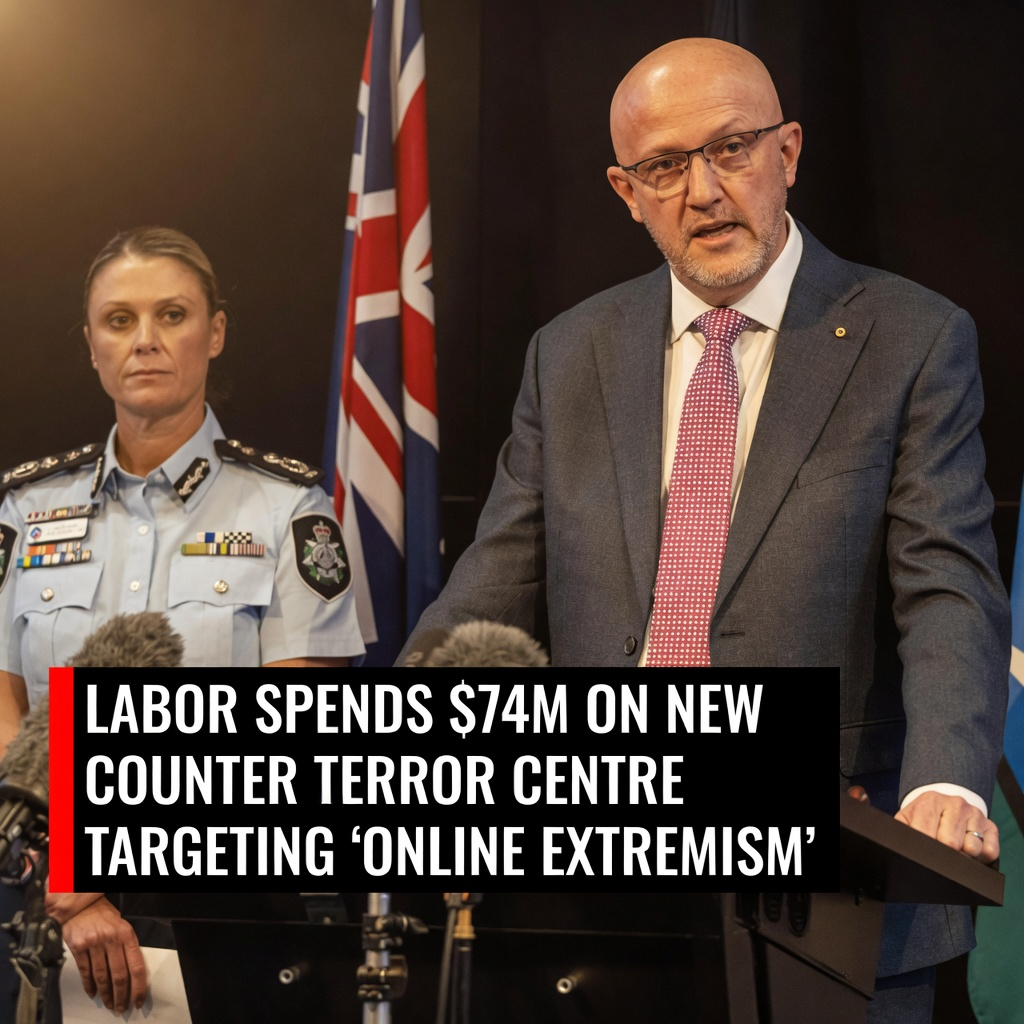
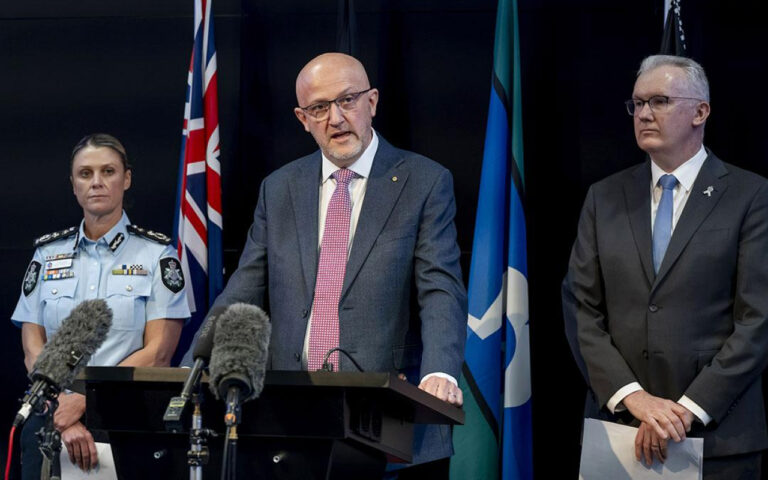
Home Affairs Minister Tony Burke and AFP Commissioner Krissy Barrett are spearheading a new $74 million initiative to combat online violent extremism.
ASIO boss Mike Burgess expressed his extreme concern regarding the number of young men being radicalised online and mobilising to violence with almost zero warning.
The agency revealed that its operatives are already posing as violent extremists in encrypted groups, a move that recently led to a major arrest in Western Australia.
However, the announcement comes amidst a severe wave of criticism following the tragic Bondi attack, with many questioning if our agencies have lost their focus on real-world threats.
Critics within the Canberra bubble are asking why billions are spent on security while the community still feels exposed to senseless acts of violence in public spaces.
The Reality Of Radicalisation In The Modern Aussie Living Room
The digital landscape has fundamentally changed the nature of national security, moving the frontline from physical borders to the smartphones in our kids’ pockets.
Minister Burke noted that 31 people have already been charged under violent extremist laws since early 2024, with a staggering 19 of those being aged 17 or younger.
This demographic shift is a significant shock to many Aussie battlers who are trying to raise their families in a safe and cohesive environment.
The use of gaming platforms to recruit vulnerable youth is a questionable evolution that requires a serious and well-funded response from the authorities.
From a fiscal perspective, the $74 million spend is a fair dinkum investment in the future safety of our suburbs, but it must deliver tangible results to justify the cost.
The Australian Bureau of Statistics reveals that transport and communication costs are rising, but the cost of social instability is much higher for the average household.
Taxpayers are rightfully demanding that every dollar of this “counter-terror” funding is used to stop actual violence rather than just policing hurt feelings online.
The ABS shows that national security expenditure has seen a significant climb over the last decade, yet the feeling of safety on our streets remains a massive concern.
If the new centre can prevent even one lone-wolf attack, the government will claim it as a victory, but the “pub test” remains focused on the total failure to prevent the Bondi massacre.
We are seeing a situation where the intelligence community must be online because that is where the extremists are engaging with each other in secret.
Significant Spending Decisions Amidst Mounting Security Criticism
The decision to establish a dedicated online centre is the next logical step in a fast-moving threat environment, according to the Home Affairs department.
But the timing of the announcement is being viewed by some as a strategic pivot to deflect from recent operational failures in the real world.
One Nation leader Pauline Hanson has previously questioned whether our agencies are too obsessed with “right-wing extremism” while ignoring the most dangerous threats.
The quiet Australians are asking if the Canberra elite are more interested in monitoring social media posts than in stopping radicalised individuals from entering public malls.
AFP Commissioner Krissy Barrett emphasized that “shielding kids from harm” is her top priority, but achieving that goal requires more than just high-tech surveillance.
The hard yakka of community engagement and early intervention is often overlooked in favor of flashy new centres with multi-million dollar price tags.
The ABS reveals that household incomes are under severe pressure, making any government spend of $74 million a target for intense public scrutiny.
If this centre is merely a way to bolster the “surveillance state” without improving actual community safety, it will be viewed as a total rort of public funds.
We need a migration and security system that works for the people, not one that just grows the bureaucracy inside the hallowed halls of Parliament.
The “fair go” should apply to every citizen, ensuring they are protected from both online manipulators and the very real threats that walk our streets.
Navigating The Tensions Between Public Safety And Personal Privacy
The expansion of ASIO and AFP capabilities into encrypted chat rooms raises severe questions about the future of digital privacy in Australia.
While the government argues that “infiltrating” these groups is necessary to stop terrorists, many worry about the potential for mission creep into regular social discourse.
The of proving that this surveillance is targeted only at violent threats lies squarely on the shoulders of Mike Burgess and his team.
Wait until the full details of how these agents operate are made public before deciding if our digital freedoms are being sold down the river.
The ABS shows that a vast majority of Australians are now online for both work and play, making the integrity of our private communications a significant issue.
If the Canberra bubble is allowed to monitor our “meeting rooms” and “chat rooms” without strict oversight, the trust in our institutions will continue to erode.
The hard yakka of maintaining a free society while fighting terrorism is the central challenge for every Western democracy in the 21st century.
Every dollar of the $74 million must be accounted for, ensuring it goes toward stopping actual violence rather than just expanding the reach of the “thought police.”
The Aussie Dream of a free and open society is under threat if we allow fear to dictate every single policy decision made in the nation’s capital.
Resilience comes from a strong and united community, not just from a government centre that monitors our every click and keystroke.
Assessing The Strategic Long-Term Impact On Our National Cohesion
The ultimate test of the Counter Terrorism Online Centre will be its ability to prevent the rapid radicalisation of the younger generation.
The fact that 19 out of 31 people charged are under the age of 17 is a fair dinkum tragedy that suggests something is deeply wrong with our social fabric.
We need to ask why so many young Australians are finding meaning in violent ideologies rather than in the opportunities provided by our lucky country.
The ABS reveals that youth underemployment and the housing hell are major sources of stress for the next generation, potentially making them more susceptible to radical messages.
Investing in “counter-terror” is one thing, but fixing the underlying causes of social decay is the real hard yakka that Canberra seems determined to ignore.
The $74 million spend might disrupt a few chat rooms, but it won’t fix the sense of hopelessness that many young men feel in our outer suburbs.
We will be closely monitoring the results of this centre and whether the “early warning system” actually makes a difference to the safety of our public spaces.
The quiet Australians deserve a government that is both firm on security and fair on the distribution of national wealth to support our communities.
No more rorts, no more shonky excuses—just a fair dinkum commitment to protecting every citizen from both physical and digital harm.
The future of our nation depends on our ability to stay united and keep our eyes on the ball when it comes to national security.
Stay tuned as we continue to track the impact of these massive spending decisions on your safety and your wallet.
Because at the end of the day, a $74 million centre is only as good as the peace and security it actually provides to the Aussie battler.
The hard yakka of protecting Australia starts now, and we’ll be watching every move from the front lines of the Canberra bubble.
Let’s hope this “next logical step” is a fair dinkum solution and not just another expensive project that fails to deliver when it matters most.
The resilience of the Southern Cross is what keeps us going, but we need our leaders to do their bit as well.






