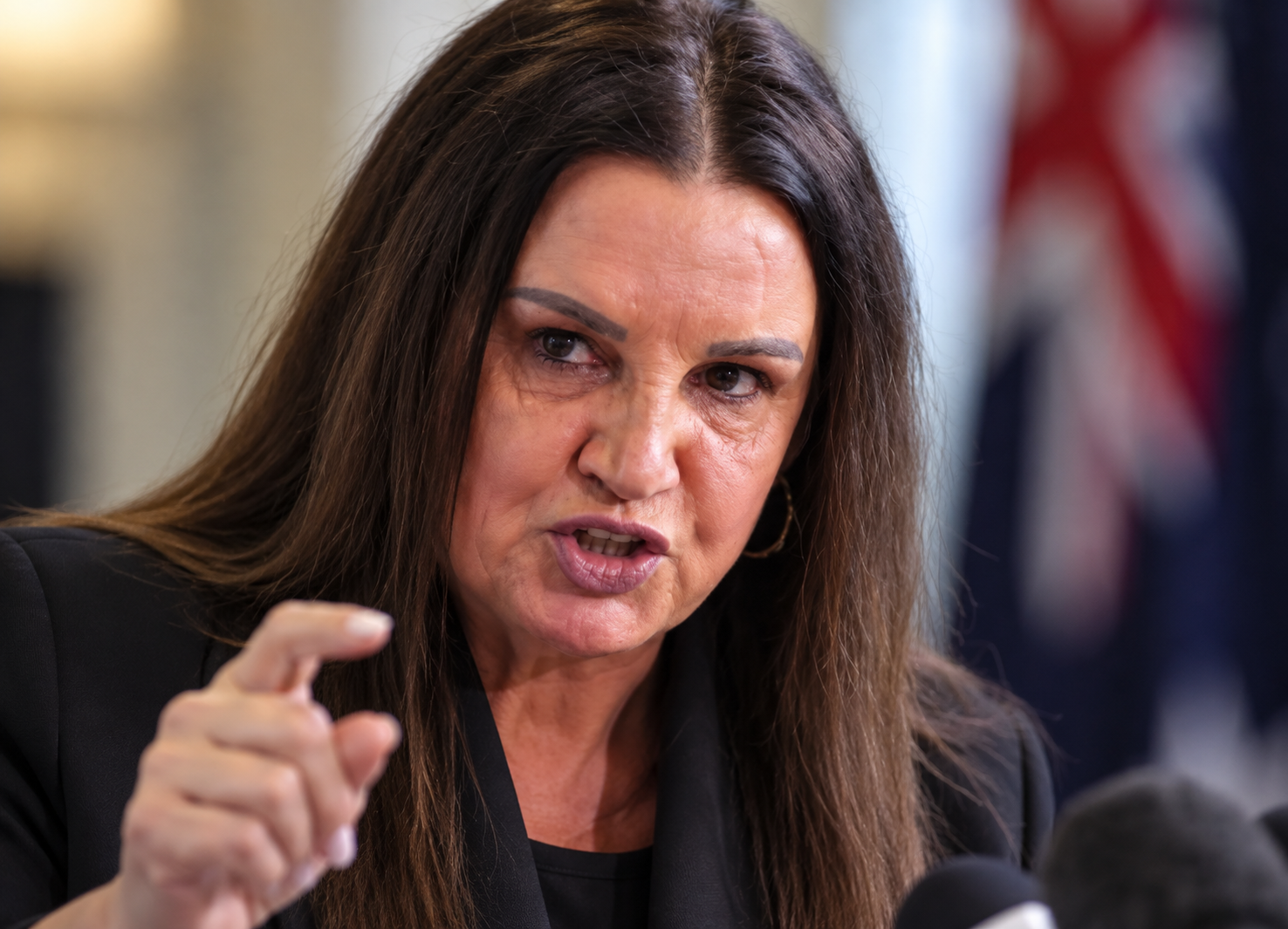
A high-profile moment involving conservative commentator Peta Credlin has ignited debate across Australia’s political and media landscape, raising broader questions about free expression, workplace expectations, and how public figures navigate symbols tied to social movements.
The incident unfolded just hours before a major prime-time appearance, when Credlin reportedly declined to wear a pride-colored accessory prepared by producers as a gesture of LGBTQ solidarity.
What followed was a wave of discussion that quickly moved beyond the studio and into national conversation.
According to accounts from people familiar with the situation, the accessory was intended as a sign of inclusion during a broadcast that would draw a wide audience.
Credlin, a prominent media personality known for her outspoken conservative views, chose not to participate in that gesture.
In a statement delivered shortly afterward, she emphasized that while she supports respectful dialogue and equal treatment under the law, she does not believe public figures should be compelled to display symbols that do not reflect their personal convictions.
She framed her decision as one rooted in individual conscience rather than opposition to any community.
The response was immediate and polarized.
Supporters praised Credlin for what they saw as a principled stand for personal freedom, arguing that symbolic participation should always be voluntary.
They pointed out that diversity of opinion, including disagreement about political or cultural symbolism, is a core feature of democratic societies.
For these viewers, the incident highlighted concerns about pressure within media environments to conform to prevailing social narratives, even when individuals may hold different perspectives.
Critics, however, viewed the refusal differently.
Some argued that wearing a pride-colored symbol in a broadcast context is less about political ideology and more about signaling safety and respect for LGBTQ audiences, many of whom have historically felt marginalized.
From this viewpoint, declining the gesture risked being interpreted as dismissive, even if that was not the stated intent.
Advocacy groups stressed that symbols can carry powerful meaning for people who have experienced discrimination, and they encouraged media organizations and personalities to consider that impact carefully.
Importantly, several LGBTQ advocates also emphasized that the situation should not be reduced to hostility or personal attacks.
They noted that progress toward inclusion is best served through conversation rather than confrontation, and that assuming malicious intent can deepen divisions.
Some commentators highlighted that genuine allyship involves ongoing actions—such as fair coverage, respectful language, and opposition to discrimination—rather than a single visible symbol.

Media analysts observed that the incident reflects a broader global tension playing out in newsrooms, studios, and workplaces across Western democracies.
As social movements gain visibility, organizations increasingly use symbols to communicate values.
At the same time, employees and on-air personalities are asserting boundaries around compelled expression.
Navigating this terrain requires clarity, transparency, and mutual respect, particularly when audiences span a wide range of beliefs.
For Credlin, the moment reinforced her public image as a figure unafraid to challenge what she describes as “woke” cultural pressures.
Yet even among those who disagreed with her framing, there was acknowledgment that the discussion it sparked is worth having.
Where should the line be drawn between institutional messaging and individual choice?
How can media outlets promote inclusion without alienating contributors who hold differing views?
And how can public debate remain civil when emotions run high?

Several commentators suggested that solutions lie in advance communication and clear policies.
If symbolic participation is expected, that expectation should be communicated early, allowing all parties to make informed decisions.
Conversely, if participation is optional, that choice should be respected without assigning motives or moral judgments.
Such approaches can help prevent last-minute conflicts and ensure broadcasts remain focused on informing the public.
As the story continues to circulate, it serves as a reminder that symbols carry layered meanings—and that disagreement over them does not have to devolve into personal harm.
Many voices across the spectrum have called for empathy, urging audiences to distinguish between disagreement and disrespect.
In a media environment driven by speed and outrage, slowing down to consider context may be the most constructive response.
Ultimately, the episode underscores a central challenge of modern public life: balancing the push for visible solidarity with the equally important principle of individual conscience.
How societies manage that balance will shape not only media culture, but the tone of democratic discourse itself.