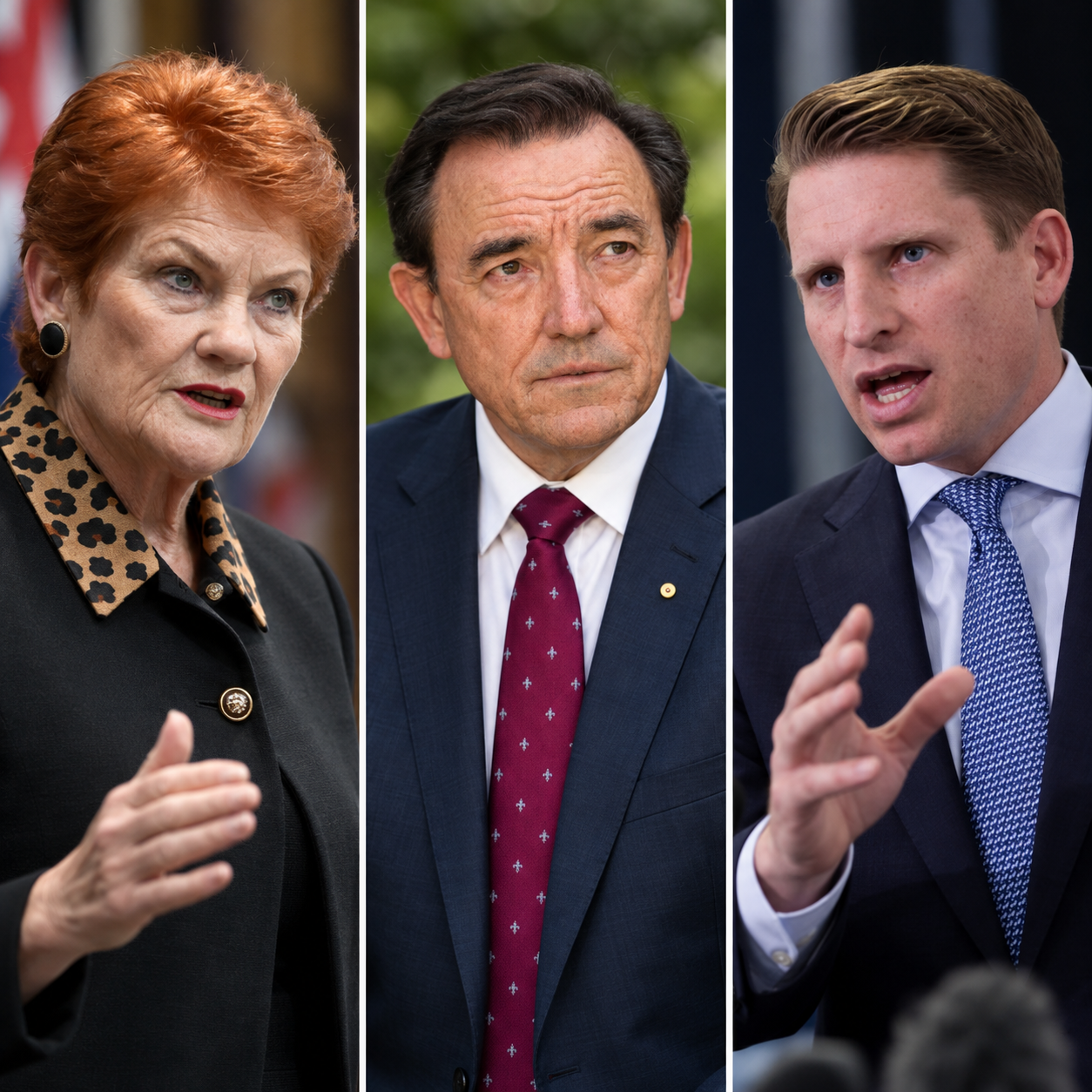
A fierce political storm erupted after One Nation leader Pauline Hanson demanded Australia immediately withdraw from the World Health Organization and abandon the Paris Agreement, denouncing what she called foreign control over national health and energy policy.
In a fiery address, Hanson accused global institutions of undermining Australian sovereignty, arguing that decisions affecting public health responses and climate commitments should be determined solely by elected representatives in Canberra, not international bureaucracies or multilateral conferences.

She described the World Health Organization as an unaccountable body exerting excessive influence during global health emergencies, claiming Australia must sever ties to regain full control over pandemic planning and domestic healthcare funding priorities.
Hanson’s proposal extends beyond health governance, targeting climate frameworks that align Australia with emissions reduction targets negotiated under United Nations auspices, which she argues restrict economic growth and energy independence.
Central to her platform is a pledge to withdraw from the Paris Agreement, contending that Net Zero commitments impose costly transitions on industries reliant on coal and natural gas exports.
Supporters applauded the speech as a bold defense of national autonomy, framing it as resistance against what they perceive as globalist pressure shaping domestic regulations without adequate democratic consent.
Critics swiftly condemned the proposal, warning that abrupt withdrawal from major health and climate institutions could isolate Australia and undermine its credibility among regional partners.
Hanson pledged to cut billions of dollars in contributions to international bodies, promising instead to redirect those funds toward domestic hospitals, regional clinics, and energy infrastructure projects.
She also called for banning all World Health Organization activities on Australian soil, arguing that national agencies are fully capable of managing health crises without external oversight.
Public health experts responded by emphasizing that WHO membership facilitates information sharing, coordinated disease surveillance, and rapid response mechanisms during cross-border outbreaks.
Energy policy formed the second pillar of Hanson’s plan, with proposals to expand coal and gas production as a means of reducing electricity prices by what she estimated could be 30 to 50 percent.
Economists questioned those projections, noting that electricity pricing is influenced by global commodity markets, network costs, and regulatory frameworks, not solely domestic generation sources.
Hanson proposed establishing a “Sovereign Health and Energy Force,” envisioned as a centralized authority prioritizing Australian citizens in healthcare resource allocation and domestic energy security planning.
Opposition leaders labeled the concept vague and potentially duplicative of existing institutions, arguing that dismantling established frameworks could create administrative confusion rather than efficiency.
Environmental groups expressed alarm at the suggestion of abandoning climate treaties, warning that retreating from emissions targets could damage Australia’s environmental reputation and trade relationships.
Industry representatives appeared divided, with some resource sector advocates welcoming a renewed emphasis on fossil fuel expansion, while renewable energy investors cautioned against policy instability.

The debate also touched on Australia’s role within the United Nations, as Hanson linked health and climate policies to broader concerns about multilateral governance.
Diplomatic analysts stressed that participation in international agreements often strengthens national influence, allowing countries to shape rules rather than merely respond to them.
Hanson, however, framed withdrawal as liberation, arguing that sovereignty requires disentanglement from institutions she characterizes as bureaucratic and politically biased.
During her address, she criticized global vaccine distribution initiatives coordinated by the WHO, claiming Australian taxpayer funds should prioritize domestic healthcare needs.
Medical associations countered that global health cooperation reduces the risk of infectious diseases reaching Australian shores, thereby protecting citizens indirectly through coordinated prevention efforts.
On climate policy, Hanson described Net Zero as economically damaging, asserting that Australia’s abundant coal and gas reserves should be leveraged to secure affordable energy for households and industry.
Climate scientists responded that extreme weather patterns and rising temperatures demand collaborative mitigation efforts, emphasizing that climate change transcends national borders.
Political strategists observed that cost-of-living pressures, including high electricity bills, have heightened voter receptiveness to arguments promising immediate price reductions.
However, analysts warned that international withdrawal could provoke retaliatory trade measures from partners prioritizing climate standards in supply chains.
Business leaders urged caution, emphasizing the importance of policy predictability for long-term investment decisions in both traditional and renewable energy sectors.

Hanson’s rhetoric has energized segments of the electorate skeptical of globalization, reflecting broader trends in nationalist politics seen across several democratic nations.
Younger Australians appear particularly engaged in the climate dimension of the debate, with student organizations organizing forums and demonstrations in response to the proposal.
Legal scholars noted that withdrawing from treaties such as the Paris Agreement involves formal notification processes and potential renegotiation of associated commitments.
Public opinion surveys indicate a divided electorate, with strong support for sovereignty arguments among some voters and equally strong backing for international cooperation among others.
Government officials defended existing commitments, arguing that health security and climate stability depend on coordinated global action rather than unilateral withdrawal.
As parliamentary debate intensifies, the nation confronts fundamental questions about balancing independence with interdependence in an increasingly interconnected world.
Whether Hanson’s proposal represents transformative reform or political upheaval remains uncertain, but the controversy has undeniably reshaped discourse around health sovereignty, energy policy, and Australia’s place on the global stage.