Pauline Hanson erupted in a fiery clash with a Sky News host today, sharply
criticizing Labor’s immigration policies and exposing deep fractures within
Australia’s conservative political landscape.
«er call to drastically cut immigration stirred immediate debate over the economic
and social conse uences :acing te nation amid rising public irustration.
!n a high-tension interview, tianson demanded a dramatic cut in immigration,
targeting foreign student numbers and skilled migrant programs.
tne argued tat Australia is drowning” in unskilled migrants who fail to meet
claimed yualifications and burden essential services.
1nis explosive critiyue directly ci.allenges Labor’s current immigration targets,
intensifying scrutiny of government failures.
+anson emphatically called to reduce net migration to 130,000 per year, extend
citizenship eligibility to a 10-year period, and clamp down on student visa abuses.
Sne accused some students of exploiting immigration channels by switching
courses and entering the workforce illegally, fueling housing pressures and straining
infrastructure across Australia.
Tie interviewer pressed Hanson for a clear, detailed policy, emphasi.ing trie
complexities involved such as impacts on universities, labor siortages, and
economic consequences.
Hanson responded with a powerful moral argument, asking listeners to consider the
struggles of first nome buyers, renters, and the homeless, framing immigration as a
threat to ordinary Australians’ livelihoods.
Tnis confrontation revealed deeper challenges facing Australian politics. the
struggle to balance public demands for lower immigration witr economic realities
Hanson’s blunt rnetoric appeals to those feeling squeezed by ii1ousing costs and ,0u
competition but exposes the difficulty any government faces in managing intricate
immigration systems without unintended fallout.

The debate quic. ly shifted toward political strategy.
Hanson acknowledged her party s limited capacity to form government alone but
floated cooperation with the coalition under strict terms.
She condemned the Nationals and Liberals as “rebels” yet insisted she could force
policy concessions, preserving One Nation’s independence while influencing
national governance.
This interview underscores a critical moment for the right of center vote in
Australia— a fractured landscape where rivalry among conservatives risks handing
Labor continued power.
Hanson positioned herself as both a protest voice and a potential kingmaker,
capitalizing on voter discontent while resisting absorption into established political
factions.
Analysts note the complexity of Hanson’s position.
Her tough stance on immigration taps into real public anxieties over housing,
wages, and national identity but lacks detailed implementation plans necessary to
navigate the policy’s economic interdependencies successfully.
wuestions remain about how to enforce stricter visa rules without damaging
universities and vital industries.
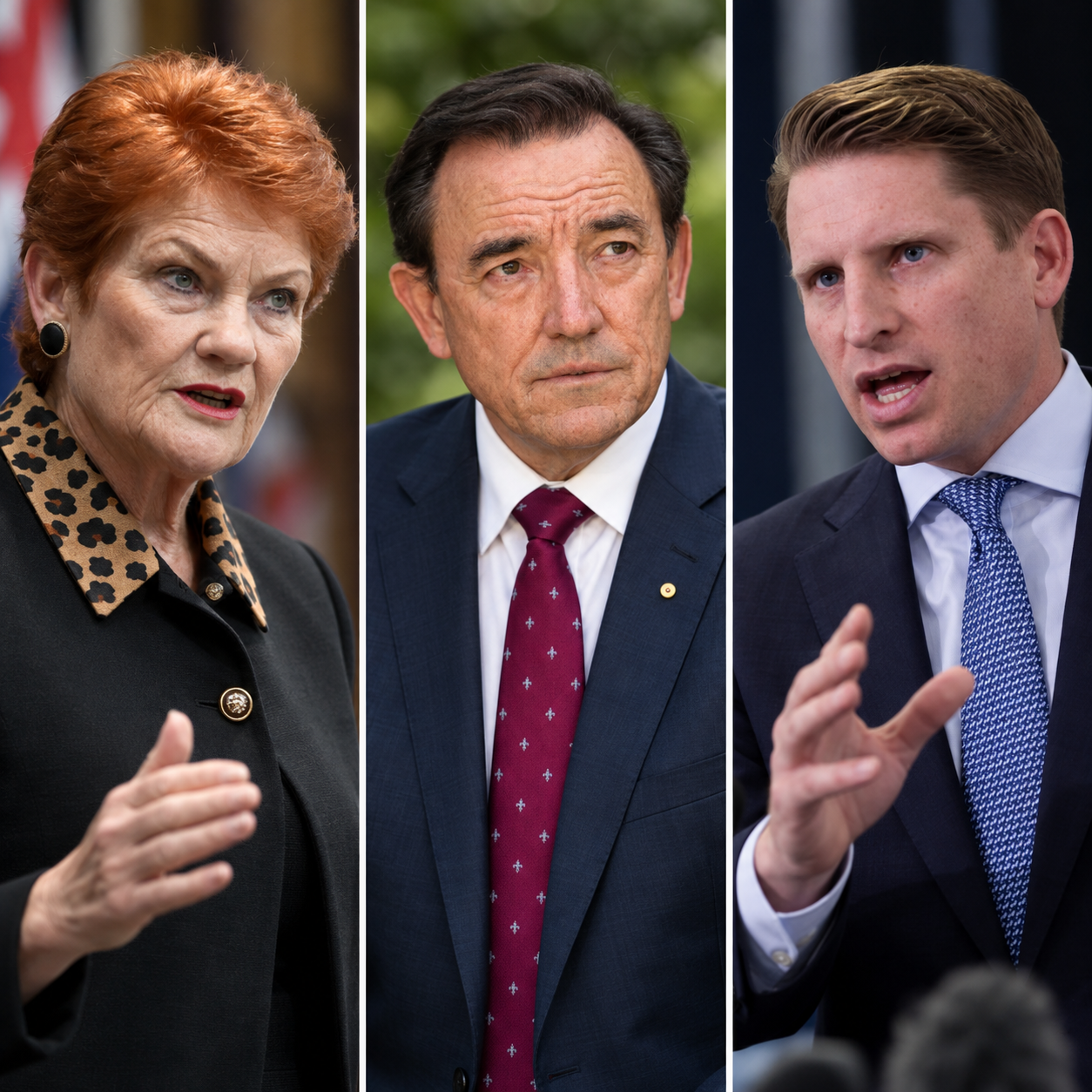
The interview also highlighted the strategic necessity of alliances.
with One Nation unlikely to win many lower house seats outright, the prospect of a
three-way conservative coalition emerges.
This potential coalition is fraught with tension—policy coherence, leadership
rivalries, and brand conflicts threaten its viability, making Australia’s next election
increasingly unpredictable.

Hanson’s call for immigration reform is more than a policy debate- it’s a reflection
of broader cultural and political battles reshaping Australia.
Her forceful appeal warns of growing public unrest and the urgent need for parties
on the right to either unify or surrender influence to Labor’s advantage.
The consequences of this clash resonate far beyond immigration numbers.
They signal a volatile political landscape where voter frustration, media pressure,
and leadership dynamics are converging.
Australia stands at a crossroads, with the balance of power hinging on whether
conservatives can reconcile their differences before the next election.
As the immigration debate intensifies, the public watches closely.
Homeland security, economic stability, and social cohesion all hang in the balance
as parties attempt to address voter grievances without undermining critical sectors.
Pauline Hanson’s challenge represents a pivotal test of political will and strategic
acumen.
This confrontation is a stark reminder that immigration is not just a numbers game
but a fierce battleground over identity, fairness, and governance.
The unfolding drama will shape Australia’s future profoundly, with decisive
outcomes expected to emerge as these complex issues move to the forefront of
national discourse.